The Creator Economy at Scale
The creator economy is no longer a fringe phenomenon or a side-hustle culture story. By 2026, it has become one of the most significant economic structures of the digital age. With over 200 million people globally identifying as content creators and the industry generating well over $200 billion annually, the question for any creator has shifted from "Is this a viable career?" to "How do I position myself to capture the most value in an increasingly competitive but also increasingly monetizable ecosystem?"
This article examines the most important trends shaping creator income in 2026, the opportunities that are currently underexploited, and the structural shifts that will define the next phase of creator economy growth.
Trend 1: The Death of Follower Count as the Primary Currency
For much of the early social media era, follower count was the dominant metric — the primary signal of influence, value, and earning potential. That era is over. The metrics that matter to brands, platforms, and audiences in 2026 are engagement rate, audience quality, conversion rate, and niche authority.
This shift has democratized creator monetization in a meaningful way. A nutritionist with 8,000 followers who has built a deeply trusting relationship with their community — where followers act on recommendations, share content passionately, and buy products regularly — is worth more to a relevant brand than a lifestyle influencer with 200,000 passive followers who scrolls past every sponsored post.
The implication for new and mid-size creators is empowering: you do not need to race to a follower milestone before you can earn. Depth of relationship beats breadth of audience in 2026's creator economy.
Trend 2: The Rise of Multi-Platform, Owned-Audience Strategies
The creators who have built the most durable businesses in the current era are not those who dominated a single platform — they are those who used social media as a top-of-funnel to build owned assets: email lists, paid communities, and direct customer relationships.
Platform risk is real and documented. Algorithm changes on Instagram, TikTok's ongoing regulatory pressures in multiple markets, YouTube's monetization policy shifts — any of these can materially impact a creator's income overnight if that income is entirely platform-dependent. The savviest creators of 2026 treat social media platforms as distribution channels, not business foundations.
The strategic playbook looks like this: create on social media to grow awareness and attract followers, then convert those followers into email subscribers and community members who you own and can monetize directly. Every follower you convert to an email subscriber is removed from the algorithmic lottery and placed into a more reliable, owned relationship.
Trend 3: AI as a Creator Force Multiplier
Artificial intelligence has fundamentally changed the economics of content creation. Tasks that once required significant time, skill, or budget — video editing, transcription, thumbnail design, copywriting, SEO research, email sequences — can now be accomplished in a fraction of the time with AI assistance.
This has two significant implications. First, it has lowered the barrier to quality, meaning that creators who invest in learning AI tools can punch well above their weight in production quality and volume. Second, it has increased competitive pressure, as the supply of content continues to expand rapidly.
The creators who are thriving amid this shift are those who use AI to handle production efficiency while doubling down on what AI cannot replicate: genuine personal perspective, lived experience, authentic community relationships, and a distinctive creative voice. AI makes you faster; your uniqueness makes you irreplaceable.
Practical AI applications for creators in 2026 include AI-assisted video editing, automated content repurposing across formats and platforms, AI-generated thumbnail and cover image variants for A/B testing, AI-powered content idea generation based on trend analysis, and automated email sequence personalization based on subscriber behavior.
Trend 4: The Premiumization of Creator Offerings
The free content market is saturated. Every niche has dozens of creators producing high-quality free content. In this environment, the value has migrated upward: to premium, high-access, high-accountability offerings where the price tag itself signals serious intent.
This is why paid communities, high-ticket coaching programs, mastermind groups, and annual memberships have all seen extraordinary growth. The market is bifurcating: free content becomes the marketing funnel, and premium paid offerings become the primary revenue engine.
Creators who are only monetizing through sponsorships and ad revenue are essentially stuck in the middle — not mass-market enough to generate significant ad income, not premium enough to earn from high-ticket offerings. The optimal strategy in 2026 involves a combination of broad free content (for growth and brand building) and a deep premium offering (for revenue).
Trend 5: Creator-Founded Brands and Equity
The most sophisticated creators in 2026 are not just content producers — they are brand founders. Rather than accepting sponsored post fees to promote other companies' products, they are launching their own product lines, taking equity stakes in companies they partner with, and building businesses that extend far beyond their content.
This is the next evolution of creator monetization. When a fitness creator with 300,000 engaged followers launches a supplement line, they are converting their audience trust into business equity rather than one-time campaign fees. When a food creator develops a cookware collab with a manufacturer, the revenue upside is orders of magnitude higher than any number of sponsored posts would have generated.
This model is scaling down to mid-size creators as well. Print-on-demand services allow creators to launch merchandise with no inventory risk. Digital product businesses generate passive revenue at scale. SaaS companies actively seek creator-partners who will both use and promote their products in exchange for revenue share or equity.
Where the Money Is: The Highest-Earning Creator Niches in 2026
Not all creator niches are created equal from a monetization standpoint. The gap between a creator in a high-value niche and a creator in a low-value niche — even with identical follower counts and engagement — can be enormous. The highest-earning creator niches in 2026:
Business and finance: CPM rates, sponsorship fees, and digital product prices are all significantly higher in business and finance content because the audience is decision-maker adults with purchasing power. Financial tools, investment platforms, business software, and coaching programs all have large budgets and pay accordingly.
Technology and software: Software companies have enormous customer acquisition budgets and recurring revenue models that justify generous affiliate commissions and sponsorship fees. A technology creator promoting a $100/month SaaS tool earning 30% recurring commission earns $30/month for every customer they bring in — indefinitely.
Health and wellness (with specificity): The global wellness industry is massive, and creator-led wellness content drives enormous purchasing decisions. Specificity is key — a general "healthy living" creator earns a fraction of what a specialized oncology nutrition or sports performance creator commands in their niche.
Professional skills and career development: Content that helps people earn more, advance faster, or transition into new careers commands premium prices. Buyers in this category are investing in themselves and have high willingness to pay for content that delivers career ROI.
Parenting and education: Parents are among the most motivated buyers in the consumer economy. Parenting creators with engaged audiences can build significant businesses through digital products, courses, and community offerings.
The Opportunities That Are Underexploited Right Now
Even in a mature creator economy, there are meaningful opportunities that most creators are not yet capitalizing on:
Long-form written content: While video dominates social algorithms, long-form written content — newsletters, Substack publications, LinkedIn articles — is underproduced relative to demand. Audiences that want depth are seeking out written creators, and the competition is lower than in video-first spaces.
Audio and podcast content: Podcast advertising rates have remained strong, and the medium attracts uniquely loyal audiences. A podcast with 10,000 weekly listeners in a valuable niche can generate $2,000–$5,000 per month in advertising alone.
B2B creator content: The LinkedIn creator economy is still significantly underdeveloped relative to its opportunity. B2B audiences have the highest purchasing power of any creator audience, and the sponsorship and digital product prices in B2B niches are correspondingly higher.
International expansion: Most creators publish exclusively in English and primarily target US audiences. Creators who expand into Spanish, Portuguese, French, Arabic, or other languages can access underserved audiences with significantly less competition.
Live experiences: In-person workshops, retreats, conferences, and community events are experiencing a renaissance as audiences seek authentic connection beyond digital interactions. The margins on live events are high, the experiences are irreplaceable, and they generate extraordinary community loyalty.
The Creator Economy's Next Five Years
The trajectory of the creator economy points toward further maturation and further consolidation of earning power among creators who have built genuine authority, owned audiences, and diversified revenue streams. The era of "get viral and get rich" is giving way to the era of "build a real audience, build a real business."
The structural advantages favoring well-positioned creators will only strengthen: AI tools will continue to reduce production costs, platform monetization programs will continue expanding to smaller creators, and consumer comfort with paying for premium creator content will continue growing. The audience that pays is bigger in 2026 than it was in 2023, and it will be bigger still in 2029.
For creators who are willing to play a long game — to build genuine expertise, to create content consistently, to serve their audience with products and communities that deliver real value — the creator economy of 2026 offers more economic opportunity than at any previous point in its history. The window is open. The tools exist. The audience is there. What separates the earners from the hobbyists is the decision to build a business, not just a profile.
A Framework for Creator Economy Success in 2026
Synthesizing the trends and opportunities above, a success framework for the current era looks like:
- Choose a specific niche with monetization potential. The intersection of your expertise, genuine passion, and an audience willing to pay is your addressable market.
- Build consistently and accumulate audience trust. Quality, consistency, and genuine helpfulness compound over time in ways that sporadic viral content does not.
- Convert social followers to owned assets early. Start building an email list from day one. Consider a paid community when your audience reaches sufficient engagement density.
- Launch a digital product within your first year. Even one well-designed product proves the monetization model and generates revenue that funds your content operation.
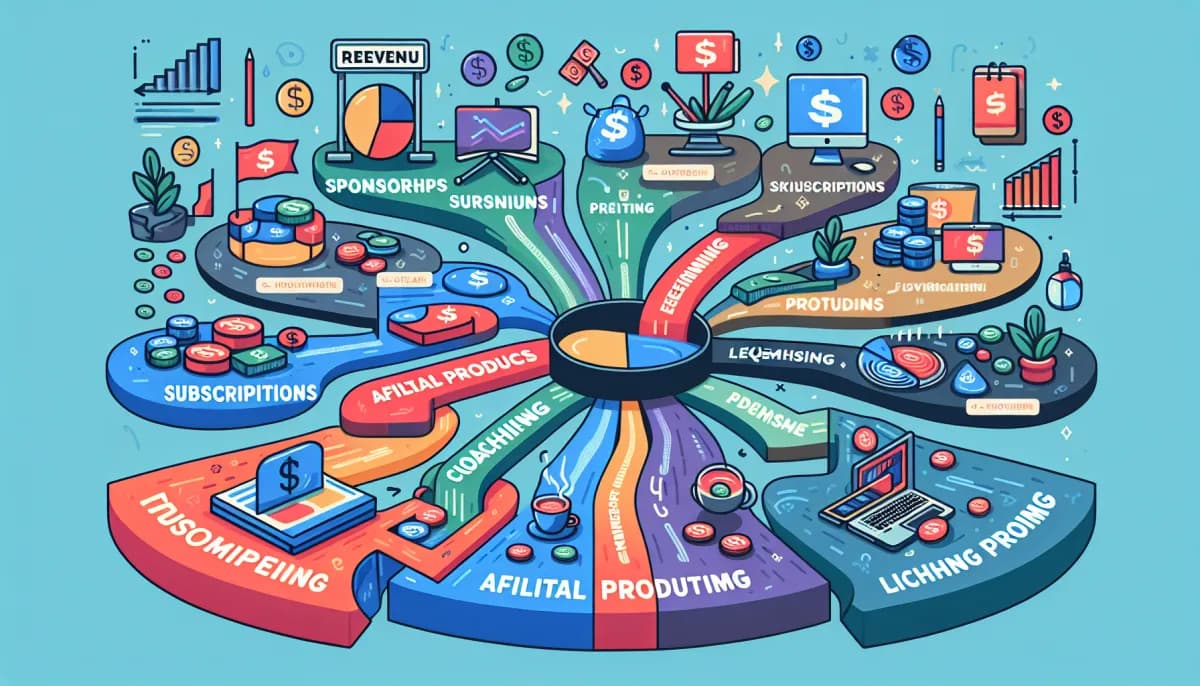
- Stack income streams deliberately. No single stream should represent more than 40% of your total creator income. Diversification is resilience.
- Use AI to amplify, not replace. Let AI handle the mechanical production tasks so you can invest your time in high-uniqueness, high-value work that cannot be commoditized.
- Think like a business owner, not a content producer. Track your revenue, understand your unit economics, reinvest in growth, and build assets that appreciate over time.
The creator economy is not a lottery. It is a business environment that rewards strategic thinking, consistent execution, and genuine service to an audience. The opportunity in 2026 is not smaller than it was in 2020 — it is different, more sophisticated, and ultimately more sustainable for the creators who approach it professionally.
To amplify your Instagram strategy, explore our Instagram services designed for serious creators.