The Numbers That Should Alarm Every Instagram Creator
Let's start with the headline and not bury it: Instagram Reels reach dropped by 35% in 2026. That's not a rounding error or a minor statistical blip. That's a structural collapse happening while Meta is shipping new features faster than ever before. Three-minute Reels, the Edits app, a teleprompter tool, Trial Reels, carousel reordering — the feature list keeps growing. The reach keeps shrinking. Something is deeply broken in this equation, and if you're a creator, a brand manager, or a social media strategist still treating Instagram as your primary growth engine, you need to understand what's actually happening.
The data comes from Metricool's 2026 Social Media Study, one of the most comprehensive annual benchmarks in the industry, covering billions of posts across all major platforms. The study doesn't just flag Instagram's decline in isolation — it maps the entire platform landscape, and the contrast with TikTok is so stark it almost feels surreal. We're talking about two platforms that are supposed to be in the same category, competing for the same eyeballs, yet producing results that look like they exist in parallel universes.
This piece breaks down exactly what the data shows, why it's happening, and — most importantly — what creators and brands can actually do about it. Because the answer isn't to abandon Instagram. It's to completely rethink how you use it.
The Full Picture: Platform-by-Platform in 2026
Before we dissect the Instagram situation specifically, it's worth stepping back and looking at the full landscape the Metricool study describes. Because the Instagram story only makes sense in context.
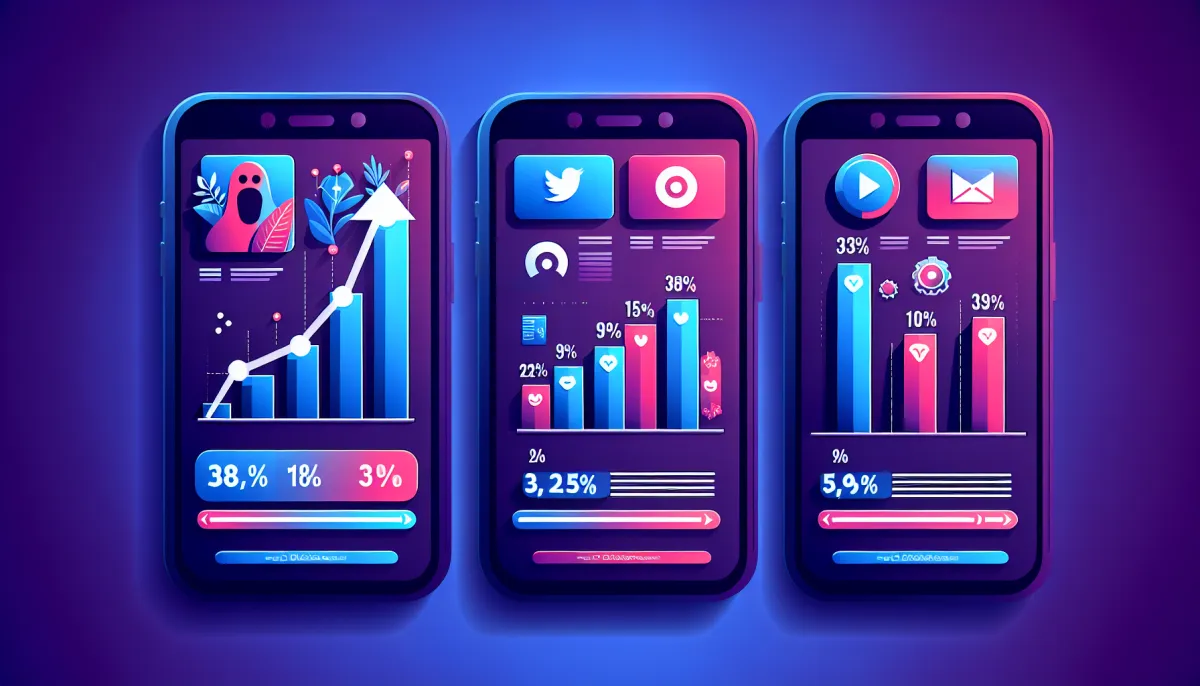
TikTok currently sits at 1.9 billion monthly active users. Its average engagement rate is 3.70% — and here's the number that should stop you in your tracks — that's a 49% year-over-year increase. TikTok didn't just maintain its engagement advantage; it grew it massively in a year when most platforms were either flat or declining. Meanwhile, YouTube long-form content saw a 30% increase in views per video, suggesting that the hunger for depth and substance is real when creators deliver quality. LinkedIn is quietly becoming a content powerhouse, with the 2026 growth projection placing it at +14%, second only to TikTok's projected +17%.
Instagram's projected growth for 2026 sits at +13%. Not terrible in isolation, but contextually meaningful — it's trailing both TikTok and LinkedIn in growth trajectory while simultaneously watching its core engagement metric crater. Instagram has more users than it's ever had, and yet those users are engaging with content less than they did when the platform was smaller. That's the paradox.
| Platform | Avg. Engagement Rate (2026) | YoY Change | 2026 Growth Projection |
|---|---|---|---|
| TikTok | 3.70% | +49% | +17% |
| 0.48% | -35% (Reels reach) | +13% | |
| 0.15% | Flat | +5% | |
| X (Twitter) | 0.12% | -8% | +3% |
| 1.9% | +22% | +14% | |
| YouTube (Shorts) | 2.1% | +18% | +11% |
To put the TikTok vs. Instagram gap in concrete terms: TikTok engagement is approximately 8x higher than Instagram and roughly 25x higher than Facebook. These aren't minor differences. This is a chasm. And it's getting wider every year, not narrower.
Why Is Reels Reach Collapsing? The Real Reasons
The easy answer is to blame the algorithm. It's always tempting to frame these conversations as "Meta changed something behind the scenes and now creators are getting punished." And while the algorithm absolutely plays a role, the reality is more layered and, frankly, more interesting than a simple algorithm adjustment.
1. Saturation Has Hit a Wall
Instagram now has over 2 billion active users. The Reels tab is flooded. When Reels first launched in 2020 as Instagram's direct response to TikTok's explosive growth, the feature was fresh, the algorithm was distributing content aggressively to onboard creators, and the novelty factor drove organic reach sky-high. That phase is over. The early-mover advantage that creators who jumped on Reels in 2020 and 2021 enjoyed has fully evaporated. The platform is mature, crowded, and the algorithm can no longer afford to throw reach at unproven content just to populate the feed.
According to data from SQMagazine's comparative analysis, TikTok's algorithm still distributes content from zero-follower accounts to millions of viewers based purely on early engagement signals. Instagram's algorithm has shifted heavily toward rewarding established accounts, which means the rich get richer and new creators face a structurally harder climb than they did even two years ago.
2. Meta's Push-Pull on Watch Time
When Instagram launched three-minute Reels in January 2025, the intention was clear: compete with TikTok's increasingly long-form content and keep users on the platform longer. The problem is that longer content requires higher production quality and stronger storytelling to retain viewers, and most creators haven't adapted their approach. The result is a feed full of three-minute videos that viewers abandon at the 40-second mark, sending negative watch-time signals to the algorithm that then suppresses further distribution.
Marques Brownlee (MKBHD), who manages one of the most technically sophisticated content operations in the creator economy, has consistently noted that the jump from 90-second to three-minute Reels isn't just a format change — it's a content philosophy change that most creators aren't equipped to make overnight. His own Instagram presence has shifted increasingly toward teaser clips that funnel viewers to YouTube, rather than treating Instagram as a standalone destination.
3. The Broadcast Channel Distraction
Meta has been pushing Broadcast Channels and other engagement features hard over the past two years. While these features are valuable for nurturing existing audiences, they've subtly shifted creator attention away from the top-of-funnel reach that Reels was supposed to provide. Creators are spending more time on features that deepen connections with followers they already have, while the algorithm simultaneously sends less reach to new audiences. It's a retention play masquerading as a growth tool.
4. Competition for the Same Attention Pool
TikTok's recovery following the brief US ownership scare in early 2026 was remarkably swift. TechCrunch reported that TikTok bounced back from its usage dip within weeks, and the period of elevated Instagram and YouTube Shorts usage that followed the TikTok uncertainty largely reversed. Users who had temporarily migrated back to TikTok once it stabilized. The lesson for Instagram: the platform can't count on TikTok stumbles to inflate its own metrics. It needs to compete on the merits of its content ecosystem.
The Feature Paradox: More Tools, Less Reach
This is where the situation gets genuinely confusing for creators. Meta has shipped a remarkable number of new features over the past 18 months. The Edits app (launched early 2025) positioned itself as a direct TikTok competitor in the video editing space, offering sophisticated mobile editing tools natively integrated with Instagram. Trial Reels lets creators test content with non-followers before committing to a full post. The teleprompter feature removes one of the primary friction points for talking-head content. Carousel reordering allows for more flexible storytelling in multi-image posts.
None of it has reversed the reach decline. And there's a reason for that: features solve usability problems, not distribution problems. A better editing app doesn't change the fundamental economics of the algorithm. A teleprompter doesn't alter how Instagram decides which content reaches which users. These are quality-of-life improvements — genuinely useful ones — but they're not algorithmic interventions. Meta can't simultaneously offer creators better tools and also guarantee that using those tools will increase reach, because reach is a function of supply and demand, not feature parity.
Emma Chamberlain, who built her following on a distinctly lo-fi, unpolished aesthetic that was the antithesis of high-production Instagram content, has spoken in various interviews about how the pressure to produce "perfect" content on Instagram has changed the platform's feel. The irony is that as Instagram gives creators more sophisticated tools to polish their content, the resulting homogeneity may actually be suppressing engagement. When everything looks professional, nothing stands out.
The TikTok Advantage: Why 3.70% Matters More Than You Think
A 3.70% engagement rate might sound like a small number in absolute terms, but in the context of social media benchmarks, it's extraordinary. To put it in perspective: industry-standard email marketing benchmarks consider a 2% click-through rate good. TikTok's content engagement is nearly twice that benchmark — and it's for passive content consumption, not active link clicks.
The 49% year-over-year increase in TikTok engagement is especially significant because it runs counter to the general trend of social media engagement declining as platforms mature. TikTok is defying the maturation curve that has flattened engagement on every other major platform. The primary driver, according to the Digital Information World analysis of the Metricool data, is TikTok's continued investment in its recommendation algorithm. The For You Page remains the most powerful discovery engine in social media. It surfaces genuinely relevant content to users regardless of who they follow, and its ability to do this accurately has measurably improved year over year.
Charli D'Amelio, who became TikTok's first creator to reach 100 million followers, has maintained that advantage precisely because she's understood TikTok's algorithm as fundamentally different from Instagram's. TikTok rewards consistency, participation in trending sounds and formats, and early engagement velocity. Instagram increasingly rewards brand authority, production quality, and existing follower counts. These aren't just different platforms — they're different games with different rules.
The 1.9 billion MAU figure for TikTok is also worth dwelling on. For context, Instagram has approximately 2 billion monthly active users. The gap has nearly closed from TikTok's position as a distant second just three years ago. And in terms of time-spent-per-user, TikTok has been ahead of Instagram for years. The audience size convergence combined with the engagement gap means TikTok is extracting dramatically more value per user from its content ecosystem.
What About YouTube? The Long-Form Counternarrative
The Metricool data includes one finding that complicates the simple "short-form dominates" narrative: YouTube long-form content saw a 30% increase in views per video in 2026. This is significant because it suggests that audiences haven't actually abandoned longer content — they've just become more selective about where they watch it and what quality threshold they require.
MrBeast, who understands platform economics better than arguably any creator alive, has publicly committed to YouTube as his primary platform even as he maintains presences everywhere else. His rationale is consistent: YouTube's algorithm rewards depth, rewatchability, and retention in ways that Instagram and even TikTok don't. A MrBeast video that performs well continues to generate views for months or years. An Instagram Reel has a shelf life measured in hours.
The 30% views-per-video increase on YouTube long-form is also partly explained by the platform's improved recommendation engine and its deep integration with Google Search. YouTube content is discoverable in ways that Instagram content simply isn't — search engines index YouTube, they don't index Instagram Reels. For creators building a long-term content asset, this distinction matters enormously. If you want to accelerate your YouTube growth while building that sustainable foundation, boosting your Reels views can still serve as a top-of-funnel driver that funnels audiences to your more durable YouTube content.
The Multi-Platform Reality Creators Can't Ignore
Here's the strategic conclusion that falls out of all this data: the era of single-platform dominance is genuinely over for most creators. The data from Metricool's study makes it clear that each platform is now optimizing for different content types, different audience behaviors, and different algorithmic logics. A content strategy that ignores this diversity is leaving massive reach and engagement on the table.
Miraflow's analysis of creator migration patterns in 2026 found that the creators who were growing fastest weren't the ones who abandoned Instagram for TikTok — they were the ones who figured out how to use each platform for what it does best. TikTok for discovery and viral distribution. Instagram for community building and brand-adjacent content. YouTube for depth and long-term asset creation. LinkedIn (increasingly) for B2B audiences and thought leadership. Shorts as a bridge between YouTube's long-form ecosystem and short-form discovery.
ShortSync's 2026 short-form video trends report specifically highlights the "platform-native" strategy as the emerging best practice: rather than repurposing the same video across all platforms, top creators are now producing platform-specific content that respects the distinct viewing context of each surface. A TikTok that gets reposted to Instagram Reels without modification is going to carry the TikTok watermark (which Instagram's algorithm explicitly penalizes) and it's going to be cut to TikTok's pacing and audio norms, which don't translate perfectly. The extra production effort of creating native content pays off in distribution.
Practical Strategies: How to Fight the -35% Headwind
Acknowledging the structural decline in Instagram Reels reach doesn't mean resigning yourself to it. There are specific, data-backed approaches that are working right now, even against the algorithmic current.
Front-load Everything
The single most important variable in Instagram's current algorithm is watch completion rate, specifically the percentage of viewers who watch at least 50% of your Reel. Instagram's internal research (referenced in Newzenler's 2026 creator guide) consistently shows that content with high completion rates gets pushed into the Explore and Reels feeds, while low-completion content gets suppressed immediately. The practical implication: your first three seconds need to be genuinely compelling enough to stop a thumb mid-scroll. No slow intros, no context-setting, no logo animations. The hook is everything.
Use Trial Reels Strategically
Trial Reels, despite not solving the systemic reach problem, gives you something genuinely valuable: real data on how non-followers respond to your content before it goes out to your full audience. Use it to test hooks specifically. Run five variations of the same video's opening three seconds and let Trial Reels tell you which one gets people to keep watching. This is split testing that didn't exist on Instagram two years ago, and the creators who are using it systematically are making much smarter content decisions than those who are just posting and hoping.
Lean Into Saves and Shares, Not Likes
Instagram's current algorithm weights saves and shares significantly more heavily than likes and comments as signals of content quality. This is a deliberate design choice — Meta wants Instagram to be a place where content is worth keeping and worth sending to a friend, not just worth double-tapping. If you're creating content that people save (how-to content, reference guides, useful lists, aesthetic inspiration) or share (content that makes people feel something strongly enough to want a friend to see it), you're feeding the exact signals the algorithm rewards.
Don't Abandon Instagram — Reposition It
The creators who are struggling most on Instagram in 2026 are the ones who are still trying to use it for the same thing they used it for in 2021: raw follower growth through organic Reels reach. That game has changed. Instagram in 2026 is better understood as a relationship-deepening platform rather than a discovery platform. It's where you nurture the audience you've built, drive traffic to other platforms and to direct purchase, and establish brand credibility. If you're building an audience from scratch, TikTok is going to do that more efficiently right now. Instagram is where you convert that audience into something more durable.
For creators who need to accelerate that relationship-building phase, growing your Instagram followers strategically gives you the social proof foundation that makes your content more credible when it does reach new audiences. And at a fundamental level, investing in your presence across all key platforms — whether through organic effort or through strategic social proof — is now table stakes for anyone serious about building a creator business. Check out our pricing options to see how to structure that investment effectively.
Watch the LinkedIn Signal
The Metricool data's finding that LinkedIn is growing at +14% with a 1.9% engagement rate is under-discussed in most creator strategy conversations. LinkedIn isn't relevant for every niche, but for anyone in B2B, professional services, finance, tech, marketing, or career development, it's the most undervalued content distribution channel in the current landscape. The algorithmic competition is lower, the audience purchasing power is higher, and the content longevity is significantly better than any short-form video platform. If your content strategy doesn't include LinkedIn and your audience is professional, you're leaving distribution on the table.
The Meta Strategy Behind Instagram's "Decline"
It's worth considering whether Instagram's reach decline is actually a bug or a feature from Meta's perspective. There's a reasonable argument that Meta is deliberately engineering Instagram toward a paid-distribution model, where organic reach functions as a teaser and real scale requires advertising spend. This isn't a conspiracy theory — it's the exact trajectory that Facebook took between 2012 and 2016, when organic page reach went from 15-20% to under 2% as Facebook's ad business scaled.
If that's the roadmap for Instagram Reels, then the current 35% year-over-year decline isn't a crisis to be fixed with feature updates — it's a revenue strategy. The Edits app, the teleprompter, the Trial Reels: these features keep creators invested in the Instagram ecosystem even as organic reach shrinks, because they reduce the friction of producing content and make Instagram feel like a supportive platform even as it's becoming a pay-to-play distribution channel.
Instant DM's 2026 creator showdown analysis notes that the creators who are navigating this shift most successfully are those who are treating Instagram's free tools as production infrastructure and Instagram's paid promotion as distribution infrastructure. Make the content with the tools Meta provides, then use Instagram ads to actually reach people with it. For brands with marketing budgets, this is a workable model. For individual creators without ad spend, it reinforces why building audiences on TikTok and YouTube — where organic reach is still meaningfully available — is so strategically important.
What the Data Means for 2026 and Beyond
The Metricool 2026 Social Media Study paints a picture of a fragmented landscape that is permanently more complex than the simpler two-platform world of Instagram and YouTube that defined the 2016-2020 era. TikTok at 1.9 billion MAU with 3.70% engagement is not a flash in the pan. It's a structural force that has permanently changed user expectations around content discovery, pacing, and algorithmic personalization. Every other platform is either adapting to the model TikTok established or watching its engagement metrics decline.
Instagram's 35% Reels reach decline, viewed in isolation, sounds catastrophic. Viewed in context — against post reach that's also down 31%, against an industry-wide shift toward TikTok's discovery model, against Meta's almost certain long-term move toward paid distribution — it looks more like a predictable transition point than a unique failure. The platform isn't dying. It's changing. And the creators who understand what it's changing into, rather than mourning what it used to be, are the ones who'll come out of this period with stronger businesses.
The growth projections for 2026 tell us where the energy is: TikTok at +17%, LinkedIn at +14%, Instagram at +13%. These are closely packed numbers, which means the single-platform bet is increasingly risky. A platform that leads growth projections by four points today can trail by the same margin next year. The platforms themselves are becoming less differentiating than the creator's ability to build genuinely audience-centered content that travels well across all of them.
If you're building a social media presence in 2026, the Instagram paradox — more features, less reach — is a signal to diversify your platform strategy, not abandon Instagram entirely. Treat each platform as a distinct distribution channel, produce native content for each, use Instagram for what it's currently good at (community, brand building, conversion), and invest your growth energy in the platforms where organic reach is still accessible. The creators who figure this out now will be significantly better positioned when the next platform shift arrives — because it always does.
Sources
- Metricool 2026 Social Media Study — Official Press Release
- Digital Information World — 2026 Social Media Benchmark: TikTok
- SQ Magazine — TikTok vs Instagram Statistics 2026
- TechCrunch — TikTok Recovers From Usage Dip Following US Ownership Change
- InstantDM — The Ultimate Creator Showdown: Instagram vs TikTok in 2026
- Miraflow — TikTok Ban 2026: Where Creators Are Moving
- ShortSync — Short-Form Video Trends 2026
- Newzenler — Social Media Strategy for Creators 2026
Want to take your Instagram presence further? Check out our Instagram growth services.