The Algorithm Upgrade Nobody Talked About
Here's something that should be front-page news in every marketing newsletter but somehow isn't: LinkedIn didn't just tweak its algorithm in 2024. It replaced it entirely. The platform quietly rolled out 360Brew, a decoder-only transformer model with 150 billion parameters — the same architecture that powers ChatGPT. That's not a minor backend update. That's a fundamental rebuild of how LinkedIn decides who sees what, when, and why. And if you're still operating with a 2023 mental model of how LinkedIn reach works, you're already behind.
The full rollout of 360Brew continued through 2026, and the behavioral data that's emerged from independent creators and analysts tells a strikingly coherent story. Saves are worth 5x the reach of a like. Delayed engagement — comments and shares that come in 24 to 72 hours after a post goes live — generates 4 to 6x more reach than immediate reactions. Human-written posts consistently outperform AI-generated ones. Profile quality now functions as a credibility signal that 360Brew weighs before distributing your content at all. These aren't rumors or gut feelings. They're patterns that have shown up repeatedly across millions of tracked posts, and they're directionally consistent with what we know about how large language model-based recommendation systems behave.
This guide is going to break all of it down: what 360Brew actually is, why it works differently from LinkedIn's legacy algorithm, and exactly what you need to change about your content strategy to work with it rather than against it. Whether you're a solo creator like Justin Welsh, a growth-focused coach like Lara Acosta, or a brand running B2B content at scale, the playbook has changed. Let's get into it.
What 360Brew Actually Is — And Why It Matters
Most LinkedIn creators have no idea that 360Brew exists by name. LinkedIn's engineering and research teams disclosed it through a combination of technical blog posts and conference presentations, but the mainstream creator community largely missed it. The name comes from LinkedIn's internal AI branding, and the "360" likely refers to the holistic, multi-signal approach the system takes to content ranking — it doesn't just look at engagement metrics in isolation, it evaluates a post in the context of the poster's full profile, their network, their posting history, and the content itself.
The architecture is the thing that sets 360Brew apart from every algorithm LinkedIn has run before. It's a decoder-only transformer — meaning it processes information sequentially and generates predictions about what a user wants to see based on patterns it learned during training. With 150 billion parameters, it's operating at the scale of the largest commercially deployed language models in the world. For context, GPT-3 had 175 billion parameters. We're talking about the same order of magnitude as the models that changed how the entire tech industry thinks about AI.
The critical distinction is what 360Brew was trained on. Unlike ChatGPT, which was trained on a broad corpus of internet text, 360Brew was trained exclusively on LinkedIn networking data: posts, engagement patterns, profile interactions, connection behaviors, messaging patterns, job changes, skill endorsements — the full behavioral graph of a professional social network. This means the model has an extraordinarily deep understanding of professional networking context. It doesn't just know that a post got likes; it knows whether those likes came from people who are actually relevant to the poster's industry, whether the post generated downstream career actions, and whether the content led to the kinds of professional conversations that LinkedIn's business model is built around.
Botdog's analysis of LinkedIn algorithm changes in 2026 notes that 360Brew represents a shift from a rule-based system (if engagement rate exceeds X threshold in Y hours, distribute further) to a probabilistic system (given everything we know about this post, this poster, and this audience, what is the likelihood that showing this content to person Z will result in a meaningful professional interaction?). That's a fundamentally different logic, and it explains why some of the old algorithm hacks — posting at specific times, using certain hashtags, putting links in comments rather than the post body — have become either irrelevant or counterproductive.
The Saves Signal: Why 5x Reach Is Not an Accident
The most actionable finding to come out of post-360Brew analysis is the saves signal. An analysis of more than 3 million LinkedIn posts found that saves and bookmarks generate approximately 5x more reach than likes, and approximately 2x more reach than comments. That's a massive weighting differential, and it's not random — it reflects a deliberate signal design choice that makes complete sense once you understand what 360Brew is optimizing for.

Think about what a save actually means. When someone likes a post, it's a one-second action that requires minimal cognitive engagement. You saw something, you had a mild positive reaction, you double-tapped. LinkedIn's algorithm has always known that likes are noisy signals — they correlate weakly with actual content quality or professional value. But when someone saves a post, they're making a deliberate decision: "I want to come back to this." That's a high-intent signal. It means the content had enough density, enough practical value, or enough intellectual substance that the user wanted to preserve it for future reference.
360Brew is optimizing for professional value, not just engagement volume. A post that gets 500 likes and 10 saves is telling the algorithm one thing. A post that gets 100 likes and 50 saves is telling it something completely different — and 360Brew will distribute the second post significantly further, because the save rate indicates content that professionals find worth keeping. This is why Richard van der Blom, one of the most rigorous independent analysts of LinkedIn's algorithm, has repeatedly emphasized saves as the metric to track above all others. His annual LinkedIn algorithm reports, which draw on hundreds of millions of data points, have flagged saves as the dominant reach signal since 360Brew's initial deployment.
The practical implications are significant. Content that drives saves tends to be: comprehensive guides and how-to frameworks, original research and data-driven analysis, curated resources and tool lists, step-by-step breakdowns of complex processes, and templates or frameworks that professionals can directly apply. Notice what's not on that list: hot takes, opinion pieces designed to generate argument, inspirational quotes, and reactive commentary on news. Those formats can still generate likes and comments, but they almost never drive saves. If you want reach under 360Brew, you need to ask yourself before you post: "Is this worth saving?"
Justin Welsh, who has built one of the largest solo creator businesses on LinkedIn (over 500,000 followers, multi-million dollar revenue from courses and consulting), structures his content almost entirely around this principle. His posts are systematically framework-heavy, actionable, and worth bookmarking for future reference. That's not a coincidence — he's understood intuitively (and now, apparently, algorithmically) that LinkedIn rewards content that delivers professional value rather than content that generates emotional reaction.
The Delayed Engagement Phenomenon: 360Brew's Most Counterintuitive Behavior
If the saves signal is the most actionable finding from post-360Brew research, the delayed engagement pattern is the most counterintuitive. Here's what the data shows: posts that receive sustained engagement over 24 to 72 hours after publication generate 4 to 6x more reach than posts that spike immediately and then go quiet. This runs directly counter to how most creators think about algorithmic timing — the conventional wisdom has always been that you need to maximize engagement in the first hour, because that's when the algorithm makes its distribution decision.
Under the legacy algorithm, this logic made sense: the system was essentially using early engagement as a proxy for content quality. High early engagement meant the content was resonating, so the algorithm pushed it further. Under 360Brew, the system is doing something more sophisticated. It's tracking whether a post continues to generate meaningful professional interactions over multiple days, and it's treating that sustained engagement as evidence of durable professional value rather than momentary virality.
This has enormous strategic implications. The agorapulse analysis of LinkedIn's 2025 algorithm behavior (which fed directly into the 360Brew rollout period) found that posts on technical professional topics — career development frameworks, industry-specific analysis, B2B strategy breakdowns — consistently showed the delayed engagement pattern. That's because professional content often gets discovered not through the feed, but through search, through profile visits that follow a discovery of the poster through other content, and through colleagues sharing links via direct message. All of these discovery paths create engagement that comes in hours or days after initial publication.
Jasmin Alic, known for his research-backed approach to LinkedIn content, has documented this pattern extensively in his own posting behavior. His most-distributed posts are rarely his most immediately liked ones. The posts that generate ongoing discussion — the ones where people come back to comment after reading something in the thread, or after using the framework he described and wanting to report back — are the ones that 360Brew pushes into extended distribution. He's built his content calendar explicitly around creating posts that generate this kind of slow-burn engagement: deep-dive frameworks, controversial but substantiated takes, and open questions that invite professional disagreement.
The strategic adjustment here isn't to stop caring about immediate engagement — you still want your post to get traction in the first hour. It's to stop treating the first hour as the only window that matters. Under 360Brew, a post that generates 20 thoughtful comments over three days is algorithmically more valuable than a post that generates 200 likes in the first 30 minutes and then disappears. Optimize for the kind of content that keeps generating professional conversation, not just the kind that generates instant gratification.
Profile Quality as a Pre-Distribution Signal
Here's a 360Brew behavior that most creators haven't fully processed: your profile quality now functions as a credibility signal that the algorithm evaluates before deciding how broadly to distribute your content. This means that a high-quality post from a sparse, incomplete profile will get significantly less distribution than the same post from a profile that's been built out comprehensively and demonstrates genuine professional expertise.
The logic is elegant from a machine learning perspective. 360Brew has access to your full profile data — your work history, your skills, the consistency between what you claim to be an expert in and what you actually post about, the quality of your connections, your engagement history with other people's content, and the professional signals in your network. All of this feeds into what you can think of as a baseline credibility score that 360Brew assigns to you as a poster before any individual post is evaluated. A post from someone with a high credibility score gets pushed into a larger initial distribution pool, which then gives it more opportunity to generate the engagement signals that drive further distribution.
This is a meaningful departure from how the legacy algorithm worked. Previously, a viral post could come from a relatively anonymous account — if the content itself generated strong early engagement, the algorithm would push it regardless of who posted it. Under 360Brew, profile quality acts as a prior probability. A post from an unknown account with a sparse profile has to overcome a higher algorithmic hurdle to reach the same distribution as a post from an established, credible professional profile.
The practical implication is that profile optimization is no longer a vanity exercise — it's a direct input into your reach potential. Lara Acosta, who grew from a relatively small following to over 300,000 LinkedIn followers in under two years, has consistently emphasized profile completeness as a foundational step before worrying about content strategy. Her approach: treat your LinkedIn profile as the landing page for your professional brand, not just a digital resume. The featured section, the about section, the banner image, the headline — these aren't just for humans reading your profile. 360Brew is reading them too, and it's using them to calibrate how broadly your content deserves to be distributed.
If you want to accelerate this process and signal credibility to both the algorithm and to human visitors on your profile, growing your LinkedIn follower count provides the social proof baseline that makes both 360Brew and new profile visitors take your content more seriously from the first interaction.
Human vs. AI Content: Why 360Brew Penalizes the Obvious Stuff
One of the more widely discussed post-360Brew findings is that human-written posts consistently outperform AI-generated ones. This might seem ironic — an AI algorithm that penalizes AI content — but it makes complete sense once you understand what 360Brew is optimizing for.
The issue isn't that LinkedIn has an ideological objection to AI-assisted content. The issue is that AI-generated LinkedIn posts, as they're typically produced in 2025 and 2026, have a recognizable stylistic fingerprint that correlates strongly with low professional value. The structure is too formulaic. The hooks are too generic. The "insights" are either obvious or unverifiable. The calls to action are predictable. These patterns have been thoroughly documented in LinkedIn's own research, and 360Brew has learned to detect them — not necessarily through a dedicated AI-detection system, but through the simple fact that content with these patterns generates weaker engagement signals, particularly in the high-value metrics like saves and sustained comments.
The socialbee analysis of LinkedIn content performance in 2026 found that posts with specific, verifiable data points, personal anecdotes grounded in actual professional experience, and positions that reflect genuine expertise consistently outperformed generic "thought leadership" content. This is the kind of content that's very hard to generate at scale with AI, because it requires actual expertise and actual experience to be credible. The algorithm isn't necessarily detecting AI per se — it's detecting low-specificity, low-credibility content, which happens to be what most AI-generated LinkedIn posts look like.
The strategic implication is clear: use AI as a drafting and editing tool if you want, but the source material needs to be authentically yours. Your specific experiences, your proprietary data, your genuine opinions backed by real expertise. AI can help you structure and polish that material. It can't supply the substance, and 360Brew is very good at distinguishing between content that has substance and content that merely has structure.
The Engagement Signal Hierarchy: A Complete Comparison
Here's a consolidated view of how 360Brew weights different engagement signals, synthesized from post-rollout analysis across multiple research sources. This table should fundamentally change how you think about what "success" looks like on a LinkedIn post:
| Engagement Type | Reach Multiplier vs. Baseline | Signal Strength | What It Tells 360Brew |
|---|---|---|---|
| Like (immediate) | 1x | Weak | Mild positive reaction; low cognitive investment |
| Comment (immediate) | 2x to 2.5x | Moderate | Content prompted a response; moderate engagement depth |
| Save / Bookmark | 5x | Strong | High-value content worth returning to; professional utility |
| Share / Repost | 3x to 4x | Strong | Content worth amplifying to one's own network |
| Delayed engagement (24 to 72h) | 4x to 6x | Very Strong | Durable professional value; ongoing discussion; discovery via non-feed channels |
| Profile visit after post view | 2x to 3x | Moderate-Strong | Content drove interest in the poster's professional identity |
| Connection request after post view | 3x to 5x | Strong | Content drove high-intent professional action |
The pattern here is clear: 360Brew rewards depth of engagement over breadth of reaction. A post that drives people to save, share, come back later, visit the profile, and send a connection request is categorically more valuable to the algorithm than a post that generates a wave of likes from passive scrollers. This is a content philosophy change, not just a tactical adjustment — you need to be creating posts that are worth more than a thumb-tap.
Creator Mode Is Going Away — What That Actually Means
One of the structural changes accompanying 360Brew's rollout is the gradual deprecation of Creator Mode as a distinct toggle. LinkedIn is integrating its features directly into standard profile options, which means the visibility signals that Creator Mode used to provide — follower counts displayed, newsletter links prominent, "Follow" as the primary CTA — are becoming normalized across the platform.
The practical effect for creators is twofold. First, the competitive advantage of having Creator Mode enabled is diminishing because everyone will eventually have access to the same features. Second, and more importantly, 360Brew doesn't use Creator Mode status as a distribution signal the way the legacy algorithm did. Under the old system, Creator Mode was a meaningful input: it told the algorithm that this account was optimizing for reach rather than connection. Under 360Brew, that distinction is handled by the model's evaluation of your entire behavioral profile, not by a single setting.
If you've been relying on Creator Mode as a cheat code for distribution, it's time to shift your focus to the signals that 360Brew actually weighs: saves, delayed engagement, profile quality, and content that generates genuine professional discussion. The days of hack-the-setting, beat-the-algorithm approaches are over on LinkedIn. The model is too sophisticated to be fooled by simple binary toggles.
BrandLink: LinkedIn's Expanded Monetization Play
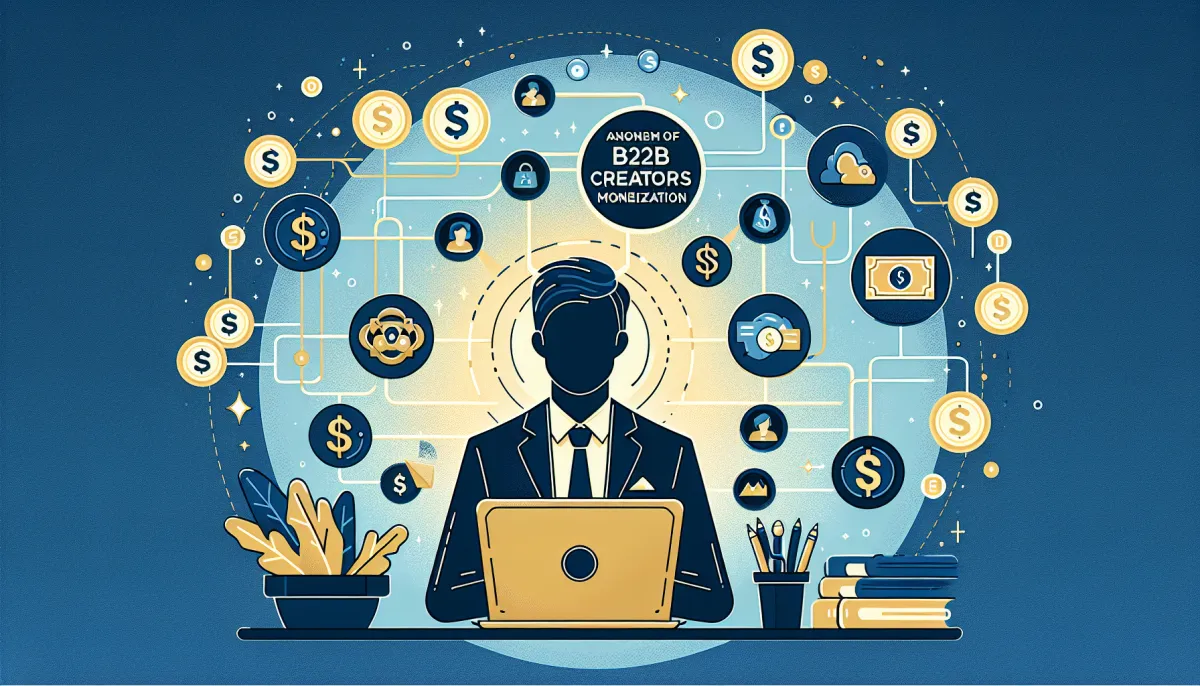
Alongside the 360Brew rollout, LinkedIn has been aggressively expanding its BrandLink program — formerly known as Wire — which allows creators to place video ads adjacent to premium publisher content on the platform. This is LinkedIn's clearest signal yet that it's taking creator monetization seriously, and it's directly enabled by 360Brew's improved audience targeting capabilities.
Here's how BrandLink works: LinkedIn's premium publisher partners — major media outlets, research organizations, professional associations — host content on the platform. Creators who participate in BrandLink can have their video content placed as pre-roll or mid-roll advertising adjacent to this premium content. The placement goes to LinkedIn members whose professional profiles and behavioral data indicate they're in the creator's target audience. Revenue is shared between LinkedIn and the creator based on view counts and engagement.
The reason BrandLink is more powerful under 360Brew than it would have been under the legacy system is precision. 360Brew's deep understanding of professional profiles means that BrandLink placements can be targeted with a granularity that wasn't previously possible. A creator making content about B2B sales strategies can have their BrandLink content placed specifically in front of VP-level sales professionals at enterprise companies — not just "people who clicked on sales content once." That precision makes BrandLink attractive to advertisers, which increases the revenue pool available to creators.
For high-reach LinkedIn creators, BrandLink represents the first genuinely meaningful direct monetization path the platform has offered. The combination of expanded BrandLink availability and 360Brew's audience matching capabilities is what's driving LinkedIn's +14% growth projection for 2026 from a monetization infrastructure perspective. LinkedIn is building the infrastructure to compete with YouTube's Partner Program and TikTok's Creator Fund — not dollar-for-dollar yet, but architecturally. And for B2B creators specifically, the audience quality on LinkedIn makes even smaller reach numbers financially significant.
To maximize BrandLink eligibility and reach the follower thresholds that unlock the program's better placement tiers, strategically building your LinkedIn presence matters. If you want to accelerate your path to BrandLink-eligible status, boosting your LinkedIn post engagement can help signal content quality to 360Brew while you build your organic reach. And for a comprehensive view of what investment in your LinkedIn presence looks like at different scales, our pricing page lays out the options clearly.
The B2B Creator Playbook for 360Brew in 2026
Let's get specific about what all of this means for how you should actually operate on LinkedIn in the 360Brew era. Here's the framework, drawn from the behavioral data and from observing what's working for the platform's highest-performing B2B creators.
Lead with Data and Save-Worthy Density
Every post you publish should pass this test: "Would a busy professional save this to read again later?" If the answer is no, reconsider the format. Posts that pass the saves test tend to share a common structure: they open with a specific, verifiable claim (a data point, a counterintuitive finding, a concrete result), they deliver on that opening with substance (a framework, a step-by-step process, original research), and they close with either a clear action item or an open question that invites professional discussion.
Richard van der Blom's content is the model here. His annual LinkedIn algorithm reports, which he publishes on LinkedIn itself, reliably generate massive saves because they're dense with specific, actionable data that LinkedIn professionals want to keep. His posts aren't just shareable — they're reference documents. That's the benchmark for save-worthy content under 360Brew.
Create for the 72-Hour Window, Not the First Hour
Stop optimizing purely for immediate engagement. Instead, post content that's designed to generate ongoing discussion: open questions with genuine multiple right answers, frameworks that invite people to share their own variations, data points that professionals want to weigh in on from their own industry experience. Jasmin Alic does this masterfully — his posts regularly generate first-day engagement, but they also generate second-day and third-day engagement as people who missed the initial post discover it through their connections' interactions and feel compelled to add their own perspective.
Build the Profile That 360Brew Respects
Before worrying about content frequency or format testing, make sure your profile is doing its job as a credibility signal. That means: a headline that's specific about your expertise (not just your job title), an about section that clearly articulates your professional value proposition, featured content that showcases your best-performing or most representative posts, a complete work history with genuine detail about your actual contributions, and skills endorsements that are consistent with your claimed expertise. 360Brew is reading all of this before it decides how broadly to push your next post.
Stay Human, Get Specific
The antidote to AI-flavored content is specificity. Specific numbers, specific dates, specific company names, specific lessons from specific experiences. The more specific your content, the more credibility signals it carries — both for 360Brew and for the humans reading it. Lara Acosta's content is instructive here: she routinely shares specific revenue numbers, specific conversion rates, specific timelines from her own business and from the clients she works with. That specificity is what makes her content feel credible and worth engaging with, and it's exactly what AI-generated content consistently fails to deliver.
What 360Brew Means for LinkedIn's Long-Term Trajectory
Zooming out from the tactical, 360Brew represents a strategic bet by LinkedIn that mirrors what we've seen from every major platform that has invested in sophisticated AI recommendation systems. The logic is: the better you get at surfacing genuinely relevant professional content, the more time professionals spend on the platform, the more valuable your advertising inventory becomes, and the more sustainable your business model is.
The Trust Insights analysis of LinkedIn's algorithm from mid-2025 — which was essentially a pre-deployment preview of 360Brew's behavioral characteristics — concluded that LinkedIn is building toward a state where its feed is so reliably relevant to each user's professional context that it becomes an indispensable daily professional resource, not just an occasional networking check-in. That's an ambitious goal, and 360Brew is the primary technical instrument for achieving it.
For creators, the implication is that LinkedIn is likely to continue rewarding exactly the behaviors that 360Brew currently rewards — depth, saves, sustained engagement, human authenticity, profile credibility — and to continue deweighting the behaviors that generate noise without value. The platform is explicitly telling you what it wants. The question is whether you're going to build a content strategy that delivers it.
The growleads analysis of LinkedIn's text versus video reach in 2026 adds one important nuance: 360Brew doesn't inherently favor one content format over another. The reach differentials between text posts, document posts, video posts, and carousel posts are smaller under 360Brew than they were under the legacy algorithm, because the model evaluates contextual relevance and engagement quality rather than format-level heuristics. This is actually good news for creators — it means the format you're best at, the format that allows you to produce your most authentic and substantive content, is probably the right format, regardless of what the latest format trend says.
Sources
- Sourcegeek — How the LinkedIn Algorithm Works: 2026 Update
- HeyOrca — LinkedIn Social News 2026
- Agorapulse — LinkedIn Algorithm 2025: Complete Guide
- SocialBee — LinkedIn Algorithm: How It Works in 2026
- Botdog — LinkedIn Algorithm Changes 2026
- Trust Insights — The Unofficial LinkedIn Algorithm Guide for Marketers (Mid-2025 Edition)
- Growleads — LinkedIn Algorithm 2026: Text vs Video Reach
Discover how our TikTok services can accelerate the strategies covered here.