Why Instagram engagement is the only metric that matters in 2026
Follower counts are vanity metrics. In 2026, the Instagram algorithm — and every brand looking to partner with creators — cares about one number above all: your engagement rate. This single percentage measures how much of your audience actively interacts with your content through likes, comments, DM shares, saves, and Story interactions. According to Socialinsider's benchmarks, a good engagement rate sits between 3% and 6%, while anything above 6% is considered excellent.
The challenge is that most accounts are stuck well below 1%. The average engagement rate across all industries hovers around 0.50–0.70% in 2026, and many creators watch their numbers decline month after month without understanding why. The root cause is straightforward: they are still running 2022 strategies on an algorithm that has fundamentally changed how it evaluates and distributes content.
This guide delivers a concrete, week-by-week action plan to double your Instagram engagement rate in 30 days. No vague theory, no recycled advice — specific, measurable actions grounded in the latest 2026 algorithm data. Whether you are a creator, entrepreneur, brand, or social media manager, these strategies work regardless of your follower count.
Understanding the Instagram algorithm in 2026: what changed
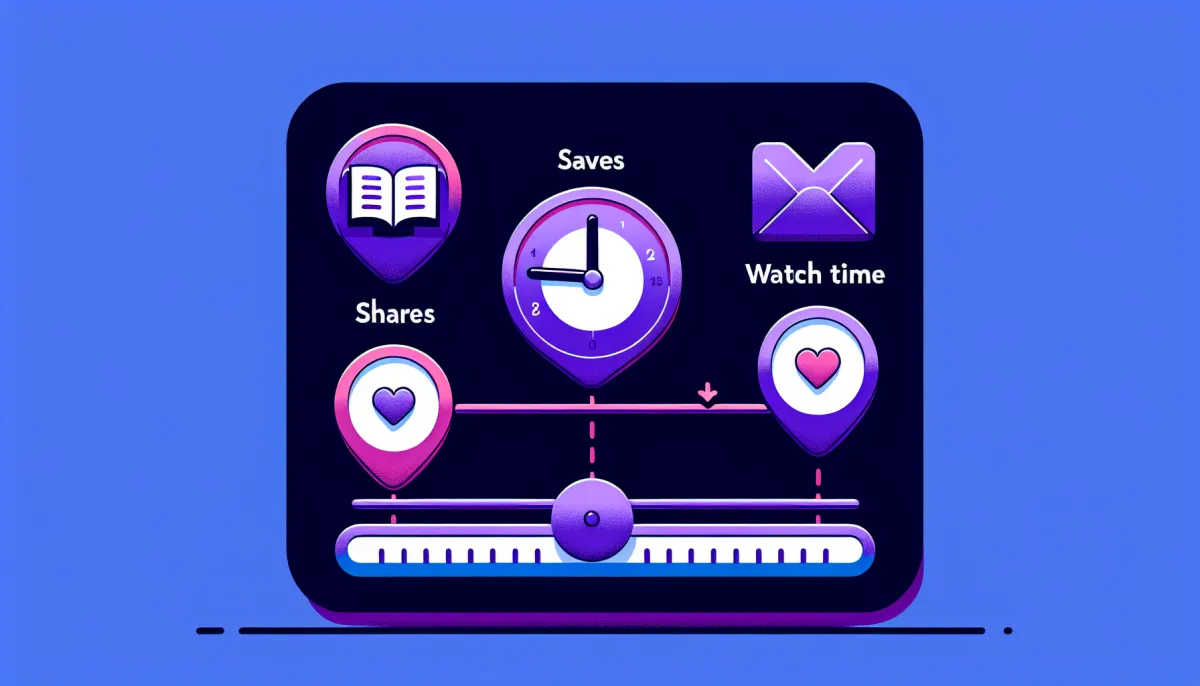
The Instagram algorithm of 2026 bears almost no resemblance to its 2023 predecessor. The most significant shift involves the weighting of engagement signals. According to Hootsuite's in-depth analysis, DM shares are now weighted 3 to 5 times more heavily than simple likes in the algorithm's distribution calculations. When someone sends your post to a friend via direct message, it sends an exponentially stronger signal to the algorithm than a double-tap ever could.
Saves occupy the second position in the signal hierarchy: they carry triple the weight of a like. When a user saves your post, they are telling Instagram that your content has lasting value — that it deserves to be revisited. This is an extraordinarily powerful quality signal that the algorithm rewards by increasing the reach of your future posts.
Comments remain important, particularly long-form comments and threaded conversations. The algorithm can now assess conversation depth: a 50-word comment followed by three replies carries far more weight than a standalone emoji. Finally, dwell time — the time someone spends looking at your post — is measured with precision, especially on carousels where each swiped slide adds accumulated attention time.
The takeaway is clear: in 2026, your entire strategy must be engineered to maximize DM shares and saves first, not likes. This is a fundamental shift that changes the type of content you need to produce.
The engagement metrics you must track (and the ones you should ignore)
Before launching your 30-day plan, you need absolute clarity on which metrics matter. Too many creators obsess over vanity indicators that do not reflect the actual health of their account.
Priority metrics to track
- Overall engagement rate: (likes + comments + saves + shares) / follower count x 100. Aim for a minimum of 3%. Calculate yours instantly with our free engagement rate calculator.
- Save rate: saves / reach x 100. A rate above 2% is an excellent signal.
- DM share rate: shares / reach x 100. This is the hardest metric to improve but also the most rewarded by the algorithm.
- Comment-to-like ratio: ideally, you want at least 1 comment for every 20 likes. A higher ratio indicates an engaged community that actively participates.
- Retention rate (Reels): average percentage of the video watched. Above 60%, the algorithm pushes your content aggressively.
Metrics to deprioritize
- Follower count: an account with 5,000 followers at 6% engagement outperforms an account with 50,000 followers at 0.5%.
- Raw reach: important but secondary. High reach with low engagement means your content is seen but nobody cares about it.
- Like count: the weakest algorithm signal in 2026. Never sacrifice content quality to chase likes.
Carousels vs Reels vs Photos: which format drives the most engagement in 2026
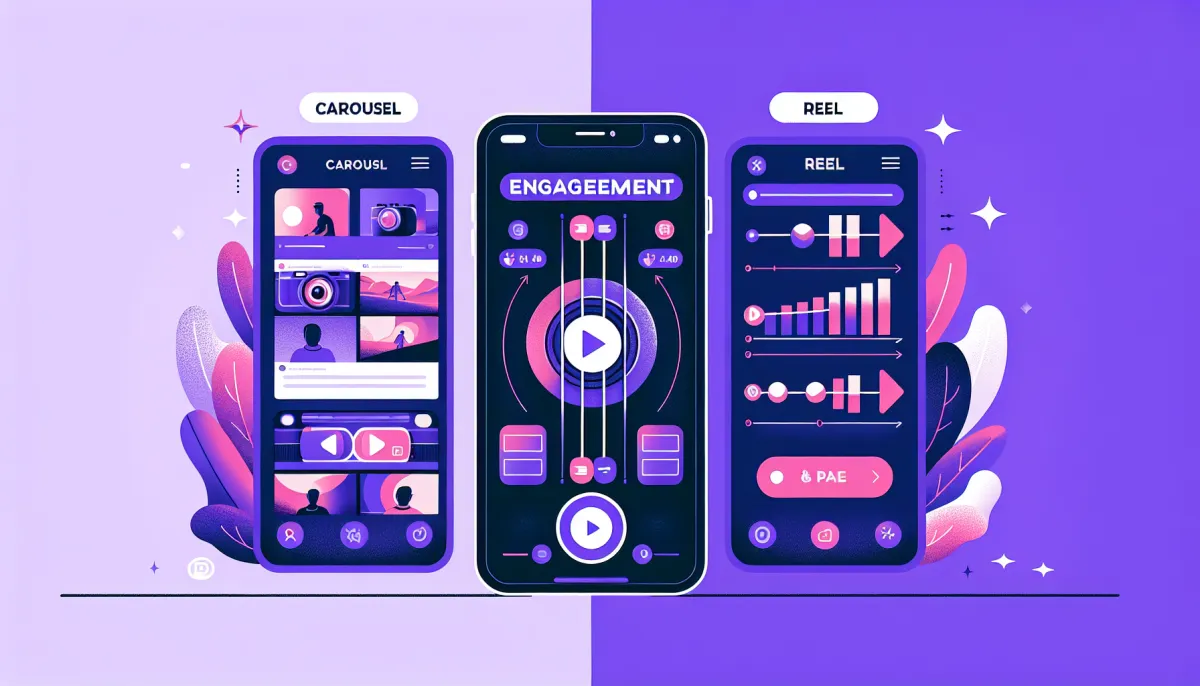
The format wars on Instagram rage on, and the 2026 data reveals results that surprise many creators. According to Socialinsider's benchmarks, carousels lead with an average engagement rate of 0.55%, followed by Reels at 0.50%. Single photos trail at roughly 0.45%.
This may seem counterintuitive if you assumed Reels were the answer to everything. The reason is simple: carousels stack multiple algorithmic advantages. First, they are re-served in the feed to users who did not swipe through all slides on their initial view, effectively doubling your chance of appearing. Second, the dwell time on a 10-slide carousel is naturally longer than on a single image, and dwell time is a major signal. Third, educational or informational carousels generate massive saves — users want to return to them.
This does not mean you should abandon Reels. Reels remain the best format for reaching new audiences outside your existing follower base. The Explore algorithm and the Reels tab heavily favor discoverability. The optimal 2026 strategy is a mix: 40% carousels (for engagement and saves), 40% Reels (for reach and new followers), and 20% single photos or text-based posts (for authenticity and personal connection).
Week 1 action plan (days 1–7): audit and foundations
The first week is not about posting more or posting differently. It is dedicated to auditing your current situation and building the foundations that will make the following three weeks effective.
Days 1–2: full account audit
Start by analyzing your last 20 posts. Identify your top 5 performers (by engagement rate, not by like count) and your bottom 5. Look for patterns: which format, which topic, which caption style, which posting time. Document everything. This dataset will guide your entire strategy.
Also review your Instagram Insights analytics: when is your audience most active? What is the demographic breakdown? These data points will determine your posting schedule and content tone.
Days 3–4: profile optimization
Your bio is the first impression. Make sure it clearly communicates: who you are, what you offer, and why someone should follow you. Add a clear call-to-action pointing to your link in bio. Update your profile photo (face visible, contrasting background) and organize your Story highlights by theme with cohesive covers.
According to Buffer, profiles with a clear bio and explicit CTA convert 2.3 times more visitors into followers than vague or overly creative bios.
Days 5–7: editorial calendar creation
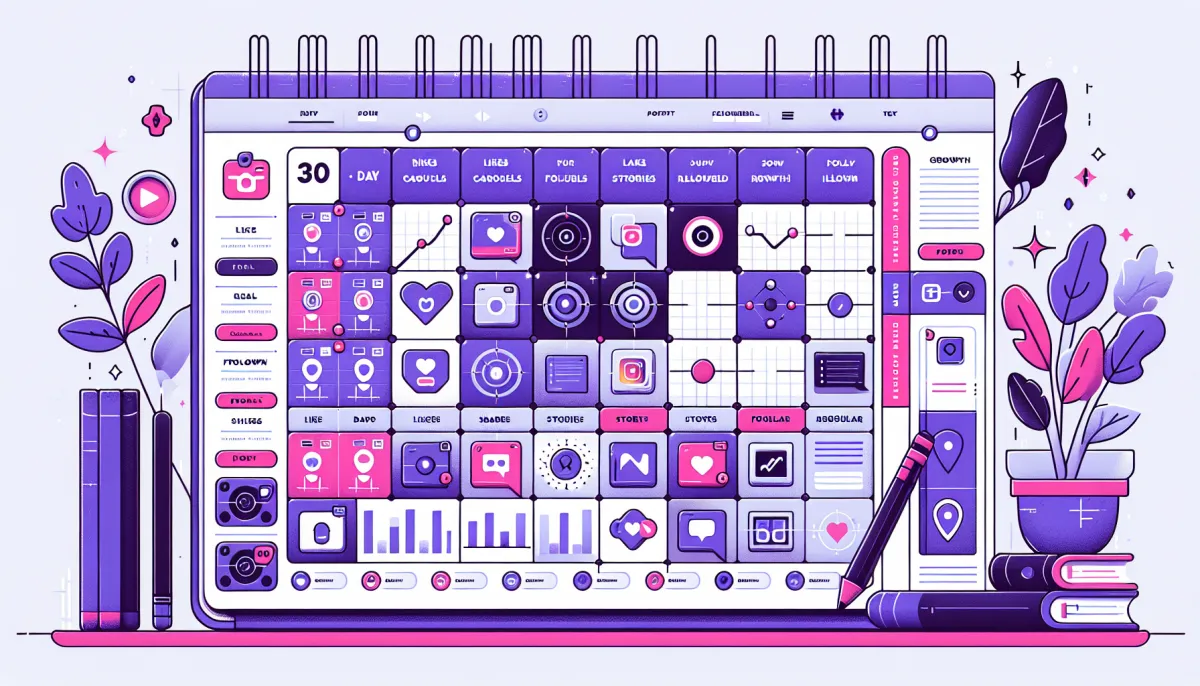
Plan your content for the next three weeks. The target: post 3 to 5 times per week in the feed (carousels plus Reels) and publish Stories daily. For each post, define in advance: the format, topic, caption hook, CTA, and hashtags. This preparation eliminates procrastination and guarantees consistency — the single most underrated engagement driver.
If you need to strengthen your follower base to maximize the impact of this calendar from day one, consider buying quality Instagram followers that will increase your social credibility immediately.
Week 2 action plan (days 8–14): creating content that triggers saves
Now that your foundations are solid, it is time to produce content specifically engineered to generate saves and shares — the two most powerful signals in the 2026 algorithm.
The 5 content types that generate the most saves
- Lists and checklists: "7 Instagram mistakes to avoid in 2026," "10 free apps for your Reels." The list format is the king of saves because people want to come back to it later.
- Step-by-step tutorials: carousels that teach a skill in 8–10 slides. Each slide equals one clear step with a visual.
- Data and statistics: infographics with key figures from your industry. People save data to reference in their own content.
- Templates and frameworks: share ready-to-use templates your audience can adapt. "My 4-part caption template," "My framework for planning a week of content."
- Contextualized inspirational quotes: not generic motivational cliches, but niche-specific quotes presented in premium design.
The art of the engagement-driving caption
Your caption must follow a precise structure to maximize engagement. Start with an irresistible hook in the first two lines — that is all people see before tapping "more." Deliver concrete value in the body. End with an explicit CTA: "Save this post for later" or "Send this to a friend who needs these tips." According to CreatorFlow, posts with an explicit save CTA receive on average 23% more saves than those without one.
Week 3 action plan (days 15–21): maximizing interactions and DM shares
Week three is dedicated to amplifying DM shares and building active community dynamics around your content.
Creating shareable content
Shareable content is content someone sends to a specific person thinking "you absolutely need to see this." The formats that generate the most DM shares include:
- Relatable content: niche memes, everyday situations in your industry, humor specific to your community.
- Contrarian or counterintuitive content: "Stop posting every day on Instagram" — this type of content provokes strong reactions and DM discussions.
- Emotional content: authentic testimonials, transformation stories, moments of vulnerability. People share what moves them.
- "Tag someone who..." posts: "Send this to your friend who dreams of launching a business" — the direct share CTA remains devastatingly effective.
Reply to comments within one hour
This is a non-negotiable rule: respond to every comment within the first hour after posting. According to Sprout Social's data, accounts that reply to comments within the first hour achieve engagement rates 2.4 times higher than accounts that respond after 24 hours. The algorithm interprets an active conversation beneath a post as a high-quality content signal, which boosts its distribution.
Do not settle for emoji replies or a generic "thanks." Ask a follow-up question, add value, extend the conversation. Each substantive reply increases the total comment count and encourages other users to join the thread.
Week 4 action plan (days 22–30): Stories, proactive engagement, and amplification
The final week combines Story mastery, proactive engagement on other accounts, and strategic amplification of your best-performing content.
Stories: the underestimated engagement engine
Instagram Stories remain the most underutilized engagement format in 2026. Posting Stories daily keeps your account at the top of your followers' Story feed, which increases their likelihood of seeing and interacting with your main feed posts. The algorithm treats Story viewers as interested in your content and prioritizes showing them your posts.
Use interactive stickers on every Story: polls, quizzes, emoji sliders, question boxes. Each interaction counts as an engagement signal. A simple two-option poll takes two seconds to create and can generate hundreds of interactions.
Proactive engagement: the 15-minute rule
Before and after every post, spend 15 minutes engaging with content in your niche. Leave substantive comments on posts by other creators and accounts in your industry — not generic comments like "great post!" but thoughtful 2–3 sentence reflections that add value. This strategy makes you visible to new audiences and frequently triggers profile visits and follows.
The impact of hashtags, timing, and posting frequency in 2026
Hashtags: the new approach
Forget the copy-pasted 30 hashtags of 2021. In 2026, Instagram officially recommends 3 to 5 ultra-targeted hashtags per post. Prioritize niche hashtags with a volume of 10,000 to 500,000 posts rather than generic hashtags with 100 million posts where your content will be buried within seconds. According to Buffer, posts with 3 to 5 targeted hashtags achieve 17% more reach than those with 20+ generic hashtags.
Optimal posting times
The best posting times vary by audience, but global data from Sprout Social indicates that the highest-performing time slots are: Tuesday and Thursday between 11 AM and 1 PM, Wednesday between 6 PM and 8 PM, and Saturday between 9 AM and 11 AM (adjusted for your audience's time zone). However, always check your own Instagram Insights analytics to fine-tune these times based on your actual audience behavior.
Ideal posting frequency
The data converges: 3 to 5 feed posts per week (carousels and Reels combined) plus daily Stories is the optimal frequency in 2026. Posting more often does not proportionally increase engagement and can actually dilute it if quality drops. Posting fewer than 3 times per week makes you virtually invisible to the algorithm.
Engagement differences by industry: where do you stand?
Not all industries are created equal when it comes to Instagram engagement. The 2026 benchmarks from Socialinsider reveal massive gaps:
- Higher Education: 2.43% — the most engaged sector, driven by highly active student communities.
- Sports: 1.49% — passionate fans react strongly to results and behind-the-scenes content.
- Food and Beverage: 0.97% — visual food content performs naturally well on a visual platform.
- Beauty: 0.53% — an ultra-competitive sector where standing out demands exceptional creativity.
- Fashion: 0.36% — paradoxically one of the most prominent industries on Instagram but with the lowest engagement rates.
Do not compare your engagement rate to a different industry's benchmark. A 1.5% rate in fashion is excellent, while 1.5% in higher education is below average. Set your goals based on your specific industry.
Boosting engagement with a social proof strategy
Social proof is a powerful psychological lever on Instagram. A post with strong likes and comments naturally attracts more engagement: users are psychologically more inclined to interact with content that others have already validated. This is the social cascade effect in action.
To kickstart this dynamic — especially when you are starting out or your audience is still modest — you can buy quality Instagram likes for your key posts. This initial impulse creates a popularity signal that encourages organic interactions. The algorithm, seeing strong early engagement, distributes your content to a wider audience, which generates even more organic engagement — a virtuous cycle.
A word of caution: social proof never replaces content quality. It amplifies it. Mediocre content with purchased likes will not generate saves or DM shares. But excellent content combined with an initial social proof boost can literally explode in terms of reach and engagement.
Fatal mistakes that kill your engagement (and how to fix them)
Even with the best strategies, certain common mistakes can destroy your engagement rate. Here are the most frequent offenders:
Mistake 1: posting without a hook
The first two lines of your caption and the first 3 seconds of your Reel determine whether people stop or scroll. A weak hook equals zero engagement, regardless of how good the rest of your content is. Invest as much time in your hook as you do in the rest of your content combined.
Mistake 2: ignoring DMs
Direct messages are an engagement goldmine. Every DM represents a direct relationship with a community member. Responding to all DMs, asking questions, and engaging in personal conversations transforms passive viewers into loyal fans who will consistently comment on and share your content.
Mistake 3: post and ghost
Publishing a piece of content and then leaving the app is the worst thing you can do. The algorithm evaluates engagement within the first 30 to 60 minutes after posting. If you are not present to respond to comments and drive conversation during this critical window, your content is penalized from the start.
Mistake 4: buying low-quality followers
Inactive followers or bots dilute your engagement rate mathematically: more followers in the denominator, same number of interactions in the numerator equals a rate that drops. If you invest in followers, choose exclusively high-quality followers that will actually contribute to your account activity.
Mistake 5: not analyzing your data
If you are not reviewing your analytics at least once a week, you are flying blind. Identify what works, double down on it, and abandon what is not generating results. Data never lies.
Your complete 30-day engagement plan summary
Here is a synthesis of your week-by-week action plan:
Week 1: Audit and foundations
- Analyze your last 20 posts and identify performance patterns
- Optimize your bio, profile photo, and Story highlights
- Create an editorial calendar for the following 3 weeks
- Establish your baseline metrics (current engagement rate)
Week 2: High-value content
- Publish 4–5 posts optimized for saves (lists, tutorials, templates)
- Include save CTAs in every caption
- Test the 40% carousels / 40% Reels / 20% photos mix
- Post daily Stories with interactive stickers
Week 3: Interactions and shares
- Create content specifically designed for DM sharing (memes, relatable content, contrarian takes)
- Reply to 100% of comments within one hour
- Engage for 15 minutes before and after every post on other accounts
- Run a poll or quiz in Stories every day
Week 4: Amplification and optimization
- Analyze weeks 2–3 results and double down on what worked
- Optimize your hashtags (3–5 targeted per post)
- Refine your posting times based on your analytics
- Use social proof strategically on your top-performing content
Key takeaways:
- DM shares are weighted 3–5x more than likes in the 2026 Instagram algorithm
- Saves carry triple the weight of a like — create saveable content
- Carousels lead with 0.55% average engagement versus 0.50% for Reels
- A good engagement rate is 3–6%, excellent is 6%+
- Post 3–5 times per week in the feed plus daily Stories
- Reply to comments within one hour for 2.4x higher engagement
- Industry differences are massive: 2.43% in higher education versus 0.36% in fashion
- Follow the 30-day plan week by week for measurable, lasting results
For real-world Instagram growth, see our dedicated Instagram services.