Instagram vs TikTok in 2026: two platforms, two philosophies, one bottom line
The rivalry between Instagram and TikTok has been simmering for years, but in 2026 it has matured into something entirely different. Both platforms have evolved far beyond social networking into full-stack business ecosystems — each with its own advertising infrastructure, integrated commerce tools, and distinct engagement dynamics. The platform you prioritize — or how you combine them — can materially alter your company's growth trajectory.
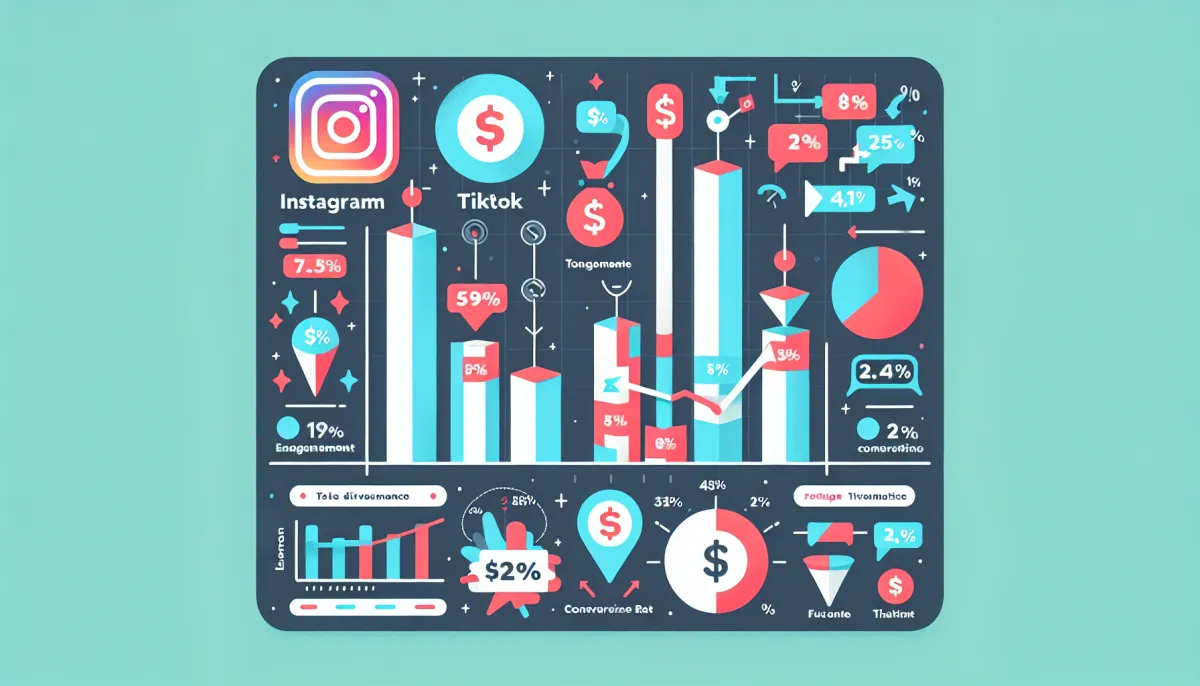
The numbers make the divergence unmistakable. According to Socialinsider benchmark data, TikTok's average engagement rate in 2026 stands at 3.70%, up 49% year-over-year. Instagram's corresponding figure is 0.48%. But collapsing the entire comparison into a single metric would be a serious mistake. Instagram remains the definitive platform for visual branding, mature shopping integrations, and cultivating a high-intent, high-purchasing-power audience. TikTok, meanwhile, excels at organic discovery, virality, and customer acquisition at a cost no other platform can match.
This comprehensive comparison dissects every critical dimension: engagement, advertising ROI, audience demographics, e-commerce capabilities, content formats, algorithm mechanics, and costs. The goal is not to crown a winner but to give you the data and frameworks you need to build a strategy tailored to your specific business objectives.
Engagement: TikTok dominates the scoreboard, but context matters
Engagement rate is typically the first metric marketers examine, and on this front, TikTok wins by a landslide. Data compiled by The Influencer Marketing Factory reveals a staggering gap: 3.70% for TikTok versus 0.48% for Instagram — nearly an 8-to-1 ratio.
But raw percentages deserve a more nuanced reading. On TikTok, engagement is primarily composed of views, likes, and shares on short-form content consumed passively. The For You algorithm surfaces every video to a broad pool of users who may not follow the creator, mechanically inflating interaction metrics. On Instagram, engagement skews toward followers who actively chose to subscribe, making it more qualified and more predictive of purchase intent.
For micro-accounts (under 10,000 followers), the gap narrows considerably. Instagram Reels generate engagement rates of 1.5–3% for these accounts, as the algorithm still favors emerging creators. On TikTok, small accounts can hit 5–12% engagement when their content resonates with the right niche, thanks to algorithmic distribution that is entirely audience-size agnostic.
Format-level engagement reveals additional nuances. Instagram carousels maintain an average engagement rate of 1.2%, more than double that of single-image posts (0.5%). Instagram Stories, with their interactive features — polls, quizzes, emoji sliders — generate a quality of engagement that TikTok's public-facing format simply cannot replicate. DMs and Story replies create one-to-one relationships that drive conversions in ways no public comment section ever will.
Advertising ROI: TikTok leads, Instagram holds its ground
When it comes to return on advertising spend, TikTok has seized the advantage in 2026. Data from LitCommerce indicates that TikTok delivers an average of $4.13 for every dollar spent on advertising, compared to $3.21 for Instagram. That 28% differential is driven by several factors.
TikTok's cost per thousand impressions (CPM) remains lower than Instagram's, despite a gradual increase as the platform matures. In 2026, average TikTok CPM sits between $6 and $10, versus $8 to $14 on Instagram. Cost per click follows the same pattern: $0.50–$1.20 on TikTok versus $0.70–$2.00 on Instagram, according to WebFX benchmarks.
However, Instagram offers advertising advantages TikTok cannot yet match. The advanced targeting inherited from the Meta platform is more precise, with sophisticated retargeting options, high-performing lookalike audiences, and native integration with the Meta pixel. For bottom-of-funnel conversion campaigns, Instagram often outperforms because its audience demonstrates more intentional purchasing behavior.
Creators and agencies corroborate this dynamic. According to a study cited by Outfame, 75% of advertisers say TikTok influencers deliver the highest ROI of any social platform. That figure is particularly striking given that Instagram benefits from a far more mature advertising ecosystem and more developed measurement tools.
For businesses targeting the US and UK markets, there is an additional factor: audience fatigue. Instagram users have been exposed to influencer marketing for nearly a decade, which can dampen response rates. TikTok's audience remains comparatively receptive to sponsored content, provided it feels native and authentic. If you are looking to amplify your Instagram presence quickly, buying Instagram followers can help establish the social proof that accelerates organic growth from the outset.
Demographics and audiences: who is where in 2026?
Audience composition remains one of the most decisive criteria for platform selection. In the United States, TikTok counts 170 million monthly active users compared to 158 million for Instagram, according to Taggbox. Globally, Instagram maintains a larger total user base (2.4 billion versus TikTok's 1.8 billion), but TikTok's growth rate is substantially faster.
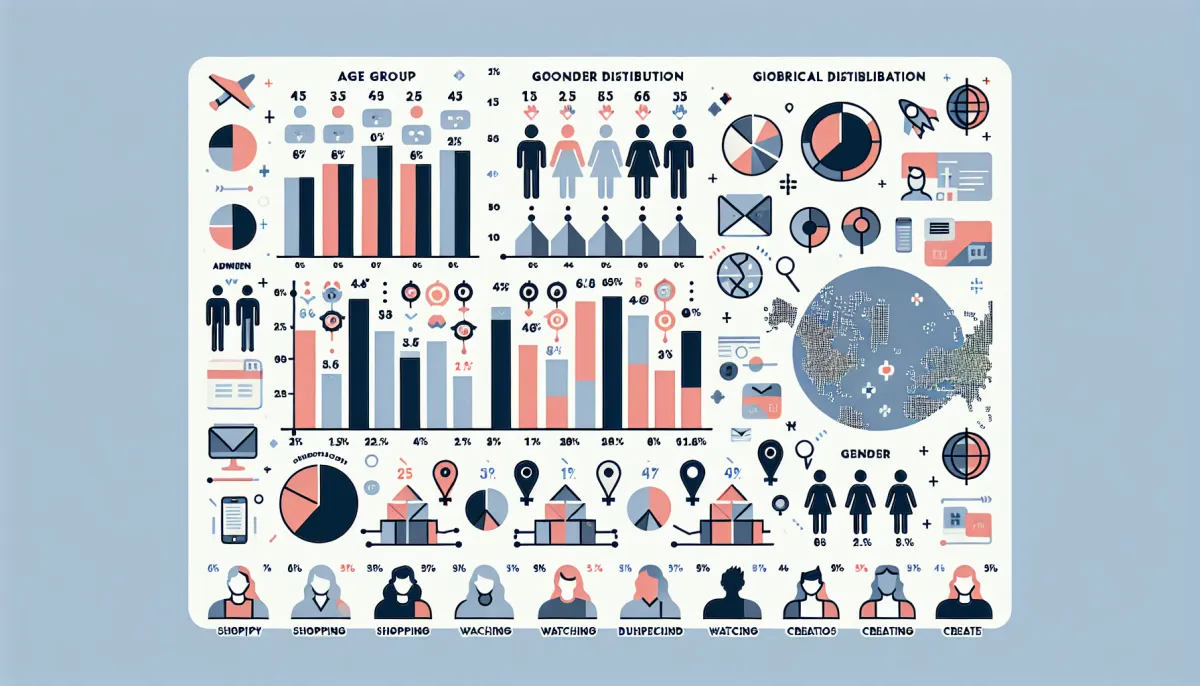
The age breakdown is particularly revealing. TikTok overwhelmingly dominates Gen Z (16–24), with 67% of its users falling in this age bracket. This generation spends an average of 95 minutes per day on TikTok versus 53 minutes on Instagram. For any brand targeting consumers under 25, TikTok is no longer optional — it is mandatory.
Instagram, by contrast, maintains a commanding lead among Millennials (25–40) and Gen X (40–55). These cohorts represent 38% and 21% of Instagram's audience respectively, compared to just 22% and 8% on TikTok. Critically for B2B and luxury brands, Instagram's audience has significantly higher purchasing power, with the median household income of Instagram users estimated at 30% above TikTok's.
Gender distribution also shows notable differences. TikTok skews slightly female (57% versus 43%), while Instagram is more balanced (52% female, 48% male). These data points are particularly relevant for fashion, beauty, and lifestyle brands targeting specific segments.
Geographically, Instagram has a more uniform global presence with strong penetration in Europe, Latin America, and South Asia. TikTok dominates in Southeast Asia, is growing rapidly in North America and Europe, but faces ongoing regulatory uncertainty in certain markets — a risk factor that businesses must weigh when allocating long-term resources.
E-commerce features: the social commerce battlefield
Social commerce has become the primary battleground between Instagram and TikTok in 2026, and both platforms are investing aggressively to win this segment. The data is unambiguous on one point: TikTok's shoppable videos convert at 2–8%, versus 1.5–3.5% for Instagram Shopping, according to benchmarks compiled by LitCommerce.
Instagram Shopping benefits from a maturity advantage. Launched well before TikTok Shop, the feature is deeply woven into the user experience: product tags in posts and Reels, a dedicated shop tab, curated collections, and native checkout in many markets. For brands selling visual products — fashion, home decor, beauty — Instagram remains the ideal storefront. The purchase journey is smoother for premium products because the platform's aesthetic DNA inspires confidence in higher-ticket purchases.
TikTok Shop, on the other hand, has revolutionized impulse purchasing. Product discovery happens within the entertainment feed, eliminating the traditional friction of the buying journey. Live shopping on TikTok generates conversion rates 3–5x higher than static posts, a format that works exceptionally well for products priced between $15 and $50. TikTok's affiliate program, which pays creators 5–20% commission, has created an organic recommendation ecosystem without parallel.
For brands weighing the two platforms for their e-commerce strategy, the general rule in 2026 is straightforward: use Instagram for product branding and retention, use TikTok for discovery and acquisition. The brands performing best combine both, using TikTok to attract new customers and Instagram to convert them into repeat buyers.
Algorithm and organic reach: two radically different engines
Each platform's algorithm reflects its core philosophy, and understanding these differences is essential for any business content strategy.
TikTok's algorithm is centered on content, not the creator. Every video is tested against a sample of users, then distributed more widely if engagement signals — completion rate, shares, comments — are positive. This means an account with zero followers can generate millions of views if the content resonates. This algorithmic meritocracy is simultaneously TikTok's greatest strength and greatest weakness for businesses: it offers unmatched viral potential but makes predicting results nearly impossible.
Instagram's algorithm, by contrast, weights the relationship between creator and audience far more heavily. Existing followers see content first, and the historical engagement between an account and its followers strongly influences distribution. For businesses, this means an Instagram audience built patiently has durable value: your followers will see your content consistently, unlike TikTok where visibility resets with every individual post.
Organic reach numbers reflect these algorithmic philosophies. On TikTok, an average post reaches 15–25% of users beyond the account's followers, thanks to the For You page. On Instagram, average organic reach has declined to 5–8% of followers for standard posts, though Reels benefit from broader distribution (10–15% of followers plus Explore exposure). If you want to boost your TikTok presence, buying TikTok followers can help trigger the social proof signals that accelerate algorithmic distribution.
The strategic implication for businesses is clear: TikTok is the most powerful organic acquisition channel of 2026, while Instagram is the most effective retention and loyalty channel. Ignoring either one means operating with only half a marketing funnel.
Content formats: what works on each platform
Content formats have converged in recent years — Instagram copied Reels from TikTok, TikTok launched photo carousels — but each platform retains signature formats where it excels.
On TikTok, the reigning format remains short-form video (15–60 seconds), optimized for vertical full-screen viewing. Top-performing videos follow a precise structure: a hook within the first 3 seconds, educational or entertaining content in the middle, and a call to action at the end. The "rapid storytelling" format — where the creator narrates an experience in 30 seconds with dynamic cuts — generates the highest completion rates. Longer videos (1–3 minutes) are gaining traction for educational and tutorial content, but sub-60-second videos remain the algorithmic sweet spot.
On Instagram, format diversity is a major competitive advantage. Reels (15–90 seconds) are the primary growth format, but carousels remain the most engaging format in terms of interaction rate. Stories offer an ideal daily communication channel for customer relations, product launches, and behind-the-scenes content. Classic photo posts, while less favored by the algorithm, retain their relevance for luxury branding and evergreen content.
An often-overlooked but highly effective Instagram format is the Guide — themed collections of posts that serve as curated resources. For brands, this is a content organization tool with no TikTok equivalent. Similarly, Collabs (co-published posts) offer a native cross-promotion mechanic that TikTok does not replicate in the same way.
The bottom line: TikTok rewards raw creativity and authenticity, while Instagram rewards aesthetic consistency and format diversity. A brand must tailor its content strategy to each platform rather than recycling identical content across both.
Complete comparison table: Instagram vs TikTok for business in 2026
| Criterion | TikTok | Advantage | |
|---|---|---|---|
| Average engagement rate | 0.48% | 3.70% | TikTok |
| Advertising ROI | $3.21 per $1 spent | $4.13 per $1 spent | TikTok |
| Shopping conversion rate | 1.5–3.5% | 2–8% | TikTok |
| US monthly active users | 158 million | 170 million | TikTok |
| Core audience | Millennials + Gen X | Gen Z | Depends on target |
| Audience purchasing power | High (income +30%) | Moderate | |
| Organic reach | 5–8% (posts), 10–15% (Reels) | 15–25% beyond followers | TikTok |
| Visual branding | Excellent (grid, aesthetic) | Limited (dynamic feed) | |
| Viral potential | Moderate | Very high | TikTok |
| Ad targeting | Highly advanced (Meta) | Improving | |
| Format diversity | Reels, Stories, Carousels, Guides, Collabs | Short video, Live, Carousels (new) | |
| E-commerce maturity | High (established Shopping) | Rapidly growing (TikTok Shop) | |
| Average CPM | $8–$14 | $6–$10 | TikTok |
| Average CPC | $0.70–$2.00 | $0.50–$1.20 | TikTok |
| Audience retention | Strong (follower relationship) | Weak (content-first) | |
| B2B / LinkedIn crossover | Good | Limited | |
| Influencer ROI (75% of advertisers) | — | Highest reported ROI | TikTok |
Strategy by business type: where to invest based on your profile
Not every business faces the same calculus when choosing between Instagram and TikTok. Here are concrete recommendations based on your business profile.
Fashion and beauty e-commerce: both platforms are essential. Use TikTok for product discovery videos (try-ons, unboxings, tutorials) and Instagram for visual branding, lookbooks, and retention via Stories. Fast fashion brands generate an average of 40% of their social sales through TikTok Shop in 2026, while Instagram remains the primary channel for the premium segment.
Food and restaurant: TikTok dominates this vertical thanks to the inherently visual, shareable nature of food content. Recipe videos, food hacks, and restaurant visits routinely generate millions of views. Instagram retains its value for local branding — geotagged Stories, polished menu photography, and customer UGC.
B2B and professional services: Instagram remains the priority platform, particularly because of its integration with LinkedIn and its credibility among decision-makers. B2B TikTok is emerging but remains niche. Allocate 70% of your efforts to Instagram and 30% to TikTok for awareness building.
SaaS and tech: both platforms have a role. Short-form product demos perform remarkably well on TikTok, while Instagram is ideal for customer testimonials, educational carousels, and thought leadership content.
Local business: Instagram dominates for local businesses thanks to geolocation features, local Stories, and location-based search. TikTok can supplement with occasional viral videos, but ROI is less predictable for businesses with a limited service area.
The winning strategy in 2026: combine both platforms
The question is no longer "Instagram or TikTok?" but "how do I combine them effectively?" The data in 2026 confirms that brands using both platforms in a coordinated fashion consistently outperform those concentrating on just one.
The most effective model is the cross-platform funnel: use TikTok as your top-of-funnel acquisition engine (awareness and discovery) and Instagram as your mid- and bottom-of-funnel conversion and retention engine. In practice, a viral TikTok video captures attention, the TikTok profile directs users to Instagram, and Instagram converts the visitor into a repeat customer through Stories, Shopping, and DMs.
To optimize this approach, follow this five-step framework:
- Produce TikTok-first content: create your short-form videos for TikTok first, then adapt them as Instagram Reels. The reverse works less well because Instagram's "polished" content typically underperforms on TikTok.
- Differentiate exclusive content: offer unique content on each platform to give audiences a reason to follow both accounts. Exclusive Stories on Instagram, challenges on TikTok.
- Synchronize launches: announce simultaneously on both platforms but adapt the format. Mystery teaser as a Reel, full reveal on TikTok, deep-dive details in an Instagram carousel.
- Cross-pollinate data: insights from each platform should inform the other's strategy. If a topic explodes on TikTok, develop it into in-depth Instagram content.
- Measure per-platform and holistically: track each platform's KPIs separately, but also analyze the cross-platform customer journey to understand each channel's true contribution.
To measure your performance accurately, use our free engagement calculator that analyzes your metrics across both platforms and identifies areas for improvement.
Budget and resource allocation: how to split your investment
The budget split between Instagram and TikTok depends on your objectives, but here are concrete benchmarks for 2026.
For a launch-stage brand targeting the 18–35 demographic: allocate 60% of your social budget to TikTok and 40% to Instagram. The priority is audience acquisition, and TikTok offers the best cost-to-visibility ratio. On Instagram, focus on building a credible profile and an aesthetic feed that will convert visitors arriving from TikTok.
For an established brand with an existing customer base: the inverse is often more effective. Allocate 55% to Instagram (retargeting, Shopping, Stories for retention) and 45% to TikTok (acquiring new segments, refreshing brand perception among younger demographics).
In terms of content production, plan for a minimum of 4–5 TikTok videos per week and 3–4 Instagram publications (a mix of Reels, carousels, and daily Stories). Consistency matters more than perfection on both platforms, but TikTok is more forgiving of raw, unpolished content while Instagram demands a baseline level of visual coherence.
Production cost is an often-underestimated factor. Effective TikTok content can be produced with a smartphone and decent lighting — a minimal equipment investment of $50–$200. A cohesive Instagram feed typically requires design tools (Canva Pro at $13/month minimum), and premium brands may need a photographer or art director to maintain visual standards.
Common mistakes to avoid on each platform
The most expensive mistakes in 2026 are often the same ones brands were making in 2024, which proves how slowly best practices are absorbed.
Common TikTok mistakes:
- Posting overly polished, ad-like content: TikTok users detect and reject content that looks like a traditional advertisement instantly. The golden rule is entertain first, sell second.
- Ignoring trends: TikTok is a trend-driven platform. Failing to participate means publishing into the void. Dedicate 30% of your content to trends adapted to your niche.
- Posting inconsistently: TikTok's algorithm rewards consistency. An account that posts 5 videos in one day and then goes dark for two weeks will be systematically penalized in distribution.
- Neglecting comments: responding to comments within the first 30 minutes significantly boosts distribution. Use comments as a content source by creating video replies.
Common Instagram mistakes:
- Publishing only Reels: while Reels are algorithmically favored, carousels and Stories remain essential for conversion and retention. A format mix is non-negotiable.
- Buying low-quality followers: bots and inactive accounts destroy your engagement rate and credibility. If you invest in audience growth, choose a reputable provider that delivers real, active accounts.
- Ignoring Analytics: Instagram offers detailed demographic and behavioral data. Not reviewing it weekly is flying blind.
- Neglecting DMs and Story replies: private interactions are the most powerful engagement signal for Instagram's algorithm in 2026. Automate initial responses but personalize important conversations.
Trends to watch in the second half of 2026
The social media landscape evolves at breakneck speed, and several emerging trends could shift the Instagram-TikTok balance in the months ahead.
The rise of AI-generated content: both platforms are integrating AI-powered creation tools. Instagram has launched its "AI Studio" enabling automatic Reels variations, while TikTok offers increasingly sophisticated AI filters and editing assistants. Brands that master these tools will gain a significant productivity advantage.
Cross-platform live shopping: TikTok dominates live commerce, but Instagram is closing the gap with new live shopping features. The trend is toward "simulcasting" — broadcasting the same live session on both platforms simultaneously to maximize reach.
Creator monetization arms race: both platforms are competing fiercely to attract and retain top creators. Compensation programs are evolving rapidly, and the platform that offers the best financial conditions will attract the most compelling content — and therefore the most engaged audiences.
Augmented reality commerce: virtual try-ons and AR product previews are going mainstream. Instagram has a head start thanks to Spark AR, but TikTok is investing heavily through Effect House. For e-commerce, these technologies could reduce return rates by 25–40%.
Regulation: regulatory questions surrounding TikTok persist in multiple markets. Businesses must maintain a diversification strategy to avoid depending on a single platform that could be affected by legislative restrictions. This uncertainty makes the dual-platform approach not just strategically sound but prudent from a risk management perspective.
Conclusion: the right question is not "which one" but "how to combine them"
At the end of this exhaustive comparison, one conclusion stands out with unmistakable clarity: in 2026, framing Instagram versus TikTok as an either-or decision is a false dichotomy. The two platforms occupy complementary positions in the marketing funnel, and the optimal strategy is to use them in tandem.
TikTok is the undisputed champion of organic acquisition, with 8x higher engagement, 28% better advertising ROI, and viral potential no other platform can match. Instagram remains the pillar of visual branding, customer retention, and mature social commerce, with a higher-purchasing-power audience and more sophisticated ad targeting tools.
For businesses in 2026, the recommendation is unambiguous: invest in both platforms, tailor your content to each, and measure results holistically rather than platform by platform. Those who master this dual-platform approach will build a competitive advantage that single-channel businesses simply cannot close.
Start by identifying your target audience, choose your primary platform based on age bracket and industry, then gradually extend your presence to the second. Use performance data to continuously refine your resource allocation, and never forget that authenticity remains the number one success factor on both platforms.
Key takeaways:
- TikTok engagement: 3.70% vs Instagram 0.48% — nearly an 8-to-1 ratio
- Advertising ROI: TikTok $4.13 vs Instagram $3.21 per dollar spent
- Shopping conversion: TikTok 2–8% vs Instagram 1.5–3.5%
- TikTok dominates Gen Z; Instagram dominates Millennials and Gen X
- 75% of advertisers rank TikTok first for influencer ROI
- Instagram excels in visual branding, advanced ad targeting, and audience retention
- The winning strategy combines both: TikTok for acquisition, Instagram for conversion
- Adjust your budget split based on your maturity stage and target demographic
To amplify your Instagram strategy, explore our Instagram services designed for serious creators.