
Why micro-influencers are rewriting the TikTok marketing playbook in 2026
Influencer marketing is undergoing a seismic shift. In 2026, brands are no longer defaulting to creators with millions of followers. A fundamental reversal has taken place: micro-influencers — creators with 10,000 to 100,000 followers — have become the primary engine of organic growth on TikTok. And the numbers leave no room for debate.
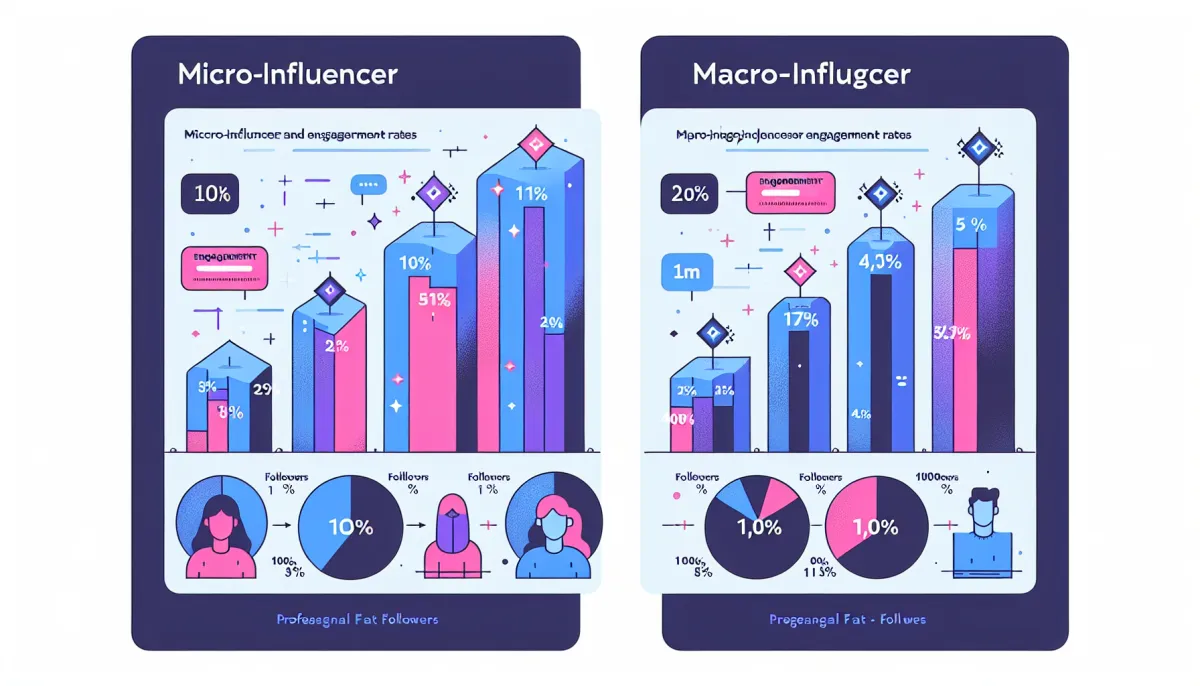
According to the latest data from Influencer Marketing Hub, micro-influencers on TikTok generate an average engagement rate of 18%, compared to just 3–5% for macro-influencers. This massive gap is driven by more authentic, closer, more conversational relationships with their communities. TikTok's algorithm, which prioritizes engaging content over follower count, amplifies this phenomenon even further.
Meanwhile, Sociallyin reports that 73% of brands now prefer collaborating with micro-influencers or mid-tier creators rather than digital celebrities. The reason? Significantly higher return on investment, better alignment with niche audiences, and radically more accessible collaboration costs.
In this in-depth guide, we will break down the mechanisms that allow micro-influencers to explode on TikTok in 2026. We will analyze real case studies, verified market data, and provide a complete strategy framework — whether you are a brand, an entrepreneur, or a creator seeking rapid growth.
Micro-influencer vs macro-influencer: understanding the performance gap
Before diving into strategies, it is essential to understand why the performance gap between micro and macro-influencers has become so dramatic on TikTok. Several structural factors explain this phenomenon.
TikTok's algorithm rewards engagement, not size: unlike Instagram or YouTube where follower count heavily influences content distribution, TikTok's algorithm evaluates each video independently. A creator with 15,000 followers can achieve 2 million views if their content generates enough interactions in the first few hours. This creates a level playing field where content quality trumps audience size.
Trust and authenticity: micro-influencers maintain real conversations with their followers. They respond to comments, create interactive content through duets and stitches, and their recommendations are perceived as advice from a friend rather than advertising. According to The Social Shepherd, this relational proximity translates into an e-commerce conversion rate that is 20% higher than campaigns with macro-influencers.
Cost per result: a TikTok micro-influencer charges an average of $100 to $1,000 per post, while a macro-influencer commands $5,000 or more. With a $5,000 budget, a brand can therefore collaborate with 5 to 50 micro-creators simultaneously, multiplying touchpoints across different targeted audiences.
Thematic specialization: micro-influencers are typically experts in a specific niche — fitness, vegan cooking, tech, sustainable fashion, parenting, gaming. Their audience consists of people genuinely interested in that topic, which drives qualified traffic and significantly higher conversions.
In summary, the micro-influencer offers a winning trifecta: higher engagement, lower cost, qualified audience. And on TikTok, where the algorithm rewards precisely these factors, the competitive advantage is multiplied tenfold.
Key micro-influencer marketing metrics on TikTok in 2026
To grasp the scale of this phenomenon, let us examine the most recent and reliable industry data.
Engagement rates:
- TikTok micro-influencers (10K–100K): 18% average engagement rate
- TikTok macro-influencers (100K–1M): 3–5%
- TikTok mega-influencers (1M+): 1.5–3%
Return on investment:
- Average influencer marketing ROI: $5.78 for every dollar spent (Influencer Marketing Hub)
- Top-performing micro-influencer campaigns: $18–$20 per dollar spent
- Micro-influencers boost e-commerce conversions by 20%
Budget and brand preferences:
- 73% of brands prefer micro/mid-tier creators
- 40% of influencer marketing budget is allocated to micro-influencers
- Average micro-influencer cost: $100–$1,000/post vs macro: $5,000+/post
Documented organic growth:
- iQfluence case study: a brand grew from 2,500 to 47,800 followers in one quarter through micro-influencer partnerships — a growth of +1,812%
- Recommendation: collaborating with 5 to 10 micro-creators per quarter generates 3–5x higher engagement than a single macro collaboration
These figures demonstrate that micro-influencer marketing is no longer an experimental niche — it has become the dominant strategy for brands seeking real performance on TikTok.
Case study #1: from 2,500 to 47,800 followers in one quarter
One of the most thoroughly documented case studies of 2026 comes from iQfluence. A European natural cosmetics brand decided to completely rethink its TikTok strategy by abandoning a single collaboration with an influencer at 500,000 followers in favor of a network of 8 micro-influencers specializing in natural skincare, each with between 12,000 and 45,000 followers.
The strategy breakdown:
- Phase 1 — Targeted selection (Week 1–2): identification of 8 micro-influencers whose audience precisely matched the target persona: women aged 22–35, interested in natural beauty and wellness. Primary criterion: engagement rate above 12% and content authenticity.
- Phase 2 — Co-creation (Week 3–4): each creator received products with complete creative freedom. No imposed script. The only guidelines: integrate the product into their existing routine and be honest about their experience.
- Phase 3 — Cross-amplification (Week 5–8): the creators dueted each other's content, creating an interconnected content network. The brand then sponsored the best-performing videos through TikTok Promote.
- Phase 4 — Conversion (Week 9–12): launch of an exclusive promo code per creator, enabling precise ROI tracking per influencer.
The results:
- Brand account: from 2,500 to 47,800 followers (+1,812%)
- Average engagement on sponsored videos: 14.7%
- Conversion rate via promo codes: 4.3% (vs 1.1% with the previous macro collaboration)
- Total campaign cost: $6,800 (vs $9,200 for the single previous macro collaboration)
- Calculated ROI: $11.40 per dollar invested
This case perfectly illustrates the fundamental principle of micro-influencer marketing: multiplying authentic touchpoints systematically outperforms the raw visibility of a single large account.
Case study #2: a fitness creator goes from 8,000 to 120,000 followers
The second case we analyze involves a fitness content creator who, at the beginning of 2026, had 8,000 followers on TikTok. By methodically applying micro-influencing principles, he reached 120,000 followers in five months — while monetizing his audience from month two onward.
His strategy in detail:
1. Ultra-niche specialization: rather than covering fitness broadly, he focused exclusively on "10-minute equipment-free workouts for office workers." This specialization created an extremely loyal and engaged audience of busy professionals looking for quick solutions.
2. Signature format: every video followed a recognizable template — a 3-second intro with the "problem of the day" (back pain, post-lunch energy crash, pre-meeting stress), then a demonstration, then the immediate result. This format created anticipation among followers who came back daily for the new "problem."
3. Intense community engagement: he responded to 100% of comments within the first hour of posting, asked questions in captions to stimulate replies, and regularly created response videos to follower comments — a format that TikTok's algorithm particularly rewards.
4. Collaboration with fellow micro-creators: he initiated "fitness challenges" with 4 other creators in complementary niches (nutrition, yoga, meditation, office ergonomics). These cross-collaborations exposed each creator to the others' audiences, creating a multiplicative network effect.
5. Progressive monetization:
- Month 2 (15,000 followers): first partnerships with supplement brands — $200 per video
- Month 3 (35,000 followers): launch of a paid PDF program ($9.90) — 340 sales in the first month
- Month 4 (70,000 followers): recurring partnerships with 3 brands — monthly revenue of $3,100
- Month 5 (120,000 followers): launch of a mobile app with monthly subscription
The key to this success? Consistency. This creator posted every single day for 150 days without exception. TikTok's algorithm rewards regularity, and his engagement rate never dropped below 15% — a level that guarantees massive organic distribution.
For creators looking to accelerate this initial growth phase, investing in high-quality TikTok followers can provide the credibility foundation needed to attract those first brand collaborations.
The 7 pillars of a successful TikTok micro-influencer strategy
Beyond case studies, what are the universal principles that distinguish the highest-performing micro-influencer strategies on TikTok in 2026? Here are the seven fundamental pillars.
Pillar 1 — Select by engagement, not by size: the number one criterion for choosing a micro-influencer should never be follower count. Analyze the real engagement rate (comments + shares, not just likes), the quality of comments (genuine conversations or generic emojis?), and thematic consistency of content. A creator with 12,000 followers and 20% engagement is worth more than a creator with 90,000 followers and 4% engagement.
Pillar 2 — Complete creative freedom: the highest-performing micro-influencer campaigns are those where the brand provides the product and key messages but lets the creator decide the format, tone, and angle. Micro-influencer audiences are trained to detect scripted content — and they disengage immediately. Authenticity is not a bonus; it is a requirement.
Pillar 3 — Strategic volume: the expert recommendation is to collaborate with 5 to 10 micro-creators per quarter. This approach generates 3–5x higher engagement than a single macro collaboration, and it diversifies risk — if one creator underperforms, the others compensate.
Pillar 4 — Targeted paid amplification: once organic videos are published, identify the 2–3 best-performing videos and invest in TikTok Promote or Spark Ads to amplify them. This "organic first, paid second" approach is significantly more effective than creating ad content from scratch.
Pillar 5 — Granular tracking: every micro-influencer should have a unique promo code, a tracked link, and a specific UTM. Without these elements, it is impossible to measure ROI per creator and optimize future campaigns. The best brands calculate cost per acquisition (CPA) for each creator and only renew those who perform.
Pillar 6 — Long-term relationships: one-off partnerships generate one-off results. Brands that build 6 to 12-month relationships with their micro-influencers see their ROI increase by 35–50% over time, because the audience becomes familiar with the product and each mention gains credibility.
Pillar 7 — Leverage TikTok-native formats: duets, stitches, comment reply videos, lives, TikTok Stories — the most effective micro-influencers use every available format, not just standard videos. Duets with brand content, for example, generate 40% higher engagement than standalone videos according to Shopify data.

How to find and recruit the right TikTok micro-influencers
Finding the right micro-influencers is an art that requires method and patience. Here is a structured five-step process.
Step 1 — Niche hashtag research: skip generic hashtags (#fitness, #beauty) and focus on niche-specific hashtags relevant to your industry. Explore the most recent videos (not the most popular) to identify emerging creators with strong potential. Use free TikTok analytics tools to quickly evaluate their profiles.
Step 2 — Engagement audit: for each potential creator, analyze their last 20 videos. Calculate the average engagement rate (likes + comments + shares / number of views). Check comment quality: real conversations indicate an authentic community, while isolated "fire" emojis suggest superficial engagement.
Step 3 — Audience verification: ensure the creator's audience matches your target demographic. Audience analysis tools allow you to verify geographic distribution, age, and interests of followers. A U.S.-based creator with 80% of followers in Brazil will not help if your market is North American.
Step 4 — Personalized outreach: micro-influencers receive dozens of collaboration proposals every week. To stand out, send a personalized message that specifically references their recent content and explains why your brand aligns with their universe. Avoid generic templates — they go straight to the trash.
Step 5 — Collaborative brief: once the partnership is confirmed, develop a brief that defines objectives, key messages, and deliverables, but leaves maximum creative freedom on execution. Include examples of content you like (without requiring them to copy it) and clearly define success metrics.
Maximizing ROI: calculation and benchmarks for your campaigns
ROI is the ultimate judge of any marketing strategy. Here is how to calculate and optimize the return on investment of your micro-influencer campaigns.
The basic formula:
ROI = (Revenue Generated - Campaign Cost) / Campaign Cost x 100
The average influencer marketing ROI is $5.78 per dollar spent according to data compiled by Influencer Marketing Hub. But note: this figure is an average that includes all influencer sizes and all platforms. Campaigns specifically using micro-influencers on TikTok typically show higher ROI, with the best reaching $18 to $20 per dollar spent.
Key metrics to track:
- CPE (Cost Per Engagement): divide total cost by the number of engagements (likes + comments + shares). A CPE below $0.10 is excellent for micro-influencers.
- CPA (Cost Per Acquisition): for conversion-oriented campaigns, divide total cost by the number of attributed sales. A CPA lower than your primary advertising channel indicates the micro-influencer strategy is profitable.
- EMV (Earned Media Value): estimate the equivalent advertising value of the generated content. A micro-influencer with 50,000 views on a sponsored video generates an EMV well above the collaboration cost.
- Conversion rate per creator: through unique promo codes, measure which creator drives the most sales. Reinvest in the top performers.
Benchmarks by industry:
- Beauty/cosmetics: average ROI of $8.20 per dollar (the highest-performing sector in TikTok micro-influence)
- Fitness/wellness: average ROI of $6.50 per dollar
- Food/beverage: average ROI of $5.90 per dollar
- Fashion/lifestyle: average ROI of $4.80 per dollar
- Tech/gadgets: average ROI of $4.10 per dollar
These benchmarks allow you to compare your performance against industry averages and adjust your investments accordingly.
Fatal mistakes that sabotage micro-influencer campaigns
Even with the best creators, certain recurring mistakes can destroy the potential of a micro-influencer campaign. Here are the traps to avoid at all costs.
Mistake #1 — Choosing by follower count: this is the most frequent and most costly error. A micro-influencer with 80,000 purchased followers and 2% engagement is a wasted investment. Always verify engagement quality before audience volume. Audit tools can detect fake followers and artificial engagement.
Mistake #2 — Imposing a word-for-word script: nothing kills authenticity faster than a creator reciting promotional copy. TikTok audiences are extremely sensitive to "forced" content. Campaigns with imposed scripts show 60% lower engagement than campaigns with creative freedom, according to Sociallyin data.
Mistake #3 — One creator, one post: the visibility of a single TikTok video is ephemeral. Without multiplying touchpoints through multiple creators and multiple posts, the impact dissipates within days. The volume strategy — 5 to 10 creators, 2 to 3 videos each — is systematically more effective.
Mistake #4 — Ignoring post-campaign metrics: too many brands launch micro-influencer campaigns without tracking mechanisms. Without unique promo codes, without UTMs, without post-campaign analysis, it is impossible to know what works and what does not. Every campaign should feed a performance database to optimize the next ones.
Mistake #5 — Neglecting the post-campaign relationship: a high-performing micro-influencer is a strategic asset. Failing to maintain the relationship after a successful campaign is a business mistake. The most successful brands create ambassador programs with their best micro-creators, ensuring regular collaborations and growing credibility.
Mistake #6 — Targeting creators outside your niche: a gaming micro-influencer will not effectively sell beauty products, even with an excellent engagement rate. Thematic relevance between the creator, their audience, and your product is a non-negotiable prerequisite.
The role of views and social proof in the micro-influencer explosion
It is impossible to discuss the growth of micro-influencers without addressing the crucial role of social proof. On TikTok, views and likes are far more than vanity metrics — they are a determining algorithmic signal.
When a video rapidly accumulates views and engagement in the first hours after posting, TikTok's algorithm identifies it as quality content and expands its distribution. This mechanism creates a snowball effect: more engagement leads to more visibility leads to more views leads to more engagement. For micro-influencers, this dynamic is particularly important because their initial follower base is smaller, and they need a stronger algorithmic "kick" to break through.
This is why many strategic micro-creators invest in TikTok views to amplify the initial distribution phase of their most important content. Combined with quality content and an engaged organic audience, this initial boost can transform a 5,000-view video into a 500,000-view viral hit.
Social proof also works in the context of brand partnerships. Brands evaluating potential micro-influencers systematically look at the like-to-view ratio of their recent videos. A ratio above 8% is considered excellent and significantly increases the chances of landing paid collaborations.
However, social proof alone is not enough. It must be combined with authentic content, constant community interaction, and a consistent posting strategy. Views and likes serve as algorithmic catalysts, but it is content quality that converts viewers into loyal followers and customers.
Micro-influencer TikTok trends to watch in the second half of 2026
The influencer marketing landscape evolves rapidly. Here are the trends that will shape TikTok micro-influencing in the months ahead.
The rise of nano-influencers: while micro-influencers (10K–100K) currently dominate, a new category is emerging: nano-influencers (1K–10K). With engagement rates reaching 25% on TikTok, these ultra-niche creators are attracting the attention of local brands and budget-conscious startups. This trend is expected to accelerate in the second half of 2026.
Hybrid UGC (User Generated Content): increasingly, brands are recruiting micro-influencers not to post on their own accounts, but to create UGC-style content that the brand publishes on its own account and boosts through paid advertising. This model combines the authenticity of micro-influencing with control over paid distribution.
Micro-influencer live commerce: live shopping sessions hosted by micro-influencers generate conversion rates 3–4x higher than brand account lives. TikTok Shop is strengthening its live commerce tools, and brands investing in this format with micro-creators are gaining a significant advantage.
AI-powered matching: brand-influencer matching platforms now integrate AI algorithms that analyze audience quality, thematic coherence, and performance potential in real time. These tools dramatically reduce search time and improve partnership quality.
Multi-platform communities: the most strategic micro-influencers are no longer limited to TikTok. They build complementary communities on Instagram, YouTube Shorts, and even LinkedIn, creating interconnected content ecosystems that maximize value for partner brands.
Concrete action plan: launch your micro-influencer strategy in 30 days
To conclude with maximum actionable value, here is a detailed action plan to launch your first TikTok micro-influencer campaign in 30 days.
Week 1 — Preparation and research:
- Define your target persona with precision (age, interests, buying behavior)
- Identify 15–20 potential micro-influencers in your niche via hashtag research
- Audit each profile: engagement rate, comment quality, thematic consistency, posting frequency
- Narrow your list to 8–10 creators who perfectly match your criteria
Week 2 — Outreach and negotiation:
- Send personalized messages to each selected creator
- Propose a flexible brief: clear objectives, maximum creative freedom
- Negotiate terms: compensation, number of posts, content usage rights
- Create unique promo codes and tracked links for each creator
Week 3 — Production and publishing:
- Ship products with a communication kit (not a script)
- Review content before publishing (verify key messages, not style)
- Stagger publications throughout the week to maintain continuous visibility
- Encourage duets and interactions between participating creators
Week 4 — Analysis and optimization:
- Compile results by creator: views, engagement, conversions, CPA
- Identify the 2–3 best-performing videos and invest in amplification via TikTok Promote
- Contact the top-performing creators to propose a long-term partnership
- Document learnings to optimize your next campaign
This plan is deliberately ambitious but realistic. With a budget of $2,000–$5,000 and rigorous execution, you can expect a minimum 4x ROI and build the foundation of a sustainable micro-influencer strategy.
Conclusion: the micro-influencer era on TikTok is just getting started
The data is unanimous: in 2026, micro-influencers are the driving force of TikTok marketing. With an 18% engagement rate versus 3–5% for macro-influencers, an average ROI of $5.78 per dollar spent that can reach $18–$20 for the best campaigns, and a collaboration cost 5–50x lower, the economic equation is indisputable.
The case studies confirm it: whether it is a brand growing from 2,500 to 47,800 followers through a micro-creator network, or a fitness creator multiplying his audience by 15x in five months, micro-influencer success stories are no longer exceptions — they are the norm.
For brands and creators looking to capitalize on this trend, the key lies in five fundamental principles: selection by engagement (not size), creative freedom, strategic volume (5–10 creators/quarter), granular tracking, and long-term relationships.
Influencer marketing has decisively shifted. The era of $50,000 partnerships with a single digital celebrity is drawing to a close. The future belongs to networks of authentic, specialized, and measurable micro-influencers. And on TikTok, that revolution is already underway.
Key takeaways:
- TikTok micro-influencers: 18% engagement vs 3–5% for macro-influencers
- Average ROI: $5.78 per dollar spent, top campaigns up to $18–$20
- 73% of brands prefer micro/mid-tier creators
- 40% of influencer budget allocated to micro-influencers
- Cost: $100–$1,000/post vs $5,000+ for macro
- Case study: +1,812% follower growth through micro-influencer partnerships
- Recommendation: 5–10 micro-creators/quarter = 3–5x more engagement
- Micro-influencers boost e-commerce conversions by 20%
Want to take your Instagram presence further? Check out our Instagram growth services.