
Creator earnings in 2026: separating hype from hard numbers
How much does a content creator actually earn in 2026? It is the question every aspiring and established creator asks, yet reliable answers remain surprisingly elusive. Between the flashy income screenshots on social media and the financial reality faced by most creators on a daily basis, there is a substantial gap — one that we are going to close with verified, sourced data.
The latest figures compiled by DemandSage and the Influencer Marketing Hub reveal an average of $215 per sponsored post across all creator tiers. But that average masks staggering disparities: a nano-influencer on Instagram might earn $80–$90 per post, while a mega-influencer with over one million followers routinely negotiates above $10,000 per collaboration.
The creator economy has crossed the $250 billion mark in global value according to Circle, and yet only 18% of creators derive most of their income from sponsorships alone. This guide breaks down, platform by platform, what creators actually earn, how rates vary by audience size, and why revenue diversification has become the golden rule of monetization in 2026.
Instagram: the sponsorship powerhouse
Instagram remains the benchmark platform for influencer marketing in 2026. Its mature ecosystem, versatile formats (feed posts, Stories, Reels, Lives, Guides), and demographically attractive user base make it the preferred playground for brands seeking targeted visibility.
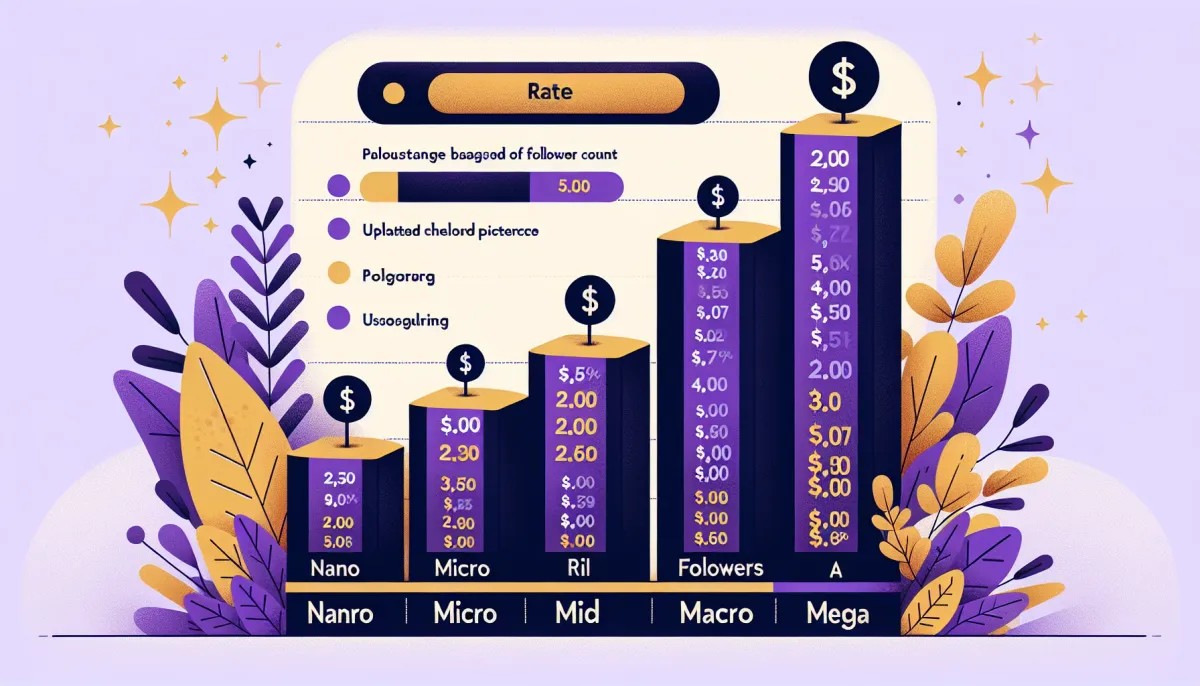
Sponsored rates on Instagram follow a near-linear progression based on audience size, with well-defined tiers that industry professionals recognize:
- Nano-influencers (1K–10K followers): $80–$90 per feed post. These creators offset limited reach with engagement rates that often exceed 5%, making them particularly attractive for local brands and niche product launches.
- Micro-influencers (10K–50K): $200–$500 per post. This segment is experiencing the fastest growth in advertiser demand. Their audience is large enough to generate volume while retaining authentic engagement.
- Mid-tier (50K–100K): $500–$670 per collaboration. At this level, creators begin professionalizing their approach with structured media kits and formalized negotiations.
- Macro-influencers (100K–500K): $670–$5,000 per post. National and international brands gravitate toward this tier for campaigns with significant reach.
- Mega-influencers (500K–1M): $5,000–$7,500 per post. These creators are typically managed by talent agencies and negotiate multi-format packages.
- Celebrity creators (1M+): $10,000 and well beyond. Rates can reach $50,000–$100,000 for the largest audiences, especially when the content is exclusive and cross-platform.
A critical factor is format: Instagram Reels command rates that are 1.5x to 3x higher than standard feed posts. This premium reflects the algorithm's heavy bias toward short-form video, which delivers substantially higher organic reach. A micro-influencer charging $300 for a feed post can legitimately quote $600–$900 for an equivalent sponsored Reel.
Stories typically command 30–50% of the feed post rate, but their ephemeral format and link sticker functionality make them a powerful direct-conversion tool that e-commerce brands prize.
To maximize your Instagram earnings, the first step is to build a qualified, engaged follower base. A profile with 10,000 active followers and 6% engagement will consistently command higher rates than an account with 50,000 followers and 1% engagement. Services like buying Instagram followers can accelerate this initial growth phase and boost your profile's credibility with potential brand partners.
TikTok: the new monetization giant
TikTok has revolutionized creator monetization, but its compensation mechanisms remain among the most complex to decode. Unlike Instagram where sponsorships dominate, TikTok offers a multi-layered ecosystem that combines creator funds, direct sponsorships, and native monetization features.
The TikTok Creator Fund (rebranded as the Creativity Program in 2024 and expanded in 2025) pays eligible creators approximately $30–$40 per 1 million views. As a standalone income source, this is insufficient to sustain a full-time creator career — a creator generating 500,000 views per video would earn just $15–$20 per post. However, the program serves as a springboard toward more substantial revenue streams.
TikTok sponsorship rates follow a different grid than Instagram:
- Nano-influencers (1K–10K): $50–$300 per sponsored video. TikTok's short format and viral potential make even small creators attractive to brands seeking authenticity.
- Micro-influencers (10K–50K): $200–$2,500. The wide range reflects niche variation — a tech or finance micro-influencer can charge the top of the range, while a lifestyle creator sits lower.
- Mid-tier (50K–500K): $2,500–$7,000. These creators benefit from a loyal audience and a measurable performance track record.
- Macro-influencers (500K–1M): $7,000–$15,000. Campaigns at this tier often include content usage rights and exclusivity clauses.
- Mega-influencers (1M+): $15,000–$50,000+ depending on niche, engagement, and negotiated exclusivity.
TikTok Shop has added another monetization dimension in 2025–2026. Affiliate creators earn 5–20% commission on sales generated through their shoppable videos. Some micro-creators specializing in beauty and fashion niches report monthly revenues of $2,000–$8,000 solely through TikTok Shop, without a single sponsored collaboration.
If you want to accelerate your TikTok visibility to unlock these monetization opportunities, growing your TikTok audience strategically can be a worthwhile medium-term investment.
YouTube: the long-form monetization king
YouTube remains, by a considerable margin, the most lucrative platform for creators who invest in long-form content. Its dual revenue model — AdSense advertising revenue plus direct sponsorships — provides a financial stability that other platforms struggle to match.
The YouTube Partner Program returns 55–70% of advertising revenue to creators. RPM (revenue per thousand impressions) varies significantly by niche:
- High-RPM niches (finance, real estate, B2B tech, insurance): $15–$35 per 1,000 views
- Medium-RPM niches (consumer tech, education, health): $7–$15 per 1,000 views
- Low-RPM niches (gaming, vlogging, entertainment): $2–$7 per 1,000 views
For direct sponsorships, YouTube positions itself as the premium platform:
- Nano-creators (1K–10K subscribers): $100–$500 per sponsored integration
- Micro-creators (10K–50K): $500–$5,000 depending on integration length (30 seconds, 60 seconds, dedicated video)
- Mid-tier (50K–200K): $5,000–$15,000. SaaS and tech brands are particularly active in this segment.
- Macro-creators (200K–1M): $15,000–$25,000 per sponsored video
- Mega-creators (1M+): $25,000–$100,000+. Dedicated sponsored videos can exceed $200,000 for the most influential channels.
YouTube Shorts, the platform's short-form format, remains less lucrative with RPMs hovering at $0.02–$0.10 per 1,000 views through the Shorts fund. However, Shorts function as a powerful acquisition tool: they drive traffic to long-form content where monetization is maximized.
YouTube memberships and Super Chats during live streams provide meaningful supplementary income. Mid-tier creators report membership revenues of $500–$3,000 per month, while Super Chats can generate $200–$2,000 per live session depending on community size and engagement.
Comparison table: creator rates by platform and audience tier (2026)
This table summarizes average sponsorship rates by platform and audience tier. The ranges reflect consolidated data from DemandSage, Influencer Marketing Hub, and Hootsuite for Q1 2026.
| Audience Tier | Instagram (Post) | Instagram (Reel) | TikTok | YouTube |
|---|---|---|---|---|
| Nano (1K–10K) | $80–$90 | $120–$270 | $50–$300 | $100–$500 |
| Micro (10K–50K) | $200–$500 | $300–$1,500 | $200–$2,500 | $500–$5,000 |
| Mid-tier (50K–100K) | $500–$670 | $750–$2,000 | $2,500–$5,000 | $5,000–$15,000 |
| Macro (100K–500K) | $670–$5,000 | $1,000–$15,000 | $5,000–$7,000 | $15,000–$25,000 |
| Mega (500K–1M) | $5,000–$7,500 | $7,500–$22,500 | $7,000–$15,000 | $25,000–$50,000 |
| Celebrity (1M+) | $10,000+ | $15,000+ | $15,000–$50,000+ | $25,000–$100,000+ |
Key observations:
- YouTube consistently dominates in absolute value per collaboration, thanks to the longer content lifespan and its dual revenue model (ads + sponsorships).
- Instagram Reels offer the best effort-to-pay ratio for visual creators, with a 1.5x to 3x multiplier over standard feed posts.
- TikTok presents the widest range because its unpredictable virality makes every creator a potential vehicle for millions of views — which increases their perceived value to brands.
- Across all tiers, the average remains $215 per sponsored post — a figure dragged down by the sheer mass of nano-influencers who represent over 65% of the market.
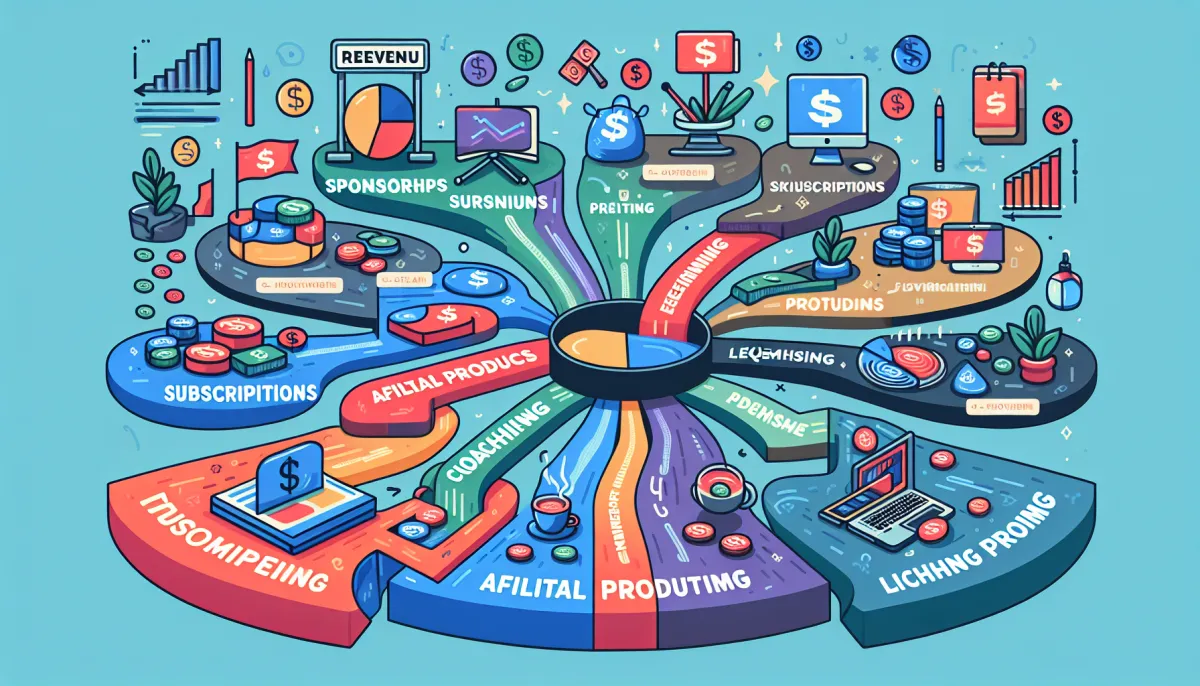
The 7 revenue streams beyond sponsorships
While sponsorships capture media attention, they represent only a fraction of the income earned by the most successful creators. According to data from Circle and Shopify, only 18% of creators rely exclusively on sponsorships. The remaining 82% have diversified their revenue sources, and the highest-performing creators follow an optimal distribution:
- 40% — Digital products: e-books, online courses, templates, Lightroom presets, AR filters. This revenue source offers the highest margins (often 85–95%) and the best scalability. A creator with 20,000 followers selling a $27 e-book can generate $5,000–$15,000 per launch.
- 25% — Subscriptions and memberships: Patreon, YouTube memberships, private Discord communities, premium newsletters. This model creates predictable recurring revenue. Mid-tier creators report monthly membership revenues of $1,500–$8,000.
- 20% — Affiliate marketing: Amazon affiliate links, specialized affiliate programs (SaaS, equipment, fashion). Commission rates range from 3% to 50% depending on the product. Tech and finance creators achieve the best results thanks to the high average order value of recommended products.
- 10% — Sponsorships: paid brand collaborations. Although they represent only 10% of the optimal total revenue, they remain essential for credibility and visibility.
- 5% — Consulting and speaking: conference appearances, private coaching, corporate training. A creator recognized in their niche can charge $1,000–$5,000 per consulting day.
Two bonus revenue streams round out the list:
- Merchandising: physical products bearing the creator's brand. Apparel and accessories lines launched by mid-tier creators generate $2,000–$20,000 per month depending on community size.
- Licensing and usage rights: brands pay to repurpose creator content (UGC whitelisting) in their paid advertising campaigns. These rights often represent 30–100% of the initial collaboration fee.
How to calculate your real value as a creator
Rate-setting is one of the most challenging exercises for creators. Price too high and you lose opportunities. Price too low and you devalue yourself and pull the market down. Here is a structured methodology for setting your rates in 2026:
The base formula:
Rate per post = (Follower count x Engagement rate x Average CPE for your niche) x Format multiplier
Average CPE (Cost Per Engagement) by niche in 2026:
- Fashion/Beauty: $0.05–$0.10
- Tech/Gaming: $0.08–$0.15
- Finance/Business: $0.12–$0.25
- Health/Fitness: $0.06–$0.12
- Food/Cooking: $0.04–$0.08
- Travel: $0.07–$0.14
Format multipliers:
- Instagram feed post: 1x (baseline)
- Instagram Story: 0.4x
- Instagram Reel: 2x
- TikTok video: 1.5x
- YouTube video (60s integration): 3x
- YouTube dedicated video: 5x
For example, a tech creator with 25,000 followers and a 4% engagement rate would charge: 25,000 x 0.04 x $0.12 = $120 for a feed post, $240 for a Reel, and $360 for a TikTok video. These rates serve as a starting point and should be adjusted based on exclusivity, usage rights, and creative brief complexity.
To refine this estimate, you can use our free engagement calculator which gives you a clear picture of your account performance and your rate positioning relative to the market.
Hidden factors that influence your earnings
Beyond follower count and engagement rate, several often-overlooked factors have a significant impact on creator earnings:
1. Your audience geography
A creator whose audience is 80% based in the United States, Canada, or Western Europe will command higher rates than a creator with an audience dispersed across markets with lower purchasing power. Advertising CPMs vary by a factor of 1 to 10 across regions — and that directly impacts sponsorship rates.
2. Niche and audience purchasing power
Finance, B2B tech, real estate, and luxury niches command rates 2–4x above the average because each conversion generated by the creator has a substantially higher customer lifetime value (LTV) for the brand.
3. Production quality
A creator capable of delivering high-quality content (professional lighting, polished editing, refined storytelling) justifies rates 30–50% higher. Brands save on their production costs by delegating to the creator.
4. Performance track record
Creators who can demonstrate concrete results (sales generated, traffic referred, sign-ups obtained) through case studies or analytics screenshots negotiate significantly higher rates. Performance data transforms a marketing expense into a measurable investment.
5. Exclusivity and usage rights
An exclusivity clause (not collaborating with a competitor for 30, 60, or 90 days) justifies a 25–100% premium on the base rate. Whitelisting rights (using content in the brand's paid ads) typically add another 30–50%.
6. Seasonality
Rates naturally increase by 20–40% during high-demand advertising periods: Q4 (Black Friday, Christmas), Valentine's Day, back-to-school. Savvy creators plan their collaboration calendar accordingly.
Case study: anatomy of a mid-tier creator's revenue in 2026
To put these numbers into concrete perspective, consider the profile of a mid-tier creator active on Instagram and TikTok with 75,000 combined followers in the lifestyle and fashion niche:
Average monthly revenue (estimated):
- 2 Instagram collaborations (1 Reel + 1 post): $1,800
- 1 sponsored TikTok video: $1,200
- Affiliate income (bio links + Stories): $600
- Digital product sales (presets/guides): $900
- Premium Discord membership (45 members x $9.90): $445
- UGC usage rights (1 campaign): $500
Estimated monthly total: $5,445
While modest compared to mega-influencers, this income represents a comfortable salary that allows for full-time content creation. The critical point is diversification: no single source exceeds 33% of total revenue, which protects the creator against fluctuations in the sponsorship market.
By comparison, a creator at the same tier who relies exclusively on sponsorships would earn approximately $3,000 per month — 45% less. Diversification is not a luxury; it is a strategic necessity.
The most common pricing mistakes creators make
After analyzing hundreds of creator media kits and negotiations, here are the most frequent errors that cost real money:
Mistake 1: undervaluing usage rights
Too many creators allow brands to repurpose their content in paid advertising campaigns without charging a premium. This right has real monetary value: UGC content used in ads performs 2–4x better than brand-created content, meaning your work generates considerable value beyond the initial organic publication.
Mistake 2: accepting product-only compensation
Receiving a free product in exchange for a post is acceptable in only two cases: the product's value exceeds your usual rate, or the brand collaboration offers significant strategic value for your positioning. In all other cases, insist on monetary compensation.
Mistake 3: not having a professional media kit
A well-structured media kit (audience demographics, engagement rates, past collaboration examples, rate card) increases perceived value by 20–30%. Brands associate the professionalism of your presentation with the quality of your content.
Mistake 4: neglecting negotiation
Initial brand offers are almost systematically 30–50% below the actual available budget. Negotiation is not greed — it is professionalism. Offer tiered options (basic vs. premium package) rather than a simple yes or no.
Mistake 5: ignoring conversion metrics
Creators who track and communicate their conversion rates (clicks, sales, sign-ups) justify rates 40–60% higher. Invest in tracking tools (UTM parameters, affiliate links, dedicated promo codes) to prove your ROI to brands.
Optimal monetization strategy by tier in 2026
Your monetization strategy should evolve with your audience. Here are the recommended priorities by tier:
Phase 1 — 0 to 5,000 followers: building foundations
- Priority: organic growth and niche positioning
- Monetization: first digital products (template, free guide to build an email list)
- Revenue target: $0–$500/month
- Key action: create consistent content and document your results for a future media kit
Phase 2 — 5,000 to 20,000 followers: first monetization
- Priority: affiliate marketing and paid digital products
- Monetization: first sponsorships ($80–$300/post), e-book or mini-course ($15–$47)
- Revenue target: $500–$2,000/month
- Key action: create a media kit, join influencer platforms, launch a newsletter
Phase 3 — 20,000 to 100,000 followers: professionalization
- Priority: structured sponsorships + membership
- Monetization: regular collaborations ($500–$5,000/post), premium course ($97–$297), paid community
- Revenue target: $3,000–$10,000/month
- Key action: diversify across 3–4 revenue sources minimum, negotiate long-term contracts
Phase 4 — 100,000+ followers: optimization and scaling
- Priority: personal brand and high-margin products
- Monetization: premium collaborations ($5,000+), own brand launch, consulting, speaking
- Revenue target: $10,000+/month
- Key action: hire an assistant or agent, develop scalable passive income streams
Trends that will reshape creator earnings in 2026–2027
The creator economy is evolving at breakneck speed. Here are the major trends that will impact earnings over the next 12 to 18 months:
The rise of paid UGC
The professional UGC (User Generated Content) model is exploding. Brands pay creators $150–$500 per video to produce content that will be used in their ad campaigns — without even requiring the creator to publish it on their own channels. This model opens monetization to talented creators with small audiences.
Subscriptions as a revenue pillar
Native subscription features (Instagram Subscriptions, YouTube Memberships, TikTok Series) are gaining adoption. Creators who build a cohesive subscription offer secure predictable revenue that protects them from algorithmic fluctuations and seasonal sponsorship variations.
Artificial intelligence as a productivity multiplier
AI tools (script generation, automated editing, content variant creation) allow creators to produce 2–3x more content without proportionally increasing their work hours. This increased productivity translates directly into additional monetization opportunities.
The rise of vertical communities
Specialized community platforms (Circle, Skool, premium Discord) enable creators to monetize their expertise with subscription rates of $19–$99/month. A creator with 500 members paying $29/month generates $14,500 monthly — with zero dependence on sponsorships or algorithms.
Platform-enforced rate transparency
Creator marketplaces integrated into platforms (Instagram Creator Marketplace, TikTok Creator Marketplace) are progressively standardizing rates. This transparency benefits well-positioned creators but compresses margins for those who were overcharging relative to their actual metrics.
Conclusion: turning your presence into sustainable revenue
The data is clear: in 2026, it has never been more accessible to earn money as a content creator, but it has never been more important to do so intelligently. The $215 average per sponsored post tells only a tiny fraction of the story.
Creators who thrive in 2026 share three common characteristics: they have diversified their revenue across at least four different sources, they know precisely what their audience is worth (geography, demographics, purchasing power), and they treat their creative activity as a business — with financial targets, metric tracking, and a structured growth strategy.
Whether you are a nano-influencer with 2,000 followers or a mid-tier creator at 100,000, the path to sustainable monetization follows the same steps: build an engaged audience, diversify your revenue streams, professionalize your approach to collaborations, and continuously invest in the quality of your content and the growth of your community.
The $250 billion creator economy is just getting started. The foundations you lay today will determine your earnings tomorrow.
Key takeaways:
- Global average: $215 per sponsored post in 2026
- Instagram: $80 (nano) to $10,000+ (celebrity), Reels = 1.5–3x the feed rate
- TikTok: $50 (nano) to $50,000+ (mega), Creator Fund = $30–$40/1M views
- YouTube: highest-paying platform, up to $100,000+ per sponsored video
- Only 18% of creators live exclusively on sponsorships
- Ideal split: 40% digital products, 25% subscriptions, 20% affiliate, 10% sponsorships, 5% consulting
- Diversification boosts revenue by 45% on average compared to sponsorships alone
Discover how our Instagram services can accelerate the strategies covered here.