Why YouTube Shorts is the most profitable short-form platform in 2026
YouTube Shorts has cemented its position as the highest-paying short-form video platform in 2026. While TikTok continues to struggle with creator payouts and Instagram quietly sunsetted its Reels bonus program, YouTube built a structured, transparent monetization system around Shorts that actually rewards creators. With over 70 billion daily views on short-form content, the platform hasn't just caught up with its competitors — it has surpassed them economically.
The defining moment came with the March 2026 update, which fundamentally restructured how RPM (Revenue Per Mille) is calculated for Shorts. RPM is now weighted by real engagement: a viewer who watches your entire Short generates significantly more revenue than one who swipes away after two seconds. This single change has transformed creation strategy — content quality is now directly proportional to the revenue it generates.
This tutorial walks you through every step, from creating your first Short to advanced monetization and the techniques that trigger virality. Whether you are a complete beginner or an experienced creator looking to optimize your Shorts revenue, every section contains verified data and actionable strategies you can implement immediately.
Understanding the YouTube Shorts monetization program in 2026
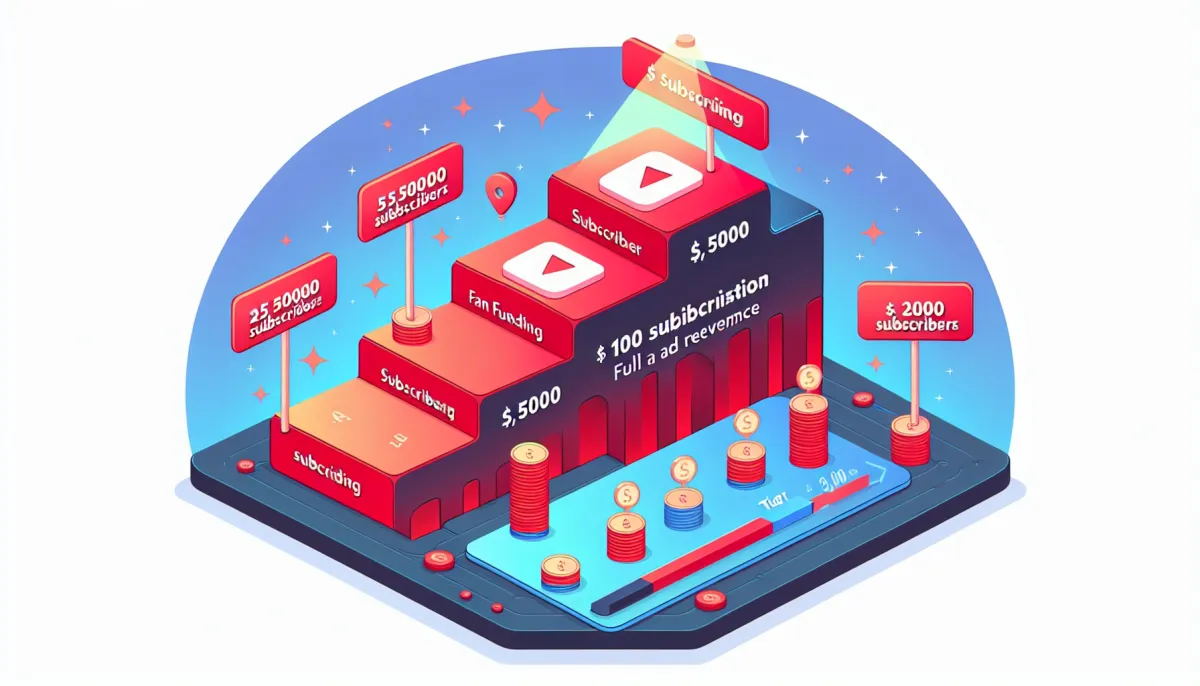
The YouTube Shorts monetization program operates on a two-tier system that has been refined throughout 2025 and into early 2026. Understanding these tiers is essential for mapping out your growth strategy.
Tier 1: fan funding (500 subscribers + 3 million Shorts views in 90 days)
The first tier unlocks fan funding features. To qualify, you must meet two conditions simultaneously: reach 500 subscribers on your channel AND accumulate 3 million views on your Shorts within the last 90 days. This tier unlocks Super Thanks on your Shorts, Super Chats if you stream live, and channel memberships.
This first tier is strategically important because it allows you to start generating revenue before reaching the traditional 1,000-subscriber threshold. For a creator who publishes quality Shorts daily, reaching 3 million views in 90 days means roughly 33,000 views per day — a realistic target if your content addresses a topic with broad audience potential.
Tier 2: full ad revenue (1,000 subscribers + 10 million Shorts views OR 4,000 watch hours)
The second tier unlocks ad revenue sharing on your Shorts. You need 1,000 subscribers AND must meet one of two conditions: either 10 million Shorts views in 90 days, or 4,000 hours of public watch time on your long-form videos over the past 12 months. This tier gives you access to full monetization through ads served between Shorts in the feed.
Current Shorts RPM ranges between $0.03 and $0.10 per 1,000 views, depending on your niche, audience geography, and — since the March 2026 update — your engagement rate. A creator generating one million monthly views can expect between $30 and $100 in direct ad revenue. That may not sound like much on its own, but combined with Super Thanks, memberships, and brand deals, the Shorts format becomes a genuine revenue engine.
Creating your first YouTube Short: step-by-step technical guide
Creating a YouTube Short follows a precise process that, once mastered, allows you to produce quality content in under 30 minutes per video.
Step 1: choose the right format and dimensions
YouTube Shorts use the vertical 9:16 format with an optimal resolution of 1080 x 1920 pixels. The maximum duration is 60 seconds, but internal data shows that the optimal length sits between 15 and 30 seconds, with a sweet spot at 20–25 seconds. Longer Shorts (45–60 seconds) tend to have lower completion rates, which negatively impacts their distribution since the March 2026 update.
Step 2: record natively or import footage
You have two options for creating a Short. The first is to record directly from the YouTube app by tapping the "+" button then "Create a Short." This gives you access to YouTube's native tools: filters, timer, speed controls, and the built-in music library. The second option is to film with your phone's camera app or a professional editing tool (CapCut, DaVinci Resolve Mobile, Adobe Premiere Rush), then upload the finished video.
For serious creators, the second approach is preferable because it provides full control over editing, transitions, and captions. External editing also lets you build reusable templates that dramatically accelerate your production pipeline.
Step 3: add captions — mandatory, not optional
The data is unequivocal: 85% of Shorts are watched without sound. Captions are not a luxury — they are an absolute necessity for your message to land. YouTube now offers auto-generated captions, but their accuracy remains inconsistent. For professional results, use tools like CapCut (animated captions), Descript, or Zubtitle. Position your captions in the center third of the screen to avoid them being obscured by the YouTube interface (channel name, interaction buttons).
Step 4: optimize your title, description, and hashtags
Your Short's title should be compelling and include your primary keyword. Keep it under 40–50 characters so it displays fully in the feed. The description supports up to 5,000 characters — use it to add context, links, and secondary keywords. Always include the #Shorts hashtag (although YouTube auto-detects the format, this hashtag still improves discoverability in certain regions).
The March 2026 update: what changed for Shorts revenue
The March 2026 YouTube Partner Program update for Shorts represents the most significant change since ad revenue sharing was introduced for short-form content. Here is what concretely changed.
Engagement-weighted RPM
Before this update, RPM was calculated in a relatively uniform way: every view generated approximately the same revenue whether it lasted one second or the full duration of the Short. Now the system is weighted. A viewer who watches your Short to completion generates more revenue than a viewer who swipes immediately. In practice, this means a Short with an 80% completion rate and 100,000 views can earn more than a Short with a 30% completion rate and 300,000 views.
This mechanism finally aligns creator and platform incentives: YouTube wants to keep users in the Shorts feed as long as possible, and creators who contribute to that goal are rewarded with higher payouts.
The daily posting RPM bonus
Internal data revealed by creators in the pilot program shows that daily posting increases RPM by 15–25%. YouTube rewards consistency because it ensures a steady stream of fresh content in the feed. This bonus is not officially documented in YouTube's public materials, but it has been confirmed by multiple creators in the test group and aligns with the broader community's empirical observations.
New AI tools for creators
YouTube has rolled out new AI-powered tools to support Shorts creators. Veo 3 Fast lets you generate backgrounds and visual effects directly inside the Shorts editor. Automatic product timestamps streamline integrated commerce: when you mention a product in your Short, YouTube can automatically attach a purchase link beneath the video. These tools significantly reduce production time and open up new creative possibilities.
The YouTube Shorts algorithm decoded: 7 signals that matter
The YouTube Shorts algorithm operates differently from the long-form video algorithm. Understanding its ranking signals is the key to maximizing your distribution.
Signal 1: completion rate (the most important)
Completion rate is, by far, the most powerful signal in the Shorts algorithm. A Short that reaches 70% or higher completion receives dramatically more distribution. In concrete terms, if your 20-second Short is watched for an average of 14 seconds or more, the algorithm treats it as high-quality content and pushes it to progressively larger audiences.
Signal 2: rewatch (loop viewing)
Looping is an extremely powerful viral signal. When a viewer watches your Short 2–3 times consecutively, the algorithm interprets it as exceptionally engaging content. To encourage looping, create Shorts whose ending connects naturally to the beginning, add a detail viewers can only notice on a second watch, or pose a question at the start whose answer is only revealed at the end.
Signal 3: engagement rate (likes, comments, shares)
Traditional interactions remain an important signal. Comments carry the most weight because they indicate deep engagement. End your Shorts with an open question or a polarizing statement to encourage comments. Shares — especially via private messages — are an organic virality signal that YouTube values enormously.
Signal 4: profile click-through rate
If a significant percentage of viewers click on your profile after watching your Short, the algorithm understands that your content generates enough interest for the viewer to want to learn more. This signal is particularly important for new creators because it accelerates the discovery phase.
Signal 5: retention in the first 2 seconds
Contrary to what some outdated guides still claim, the hook must not happen within the first 5 seconds — it needs to happen within the first 1–2 seconds. The algorithm measures retention second by second, and the steepest drop-off occurs between second 1 and second 3. Your opening must be immediately captivating: a movement, on-screen text, a shocking question, or an unexpected visual.
Signal 6: initial engagement velocity
The speed at which your Short accumulates interactions in the first hours after publishing is a key indicator. A Short that generates high likes and comments within the first hour gets pushed more aggressively by the algorithm. This is why publishing when your audience is most active is critical.
Signal 7: channel thematic consistency
The algorithm evaluates not only each Short individually but also the overall consistency of your channel. Creators who focus on a specific niche receive better distribution because YouTube can more easily identify and target their ideal audience. A fitness creator who exclusively posts workout Shorts will outperform a creator who alternates between cooking, gaming, and fitness content.
The perfect hook: capturing attention in under 2 seconds
The hook is the single most critical element of your Short. In an environment where viewers can swipe to the next Short in a fraction of a second, your opening must be magnetic.
5 hook types that work in 2026
The first type is the visual hook: start with a striking image, fast movement, or abrupt cut. No logos, no intros — the action begins immediately. The second type is the text hook: display text on screen from the very first frame. "What nobody tells you about…" or "I tested X for 30 days" are proven formats. The third type is the audio hook: a distinctive sound or shocking statement that grabs attention even in silent mode via captions. The fourth type is the curiosity hook: show the end result of a transformation or process in the first second, then explain how to get there. The fifth type is the identification hook: "POV: you are…" or "If you do X, watch this" — these hooks work because they create an immediate feeling of personal relevance.
Fatal hook mistakes
Never start with "Hey everyone" or "Welcome to my channel." These introductions are the number-one cause of instant swipes. Don't start with a fade-to-black or a title card either — you have 1–2 seconds, not 5. Every millisecond of delay before the interesting content begins is an opportunity for the viewer to leave.
To grow your YouTube subscriber base and hit monetization thresholds faster, make every Short's hook so irresistible that viewers immediately want to follow your channel for more.
Optimizing Short length and structure
Your Short's duration directly impacts its algorithmic performance. Here is how to find the right balance.
Optimal duration based on 2026 data
Performance analysis across millions of Shorts shows that the optimal length sits between 15 and 30 seconds, with a particularly effective sweet spot between 20 and 25 seconds. This range offers the best trade-off between the amount of content you can deliver and the completion rate. Shorts under 10 seconds generate less revenue (not enough time for engagement), while Shorts over 45 seconds suffer from significantly lower completion rates.
The 3-act structure for a perfect Short
Even in 20 seconds, your Short needs a clear narrative structure. Act 1 (seconds 1–3) is the hook: capture attention instantly with a striking visual, text, or audio element. Act 2 (seconds 4–16) is the body: deliver your main content — the information, demonstration, or story. Maintain pacing with cuts every 2–3 seconds. Act 3 (seconds 17–20) is the payoff: end with a call to action, an unexpected twist, or an element that encourages rewatching.
The perfect loop technique
To maximize rewatches, create a Short whose last second connects visually or narratively to the first. For example, if your Short begins with "The first thing you need to do is…", end with "…and now, here's the first thing you need to do." This type of loop pushes viewers to watch 2–3 times, which sends a massive viral signal to the algorithm.

Advanced monetization strategies beyond ad revenue
Direct ad revenue from Shorts is only a fraction of the monetization potential. The most profitable creators combine multiple revenue streams.
Super Thanks: turning views into tips
Super Thanks allows viewers to send you a tip directly on your Shorts. To maximize Super Thanks, create content that generates strong emotion — gratitude, admiration, surprise. Tutorial Shorts ("How to do X in 30 seconds") and transformation Shorts ("Before/After") are the formats that generate the most Super Thanks. Mention the feature subtly without being pushy: "If this tip helped you, a Super Thanks always means a lot" works better than "Don't forget to leave a Super Thanks."
Channel memberships
Memberships let you offer exclusive content in exchange for a monthly paid subscription. Use your Shorts as teasers for your premium content: show a preview of what members receive. A creator with 1,000 members at $4.99/month generates nearly $5,000 monthly — far more than ad revenue alone.
Affiliate marketing via Shorts
Shorts in the "product of the day," "must-have tool," or "best buy of the month" format are perfect for affiliate marketing. Place your affiliate link in the Short's description and reference it with on-screen text ("Link in description"). Conversion rates on Shorts are generally lower than on long-form videos, but the sheer volume of views more than compensates.
Brand collaborations
Brands are increasingly paying for placements in Shorts. A creator with 50,000 subscribers and strong engagement can negotiate between $200 and $1,000 per sponsored Short. To attract brands, maintain an engagement rate above 5%, specialize in a clearly defined niche, and build a professional media kit that showcases your stats.
To amplify your Shorts' reach and attract more brand deals, boosting your YouTube views can significantly accelerate your growth and credibility with advertisers.
Publishing schedule and consistency: the winning strategy
Posting consistency is one of the most underrated factors in YouTube Shorts success. The 2026 data confirms its critical importance.
Why you should post daily
Creators in YouTube's test group observed that daily posting increases RPM by 15–25% compared to weekly posting. This increase is driven by several factors: the algorithm favors active channels, each Short is a new opportunity to reach new viewers, and consistency trains your audience to return to your profile daily.
The optimal publishing calendar
Post your Shorts when your audience is most active. For a US-based audience, the highest-performing windows are typically 7–9 AM (morning scroll), 12–2 PM (lunch break), and 6–9 PM (evening wind-down). Use YouTube Studio analytics to identify the specific activity peaks for your audience. If you are posting one Short per day, vary your posting times over two weeks to identify your optimal slot.
Batch content production
Batch production is the most efficient method for maintaining daily posting without it consuming your entire schedule. Set aside one day per week to film 5–7 Shorts in a single session. Prepare your scripts in advance, set up your lighting and framing once, then film back-to-back. Editing can be spread across the week. This approach lets you maintain a daily presence while dedicating only one production day and a few editing hours throughout the week.
Managing motivation dips
Daily consistency is demanding. To avoid burnout, build a library of "backup" Shorts that you can publish on days when you don't have the time or energy to create. Having 2–3 weeks of content banked gives you a comfortable safety net and significantly reduces the stress associated with daily content creation.
Mistakes that kill your Shorts performance
Even with a solid understanding of the algorithm, common mistakes can sabotage your results. Here are the most frequent ones and how to avoid them.
Mistake 1: skipping captions
We mentioned it earlier, but it bears repeating: 85% of Shorts are watched without sound. A Short without captions immediately loses 85% of its communication potential. This is not an aesthetic choice — it is a functional necessity. Captions must be readable, properly synced, and correctly positioned on screen.
Mistake 2: slow hooks
If your interesting content doesn't start within the first 1–2 seconds, you have already lost. The most common mistake is opening with an introduction, animated logo, or even a "Hey guys." Those wasted seconds translate into a plummeting retention rate and mediocre algorithmic distribution.
Mistake 3: ignoring the vertical format
Some creators import clips from horizontal videos with black bars on top and bottom. This format uses only 60% of the available screen space and signals low-quality content to the algorithm. Film natively in vertical or properly reframe your footage to fill 100% of the 9:16 screen.
Mistake 4: inconsistent posting
Publishing 5 Shorts on Monday then nothing for 10 days is counterproductive. The algorithm rewards consistency, not sporadic volume. One Short per day, seven days a week, consistently outperforms 7 Shorts published on the same day followed by a week of silence.
Mistake 5: ignoring your analytics
YouTube Studio provides detailed data for every Short: completion rate, traffic sources, audience demographics, attention drop-off moments. Not reviewing this data regularly is flying blind. Analyze your top 5 and bottom 5 Shorts each month to identify success and failure patterns.
Most profitable Shorts niches in 2026
Not all niches are equal in terms of RPM and monetization potential. Here are the top-performing categories in 2026.
Personal finance and investing
The highest RPM of any Shorts niche. Advertisers in finance (online banks, brokerages, investment apps) pay premium CPMs. A Short about "3 ETFs to buy in 2026" can generate an RPM 3–5x the average. The trade-off: competition is fierce and the audience demands high-quality, accurate information.
Tech and gadgets
Unboxings, quick reviews, and gadget comparisons in Short format deliver excellent RPMs and are a natural fit for affiliate marketing. Every product featured is a commission opportunity. Tech brands are also among the most generous for sponsored collaborations.
Health and fitness
Workout Shorts ("Abs in 30 seconds"), healthy recipe clips, and nutrition tips combine decent RPM with high viral potential. The short format is perfect for exercise demonstrations and express recipes. Affiliate partnerships with supplement brands, fitness equipment, and health apps round out the revenue.
Education and productivity
Educational Shorts ("A fact you didn't know," "How to use X in 20 seconds") benefit from excellent share and save rates. These engagement signals boost algorithmic distribution. EdTech advertisers (Coursera, Skillshare, Notion) pay above-average CPMs.
Beauty and fashion
The Shorts format is ideal for quick makeup tutorials, GRWM (Get Ready With Me) content, and fashion hauls. Affiliate partnerships with cosmetic brands and e-commerce platforms generate significant commissions, and brand collaborations in this vertical are particularly lucrative.
Essential tools and apps for your Shorts workflow
The right tools make the difference between an amateur Short and a professional one. Here is the recommended tech stack for 2026.
Video editing
CapCut remains the most popular and comprehensive tool for Shorts editing. Its animated auto-caption system, viral templates, and transition effects make it indispensable. For more advanced creators, DaVinci Resolve (free) offers professional-grade editing capabilities. Adobe Premiere Rush is a solid option for creators already in the Adobe ecosystem.
Caption generation
CapCut includes the best animated caption solution for Shorts. Descript offers a powerful alternative with automatic transcription and the ability to edit video by editing text. Zubtitle specializes in social media captions with advanced customization options.
Thumbnails and graphics
Canva remains the go-to tool for creating graphic elements for your Shorts: on-screen text, overlays, callouts. Its vertical format integration makes it easy to create elements at the right dimensions.
Analytics and optimization
YouTube Studio offers the most comprehensive analytics for your Shorts. Supplement it with TubeBuddy or vidIQ for additional data on title and description SEO, competitor analysis, and optimal keyword suggestions. Be sure to check out our free tools to analyze and optimize your performance across YouTube and other social platforms.
AI tools for creation
In 2026, AI tools are transforming Shorts production. Veo 3 Fast (integrated into YouTube) generates backgrounds and visual effects. ChatGPT and Claude can generate scripts and content ideas. ElevenLabs produces professional-quality voiceovers. Runway and Pika Labs create generative visual elements to enrich your Shorts.
Case studies: creators who blew up with Shorts
Theory matters, but nothing beats concrete examples of creators who successfully leveraged the Shorts format to transform their channels.
Case 1: 0 to 100K subscribers in 90 days with educational Shorts
A creator in the productivity niche applied a simple strategy: one 20-second Short per day, each delivering a single actionable tip. His hooks were consistently text-based ("The tool 99% of people don't know about"), his Shorts featured animated captions, and each followed a tight 3-act structure. In 90 days, his channel grew from 0 to 100,000 subscribers, with an average completion rate of 78%. He hit Tier 2 monetization in 6 weeks thanks to his view volume.
Case 2: a restaurant owner who tripled revenue
A restaurant chef started posting Shorts of his dishes being prepared — no talking, just ASMR cooking sounds and descriptive captions. His 15–20-second Shorts regularly hit completion rates of 90%+ thanks to the captivating visual format and short duration. Beyond ad revenue (modest), these Shorts drove a flood of customers to his restaurant, tripling his revenue within 6 months.
Case 3: a beauty creator earning $8,000/month with 30K subscribers
With "only" 30,000 subscribers, this beauty creator generates $8,000 monthly by combining Shorts ad revenue (roughly $500), Super Thanks (roughly $300), affiliate marketing with cosmetic brands (roughly $2,200), sponsored collaborations (roughly $3,000), and sales of her own digital skincare routine guide (roughly $2,000). Her strategy: 2 Shorts per day, each spotlighting a specific product or technique.
From Shorts to long-form: the cross-format strategy
Shorts should not exist in isolation. The most successful creators use Shorts as a gateway into a broader content ecosystem.
The Shorts → long-form funnel
Use your Shorts to tease your long-form videos. A 20-second Short that presents a captivating preview of your 15-minute video can drive significant traffic to your long-form content — which generates an RPM 10–50x higher than Shorts. Mention the full video in the Short's description and use on-screen text like "Full video on my channel."
Repurposing long-form content into Shorts
Your long-form videos are a goldmine for Shorts creation. Identify the most impactful moments from your long-form content (the "highlight moments") and repackage them as standalone Shorts. A 20-minute video can yield 3–5 distinct Shorts, each attracting new viewers to your long-form library.
Brand consistency across formats
Maintain a consistent visual identity between your Shorts and long-form videos: same color palette for on-screen text, same thumbnail style, same tone of voice. This consistency makes your brand instantly recognizable and encourages Shorts viewers to explore your long-form content.
Conclusion: your YouTube Shorts 2026 action plan
YouTube Shorts in 2026 presents a unique opportunity for rapid growth and accessible monetization. The eligibility thresholds (Tier 1 at 500 subscribers, Tier 2 at 1,000 subscribers) are achievable within weeks with a disciplined strategy, and the engagement-weighted RPM update finally rewards quality over sheer volume.
Your immediate action plan: pick a specific niche, create your first 5 Shorts following the 3-act structure (hook in 1–2 seconds, value-packed body, conclusion that encourages looping), add animated captions to every single one, and publish daily. Review your analytics weekly and double down on the formats that perform.
The creators who succeed on YouTube Shorts are not those with the best equipment or the most natural talent — they are the ones who understand the algorithm, consistently produce optimized content, and intelligently diversify their revenue streams. This tutorial has given you every key you need. Now it is your turn.
Key takeaways:
- Tier 1: 500 subs + 3M views in 90 days → fan funding unlocked
- Tier 2: 1,000 subs + 10M views OR 4,000 watch hours → full ad revenue
- Shorts RPM: $0.03–$0.10 per 1,000 views (engagement-weighted since March 2026)
- Optimal length: 15–30 seconds (sweet spot 20–25s)
- Hook in 1–2 seconds, not 5 — 85% watch without sound
- 70%+ completion rate = dramatically more distribution
- Daily posting = 15–25% higher RPM
- Looping (2–3 rewatches) = strongest viral signal
For real-world Instagram growth, see our dedicated Instagram services.