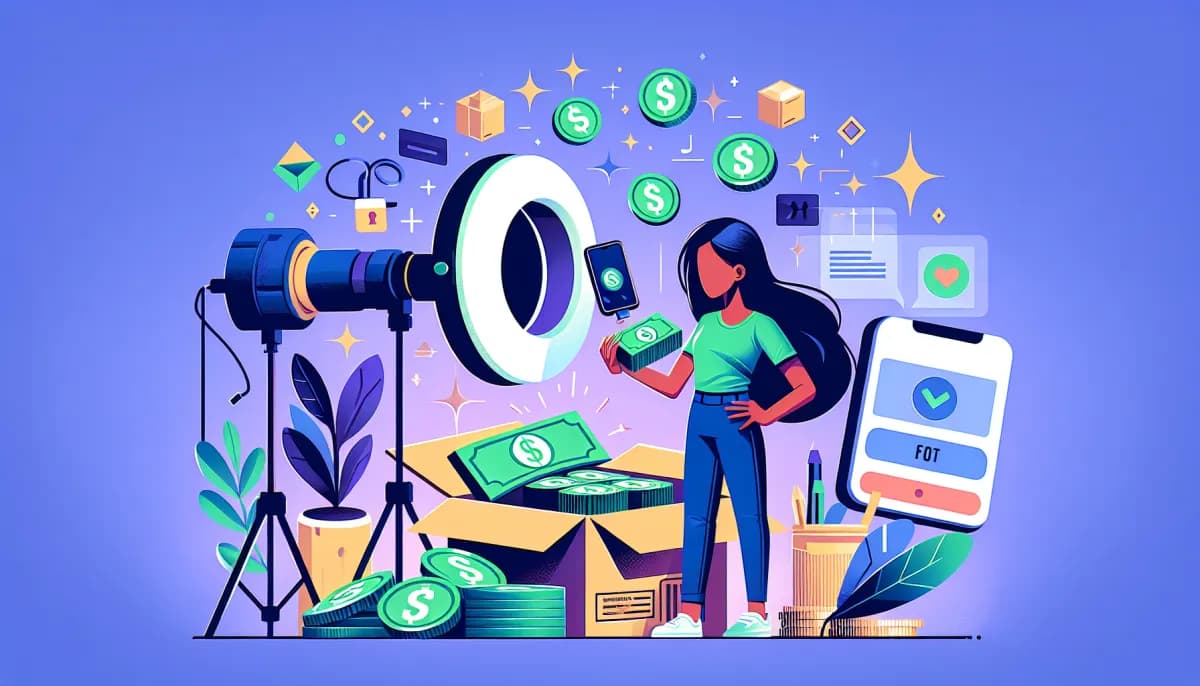
In 2026, 80% of influencer deals pay less than $300. And some creators with 5,000 followers outearn macros at 500K. That sentence, once you really sit with it, explains almost everything about where the creator economy is actually headed this year. The brands aren't chasing celebrities. They're not even chasing six-figure-follower macros. They're chasing people who can hold a product up to a phone camera, make it look believable, and sell it to an audience that trusts them. Sometimes that audience is 8,000 people. Sometimes it's 50,000. It's almost never a million. And the creators who figure this out — the ones who stop trying to go viral and start treating content as a production service — are pulling down real money. Not influencer-lifestyle money. Real money. $500 a month turning into $2,000, $2,000 turning into $5,000, and the top tier of UGC creators with a year or two of experience and proper rates quietly hitting $10,000+ months without ever crossing 10K followers.
This is the UGC playbook. Every number in it comes from recent 2026 industry data. Every tactic has been used by creators I've researched or interviewed in the last six months. And the whole thing is structured so that a creator with zero brand deals today could, by following the 90-day launch plan at the end, be earning meaningful monthly income by summer. Let's get into it.
The great 2026 creator-market flip
Something has fundamentally changed about how brands spend on creator marketing in 2026, and most creators haven't quite caught up to the implications yet. The overall US creator marketing spend is still growing — it hit approximately $44 billion in 2026, up 18% year-over-year — but the shape of that spend has inverted in ways that are genuinely important. A few years ago, the standard advice was that you needed to build up to 50,000 or 100,000 followers before you could monetize seriously. That advice is now actively misleading. Recent industry reports show that roughly 80% of all influencer deals in 2026 are paying less than $300 per deliverable. The entire spending distribution has shifted downward and outward, toward a much larger number of smaller creators and UGC producers, rather than a small number of larger influencers.
The drivers behind this shift aren't mysterious once you unpack them. First, the macro-influencer landscape has been compromised by years of fake-follower scandals, inflated engagement metrics, and performance that consistently underdelivers against what brands pay for. Brands got burned enough times that CMOs across nearly every consumer category have mandated lower per-deal spending and higher volume. Second, the performance data has been unkind to big names: UGC-style content (where the creator is lower-profile, the setting is their own home or apartment, and the tone is conversational rather than aspirational) generates approximately 50% higher engagement and 10% higher conversion rates compared to traditional polished influencer content, according to 2026 brand marketing studies. When you're the CMO, and you can buy ten UGC videos from micro-creators for the same price as one post from a mid-tier influencer, and the ten videos perform better in aggregate, the math gets obvious fast.
Third, and this is the one people don't talk about enough, the platforms themselves have been nudging toward UGC economics. TikTok Creator Marketplace, Instagram's Creator tools, and the rise of dedicated UGC-matchmaking platforms have made it easier than ever for brands to reach creators at the 1K-50K follower range. There was a roughly 48% year-over-year decline in TikTok-exclusive campaign spend in 2026 as brands shifted to cross-platform UGC strategies — the creators who adapt to this by producing content usable across Instagram Reels, TikTok, YouTube Shorts, and Pinterest are the ones who are seeing sustained income growth, not the ones optimizing for any single platform.
The practical takeaway is that you don't need fame to monetize in 2026. You need three things: you need to be able to produce competent short-form video, you need to understand how to structure a brand deal (including what to charge and what rights to grant), and you need to be on the platforms where brands are actively looking for creators. That's it. Follower count is, for UGC specifically, almost irrelevant. I know creators with 3,000 Instagram followers earning more in monthly UGC revenue than creators with 300,000 followers earning through sponsored posts alone, because the UGC creator is delivering what the brand actually wants (usable video content) rather than what the macro-influencer is selling (audience reach).
UGC vs traditional influencer: the real difference
Here's the distinction that most aspiring creators get wrong, and it matters for how you position yourself and what you charge. A traditional influencer monetizes their audience. A UGC creator monetizes their production capability. Those are two fundamentally different businesses, and the compensation models, the skills required, and the scaling trajectories are all distinct.
When a brand pays a traditional influencer, they're paying for reach. They want the creator's followers to see the post. The deal is priced primarily based on audience size, engagement rate, and audience demographic fit. The deliverable is usually a post on the creator's own channel, and the value to the brand is the exposure to that creator's audience. If the creator has 100,000 followers, the brand is paying for access to those 100,000 followers.
When a brand pays a UGC creator, they're paying for content. They want a well-made short video or set of photos that they can use in their own marketing — on their own social channels, in their paid ads, on their product pages, in their email campaigns. The creator's audience is basically irrelevant; the brand isn't paying for exposure to it. They're paying for a production service. If the creator happens to have 5,000 followers, great — but the brand isn't paying for those 5,000 followers. They're paying for the video you're going to hand over to them, which they'll then run through their own paid media budget and push to potentially millions of their own targeted audience.
This distinction changes everything about how you structure your creator business. If you're running the traditional influencer model, your growth strategy is audience growth — you're trying to get to 50K, 100K, 500K followers because your earnings scale with your audience. If you're running the UGC model, your growth strategy is skill development, client relationships, and usage rights pricing — you're trying to become a more skilled creator, with a roster of repeat brand clients, and with increasingly favorable rights terms. The UGC path doesn't require you to ever become famous. It requires you to become competent, reliable, and business-savvy about pricing.
The two models also have different income profiles. Traditional influencer income is spiky and follower-dependent — you might do a few big campaigns per year at $5K-$20K each if you're at the mid-tier level, but the deals are sporadic and your baseline is zero. UGC income is more like a freelance agency model — once you have a roster of three to five brand clients, you can often do 2-4 deals per month with recurring clients, which smooths your revenue and gives you real monthly predictability. For creators who want consistent income without needing to go viral, the UGC model is genuinely the better path, and it's the one that the 2026 data shows is growing fastest.
You can absolutely run both models simultaneously — plenty of creators do their own sponsored content for their audience while also delivering UGC content to brands for their internal use. In fact, the best-positioned creators in 2026 are doing exactly this hybrid. But you should understand which lever you're pulling in each deal, because the pricing, the rights, and the negotiation dynamics are different for each.
2026 pricing grid: what to charge based on size + experience
Let's get specific about what creators should actually be charging in 2026, because undercharging is probably the single most common mistake I see, and it's the mistake that keeps creators stuck at $200-$500 months when they should be earning $2,000-$5,000 with the same volume of work. The pricing below reflects current April 2026 market rates based on industry reports, creator-platform data, and conversations with brand marketers about what they're actually paying.
For UGC specifically (the deliverable is a video or photo set for the brand's own use, not a post on your channel):
| Creator Level | UGC Video (30s) | UGC Photo Set (5-10 photos) | Extended Usage Rights (+) |
|---|---|---|---|
| Beginner (0-3 months) | $100-$200 | $50-$150 | +50-100% |
| Intermediate (3-12 months) | $200-$500 | $150-$300 | +75-150% |
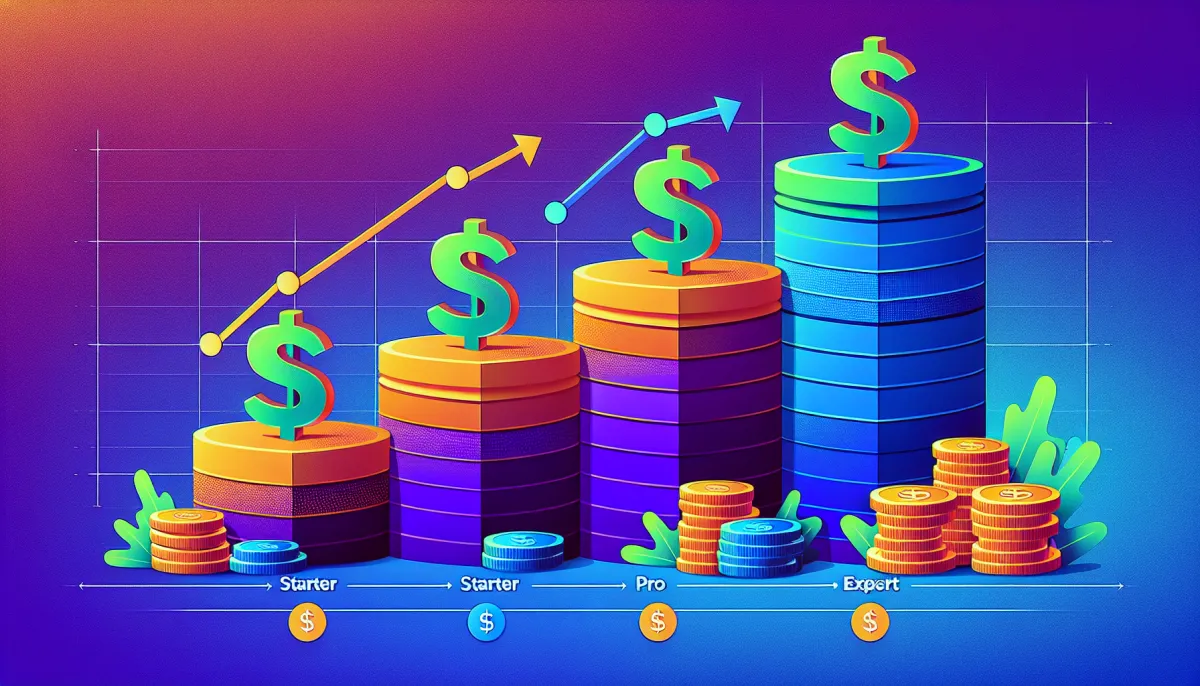
| Experienced (1-2 years) | $500-$1,500 | $300-$700 | +100-200% |
| Expert (2+ years, proven ROI) | $1,500-$5,000 | $700-$2,500 | +150-300% |
For influencer-style sponsored content (the deliverable is a post on your own channel, pricing scales with audience):
| Tier | Instagram Post | TikTok Video | YouTube Integration | YouTube Dedicated |
|---|---|---|---|---|
| Nano (1K-10K) | $75-$250 | $100-$400 | $300-$800 | $500-$1,500 |
| Micro (10K-50K) | $150-$500 | $200-$800 | $500-$1,500 | $1,000-$4,000 |
| Mid-tier (50K-500K) | $500-$3,000 | $800-$5,000 | $1,500-$8,000 | $4,000-$20,000 |
| Macro (500K+) | $3,000-$15,000+ | $5,000-$25,000+ | $8,000-$50,000+ | $20,000-$200,000+ |
Two things are worth explaining about these numbers. First, usage rights are where the real money lives in UGC, and this is the lesson that most beginners miss. The base rate for a 30-second UGC video from an intermediate creator might be $300. But if the brand wants to run that video as a paid ad for 90 days across Meta and TikTok, that's a usage rights expansion that should cost an additional $300-$600 on top of the base rate. If they want perpetual usage with no geographic restriction, that's another significant multiplier. Expert UGC creators routinely deliver videos where the base rate is $1,500 but the total invoice, with extended usage rights, is $3,500-$5,000. Learning how to price usage rights separately from base production is probably the single biggest income lever available to UGC creators in their first two years.
Second, the "experience" tier matters more than follower count for UGC. A creator with 1,500 followers but two years of consistent UGC delivery for brands in a specific niche (say, beauty or fitness) can legitimately charge $1,000-$1,500 per video, because they've built a portfolio, client references, and a reputation for reliability. A creator with 50,000 followers but only three months of UGC experience is still in the beginner-to-intermediate tier for pricing purposes. Brands are paying for proven capability, not audience size, in the UGC channel specifically.
If you're building up a creator presence alongside your UGC work and want to accelerate your credibility signals, strategic Instagram follower investment can help get you past the social-proof threshold that some brands do check before hiring.
4 UGC content types that sell best
Not all UGC content is created equal, and brands in 2026 are specifically paying premium rates for four content types that have been consistently outperforming generic sponsored content in their paid ad performance. If you're going to specialize your UGC offering — and you should, because niche specialists earn more than generalists — these are the formats to consider.
Type 1: Unboxing and first-impression videos. The classic format, but it still works because the emotional payoff of watching someone open a product for the first time and react authentically generates genuine click-through on paid ads. The production requirements are modest: good lighting, stable framing, a clean backdrop (often just a desk or kitchen counter), and the ability to hold a natural reaction on camera. Brands in beauty, home goods, tech accessories, and consumer electronics pay consistently well for this format. Typical rates in 2026: $150-$500 per 30-60 second video for intermediate creators.
Type 2: Problem-solution testimonials. This is the format that converts best for DTC brands running paid ads, and it's where experienced UGC creators can command premium pricing. The structure: you present a relatable problem (acne, disorganized kitchen, sore back, whatever), you introduce the product as the solution, and you show the positive outcome. This format is heavily used by Meta advertisers because it performs well against Meta's algorithm preferences for narrative-structured content. Typical rates: $300-$1,200 per video for experienced creators, often with usage rights premiums added.
Type 3: "Get ready with me" style product integration. The creator shows their daily routine (morning skincare, getting dressed, cooking, working out, whatever fits the brand) and the product is integrated naturally into the flow rather than presented as the main focus. These videos tend to run slightly longer (45-90 seconds) and require more editing sophistication, but they convert well for lifestyle brands and generally command higher rates. Typical: $400-$1,500 per video for experienced creators.
Type 4: Comparison and "honest review" format. The creator compares the brand's product against competitors or against "what I was using before," and delivers an honest-seeming verdict that favors the brand. This format is more sensitive — it requires the creator to have genuine credibility in the category, and it works best when the creator has an existing content pattern of reviews. The pricing for comparison videos runs higher because they're harder to produce well and they carry more creator risk. Typical: $500-$2,000 per video for experienced creators in established niches.
The specialization decision matters because brands hire UGC creators based on their existing portfolio. If your portfolio is five unboxing videos, brands looking for unboxing videos will hire you. If your portfolio is a confused mix of every format, you'll struggle to close deals. Pick one or two formats that match your natural delivery style and your home setup, and build a portfolio that makes you the obvious choice for those formats in your niche.
Where to find your first brands: 8 platforms you need to know
The infrastructure for UGC creator-brand matching in 2026 is dramatically better than it was even two years ago, and the vast majority of beginner UGC creators should start by getting on the right platforms rather than trying to cold-pitch brands directly. Here are the eight platforms that actually matter.
1. Collabstr is probably the single best starting point for US-based UGC creators in 2026. The platform lets you create a public profile with your rates, content samples, and niche, and brands browse the marketplace to hire directly. It's a lower-friction way to get first deals, and the platform handles contracts and payment. Expect to list base rates in the $100-$500 range as a beginner and scale up as you build reviews.
2. Influee is a European-based platform that has expanded aggressively into the US market and now has a solid base of brand clients. Their model is closer to a curated marketplace with project-based briefs that creators apply to. Good for creators who prefer to respond to specific briefs rather than running an open profile.
3. Billo focuses specifically on UGC video production for e-commerce brands, with a heavy emphasis on Amazon sellers and DTC Shopify brands. The rates are typically on the lower end ($50-$300 per video) but the volume is high and it's a good place to build a portfolio fast when you're starting out.
4. Insense is more oriented toward performance marketers who are specifically buying UGC to run in paid ad campaigns, which means the rates tend to be better (they know they're getting ROI from the content) but the expectations for production quality are higher. Good fit for intermediate-tier creators.
5. TikTok Creator Marketplace is the official in-platform matching tool for TikTok, and even though the TikTok-exclusive campaign spend has declined in 2026, there's still substantial brand budget flowing through this channel. Worth enabling if your TikTok presence is even modestly active.
6. Aspire (formerly AspireIQ) is more of an enterprise-focused platform — the brands using it tend to be larger and the deals tend to be bigger, but the application process is more competitive. A good target once you have a solid portfolio.
7. Upfluence is an enterprise-tier influencer marketing platform that has been expanding its UGC offering. Again, skewed toward larger brands and higher-tier creators, but worth being on once you're at the intermediate level.
8. Brybe is a newer entrant focused specifically on the micro-creator and UGC market, with a frictionless onboarding process that makes it easy for beginners. The deal flow is less consistent than Collabstr but the platform is growing.
The playbook I recommend is: sign up for three or four of these (Collabstr, Billo, TikTok Creator Marketplace, and one of Influee/Insense/Brybe) and build out your profile to the same quality standard on all of them. Creator platforms are essentially zero-cost distribution for your profile, and being on multiple platforms dramatically increases your chances of getting your first deals within 30-60 days.
If you're also building a TikTok presence to support your UGC work (many brands do check), strategically growing your TikTok following can help your profile pass the initial credibility check that some brands apply before hiring. The UGC work itself doesn't require a TikTok audience, but having one doesn't hurt.
5 fatal beginner mistakes
Having watched a lot of UGC creators start from zero over the last two years, the failure modes are remarkably consistent. These five mistakes account for something like 80% of why beginners stall out at low income levels, and all of them are avoidable once you know to look for them.
Mistake 1: Undercharging for usage rights. I already mentioned this, but it's worth restating: if a brand wants to use your video in paid ads or on their product pages beyond their own organic social posting, that's a usage rights expansion that should cost extra. Most beginners deliver the video and grant blanket usage rights without additional compensation, and this can leave literal thousands of dollars on the table per deal. Learn to price usage separately from production, and have a written statement on every deliverable invoice that specifies what rights are and aren't included.
Mistake 2: Saying yes to every brief regardless of fit. In the first few weeks of your UGC career, it's tempting to take every job that comes your way because you want to build momentum. This is a trap. Taking jobs outside your niche means your portfolio becomes a confused collection of unrelated content, which hurts your ability to close future deals in any specific niche. Pick two or three niches (your actual niches, the ones where you have real expertise and presence) and say no to briefs outside of them, even if the money is tempting in the short term.
Mistake 3: Not having a contract or scope-of-work document. Most beginners handle deals through casual DM conversations and send videos over without any formal agreement. This works fine until a brand asks for three rounds of revisions, rejects the final deliverable, or tries to pay 30 days late. Having even a basic one-page scope-of-work document that specifies the deliverables, the rights, the revision limits, and the payment terms will save you thousands of dollars of frustration over your first year. Many of the platforms above (Collabstr, Influee) handle this for you, which is a big argument for using them.
Mistake 4: Overinvesting in production equipment before building a portfolio. Every new UGC creator seems to assume they need a professional camera, a ring light, and a lavalier mic before they can start. You don't. A 2023-or-newer iPhone or similar smartphone, a $30-$50 ring light from Amazon, natural window lighting, and a quiet room are enough to produce UGC content that brands will happily pay for. The creators I've seen earning the most in 2026 are the ones who started with smartphone-only setups, built a portfolio of 15-30 deliverables, and then invested in better equipment once they were already earning. Overinvesting early means you've spent $2,000 on gear before you've closed a single $150 deal.
Mistake 5: Ghosting clients or missing deadlines. This should be obvious, but it keeps happening: creators take a deal, then fail to communicate about delays, or miss the delivery date with no warning, or go dark after taking a deposit. In the UGC world, brands talk to each other. Reliability is arguably the single biggest factor in whether you'll get repeat business, and the creators who build their reputations as reliable, communicative, and professional end up with a roster of repeat clients that generates consistent monthly income. The creators who ghost when things get hard end up rebuilding from scratch every few months and never building momentum.
Case study: 3 US creators earning $3,000-$8,000/month without fame
To make all of this concrete, let's walk through three anonymized US creator profiles I've looked at closely over the past six months. These aren't famous people. You've never heard of any of them. And they're all earning real money through UGC in 2026.

Case 1: Beauty creator in Austin, ~8,000 Instagram followers. This creator specialized in skincare UGC, specifically problem-solution testimonials for acne products and anti-aging serums. She's been producing UGC since late 2024, built an initial portfolio through Billo (lower rates but high volume), and has now transitioned to primarily Collabstr and direct brand relationships. Her typical month in early 2026 is 8-12 deliverables across 3-5 repeat clients, at an average of $400-$600 per deliverable including usage rights. Monthly revenue: $4,000-$6,000. She works roughly 20-25 hours a week on UGC, which makes her effective hourly rate somewhere in the $40-$60 range — comparable to a skilled freelance marketing role, with the advantage of complete schedule flexibility.
Case 2: Tech accessories reviewer in San Francisco, ~5,000 TikTok followers. This creator specifically produces unboxing and first-impression UGC for consumer tech brands — phone cases, earbuds, charging accessories, laptop stands, that category. He started on TikTok Creator Marketplace and expanded to Insense, where the performance-marketing brands pay better rates because they're using the videos in paid ads with clear ROI tracking. His typical month is 6-10 deliverables at $500-$1,000 each, with some of the higher-end deliverables (more sophisticated product demos) closer to the top of that range. Monthly revenue: $4,500-$7,500. He still has a full-time day job in tech, so this is all happening in evenings and weekends, but the part-time income essentially doubles his overall household income.
Case 3: Fitness creator in Miami, ~12,000 Instagram followers. This creator specializes in workout equipment and supplement UGC, with a home gym setup that provides excellent production context for almost any fitness brand brief. She's at the expert tier of UGC pricing because she's been at this for two-plus years and has a portfolio of 100+ deliverables with strong brand references. Her typical month is 10-15 deliverables at $600-$1,200 each, and she has two clients on monthly retainers (essentially, "deliver 4 videos a month for this recurring fee") that provide baseline income predictability. Monthly revenue: $6,000-$8,500. She's done this as her primary income for about a year, and between the UGC work and a small handful of traditional sponsored posts on her own Instagram, she's at an income level that exceeds what she was earning in her previous corporate job.
Three things unify these cases. First, none of them are famous — the combined follower count across all three platforms is under 30,000, which would get you dismissed as "too small to monetize" under old creator-economy frameworks. Second, all three specialized early and deeply — they didn't try to do UGC for every category, they picked niches that matched their existing life context (skincare, tech, fitness) and went deep. Third, all three built client relationships rather than chasing one-off deals — most of their monthly revenue comes from repeat clients who hire them consistently, which means the creator isn't constantly hustling for new work and can invest their time in higher-quality production.
Tax basics: LLC vs sole prop for US creators (quick overview)
This section is a brief overview rather than comprehensive tax advice — you should absolutely consult a CPA or tax professional for your specific situation — but there are a few structural decisions that US-based UGC creators should understand early, because getting them wrong in year one can create a mess when you file taxes in year two.
If you're earning UGC income in the US, that income is self-employment income, which means you'll owe both income tax and self-employment tax (approximately 15.3% on top of your regular income tax bracket) on your net earnings. This catches a lot of new creators off guard in their first tax year because they didn't withhold taxes throughout the year and they're hit with a large bill in April. The practical move is to set aside roughly 25-30% of every payment you receive into a separate savings account dedicated to tax reserves — this will cover your estimated tax liability and insulate you from a scary April surprise.
The question of sole proprietorship versus LLC is mostly about liability protection and administrative complexity. As a sole proprietor (which is the default if you don't do anything), you're personally liable for anything related to your creator business, and your business income passes through to your personal tax return. As an LLC (which costs $50-$500 to set up depending on your state), you get a layer of liability protection that shields your personal assets from business-related claims, and you have more flexibility around tax elections (for example, you can elect S-corp status once your income gets high enough to benefit from the self-employment tax savings).
The rough rule of thumb: if you're earning less than $40,000 a year from UGC, the sole proprietorship structure is probably fine. If you're earning between $40,000 and $80,000 a year, an LLC with default tax treatment (still pass-through, but with liability protection) makes sense. If you're earning over $80,000 a year, the LLC with S-corp election can produce meaningful tax savings on self-employment tax, though it also comes with additional payroll compliance requirements. Talk to a CPA before making the S-corp election because it has real downsides if you don't set it up right.
One underrated tax benefit for UGC creators: almost everything you buy for content production (camera gear, lighting, props, subscriptions to editing software, even a portion of your rent if you have a dedicated content production space) is deductible as a business expense. Tracking these expenses through a basic bookkeeping tool (QuickBooks Self-Employed, Wave, or even a well-organized spreadsheet) can reduce your taxable income by 20-40% compared to not tracking anything, which is a substantial effective raise for taking about an hour a week to log receipts.
Your 90-day launch plan
Let's end with a concrete 90-day plan that takes a creator from "I have an idea about UGC" to "I'm earning $1,000-$3,000 per month." This isn't aspirational. Creators who execute this plan with reasonable diligence should hit the revenue targets.
Days 1-15: Foundation. Pick your niche (you need one). Set up the basic production environment (well-lit corner of your home, smartphone, simple ring light, clean backdrop). Produce 5-7 sample UGC videos in your chosen niche — use your own products or borrow from friends. These are your portfolio. Don't wait for brand work to start building the portfolio; produce the portfolio first so you have something to show. Create profiles on three platforms: Collabstr, Billo, and one other (TikTok Creator Marketplace if you have any TikTok presence, or Brybe if you don't). Set your rates at the "beginner" tier — resist the urge to underprice, but don't overprice either.
Days 16-45: First deals and momentum. Apply to briefs on Billo and Influee for volume (this is how you get your first three to five deliverables done for real brands). Expect the rates to be in the $50-$200 range. Deliver on time, communicate professionally, ask for a review on the platform when you complete each deal. Use these first deliverables to flesh out your portfolio with actual brand work. In parallel, respond to any inbound inquiries on Collabstr with quick turnarounds and professional proposals. By day 45, aim to have completed 5-8 paid deliverables and to have generated your first $500-$1,500 in revenue.
Days 46-75: Move up the pricing ladder. Now that you have a portfolio of actual brand work and a handful of positive reviews, start raising your rates on Collabstr toward the intermediate tier. Apply to Insense briefs, which pay better but are more selective. Start having explicit conversations with brands about usage rights and pricing rights expansions separately from base production. Begin identifying brands that could become repeat clients — after completing a deal successfully, directly message the brand point-of-contact about ongoing needs. By day 75, aim to have at least one repeat client relationship and to be charging rates in the $200-$400 per video range.
Days 76-90: Systematize and grow. Formalize your process: have a scope-of-work template, have a usage rights pricing sheet, have a standard invoice format. Consider forming an LLC if your income trajectory suggests you'll clear $20K+ in the next 12 months. Expand to one additional platform (Aspire or Upfluence if you feel ready for the enterprise-tier competition). Set explicit monthly revenue and deliverable goals, and track them weekly. By day 90, aim to be at $1,500-$3,000 in monthly revenue with 2-3 repeat client relationships and a clear sense of which niches are your strongest performers.
Beyond day 90, the growth lever is usage rights pricing and specialization depth. Creators who plateau at the intermediate tier are usually the ones who haven't figured out how to price usage rights, or who are still generalists rather than specialists in their niche. Creators who break into the experienced and expert tiers are the ones who systematically addressed both of those levers and built real depth in one or two niches.
"80% of all influencer deals in 2026 are paying less than $300 per deliverable. For creators who understand this shift and position themselves as UGC producers rather than traditional influencers, this isn't bad news — it's the opening of a much larger, more accessible income opportunity than anything the creator economy has offered before." — Creator economy industry data, Influencer Marketing Hub 2026 report
One final thought. The creators who succeed at UGC in 2026 aren't the ones with the most talent or the best equipment. They're the ones who treat this as a business rather than a hobby — who show up reliably, who price their work appropriately, who build client relationships intentionally, and who reinvest their earnings into skill development rather than lifestyle. If you're willing to operate that way, the math in this article suggests strongly that $3,000-$5,000 per month in UGC income is achievable within a year, even if you never cross 10,000 followers. And for a lot of people, that income level — combined with the schedule flexibility that creator work offers — is genuinely life-changing.
If you want to explore how strategic social growth can complement your UGC work and give you better credibility signals with brands, take a look at our pricing page for options that fit different stages of a creator business. The UGC path doesn't require fame, but it does benefit from basic social proof, and combining the two intelligently is how the top-earning UGC creators in 2026 are structuring their businesses.
Sources
- Influencer Marketing Hub — Creator Economy Report 2026
- Collabstr — 2026 UGC Creator Rate Benchmarks
- eMarketer — US Creator Marketing Spend 2026 ($44B, +18% YoY)
- Adweek — UGC vs Influencer Content Performance Data (2026)
- Tubefilter — TikTok Campaign Spend Decline and the Cross-Platform UGC Shift
- Billo — UGC Creator Pricing Guide 2026
- Insense — Performance UGC Rates and Usage Rights 2026
- Forbes — The UGC Creator Economy and the Micro-Influencer Shift
To amplify your Instagram strategy, explore our Instagram services designed for serious creators.