700 million. One guy. 7 years. Jimmy Donaldson's trajectory defies everything we thought we knew about YouTube. As of April 2026, MrBeast's combined follower count across platforms has crossed 700 million — a number so absurd that when you try to contextualize it against any other creator, any other media entity, any other cultural phenomenon, the comparison just doesn't hold. Forbes ranked him the #1 highest-earning creator in 2025 with $85 million in earnings. He inked a multi-year Prime Video deal reportedly worth $150 million for Beast Games Season 2. His chocolate brand Feastables is now in over 40,000 retail locations. And in Q1 2026, he launched three new dubbed channels in Spanish, Hindi, and Portuguese, each already pulling nine-figure view counts.
This isn't a fluke. It isn't luck. It isn't even the "algorithm gods smiling on one creator" narrative that's been applied to every viral success from PewDiePie to Charli D'Amelio. MrBeast's empire is the product of a specific, replicable-in-principle (but brutal-to-execute) playbook that Jimmy Donaldson has been iterating on since he was 13 years old. Understanding that playbook — what worked, what's replicable, what genuinely cannot be replicated — is the single most valuable case study in the creator economy in 2026. This is that analysis.
Before MrBeast: how a North Carolina teen cracked YouTube (2012-2017)
Here's a fact that reframes everything about Jimmy Donaldson: by the time MrBeast "broke through" in 2017-2018 with his counting-to-100,000 video and his million-dollar giveaways, he had been uploading to YouTube for six years. Six. Years. He started the channel that would eventually become MrBeast in 2012, at age 13, under a different name. He made gaming videos. He made commentary videos. He made videos analyzing other YouTubers' strategies. None of it went viral. None of it monetized meaningfully. He spent his adolescence uploading content that almost nobody watched, and he kept doing it anyway.
What he was doing during those obscure years wasn't just content production — it was research. Donaldson has said in interviews that throughout his teenage years he was watching YouTube videos constantly, studying why certain videos pulled massive view counts and others didn't, analyzing thumbnails and titles, building mental models of retention curves. By 2016, he was publishing videos on his channel that were, in essence, meta-commentary on YouTube strategy itself — breakdowns of how other creators structured their content, why certain thumbnails performed better than others, what the algorithm seemed to reward.
The "counting to 100,000" video, uploaded in January 2017, was the result of this years-long research process. It wasn't a random stunt. It was a carefully designed hypothesis: that YouTube's algorithm rewarded completion rate and watch time above almost everything else, and that a video title promising a single, legible endurance challenge would generate the kind of sustained watch time that the algorithm would amplify. The video pulled tens of millions of views. MrBeast was born.
The lesson buried in this origin story is the one almost nobody talks about: the five years of obscurity weren't wasted time. They were the R&D budget. Jimmy Donaldson spent his adolescence doing what most aspiring creators refuse to do — making content that nobody watched while studying why — and by the time he stumbled onto a format that worked, he had an intuition for YouTube's mechanics that almost no one else in his generation possessed. Creators who enter YouTube in 2026 and expect to go viral within six months are, functionally, skipping the research phase that made MrBeast possible.
The secret code: obsessive retention analysis frame by frame
If you ask Jimmy Donaldson what his "secret" is, he'll tell you: retention. Specifically, he and his team analyze every MrBeast video frame by frame after publication, identifying the exact moments where viewers drop off and treating every drop-off as a diagnostic signal about what to do differently next time. This isn't metaphorical. MrBeast's team has built custom internal dashboards that let them see, at one-second granularity, what percentage of viewers are still watching at any given moment. When there's a dip, they investigate. Why did people leave here? What was happening on screen? What was happening in the narration? Was the pacing off?
This level of retention obsession is, as far as I can tell from reading interviews and listening to MrBeast's appearances on podcasts like the Joe Rogan Experience and Lex Fridman, genuinely unique in the creator economy. Most creators look at retention as a general metric — "this video had 65% retention, that's pretty good." MrBeast's team looks at retention as a diagnostic tool at one-second granularity, and every insight feeds back into how they structure the next video. The opening seven seconds, which MrBeast has publicly called the single most important part of any video, are obsessed over for weeks. The placement of the biggest visual payoff. The pacing of reveals. The cadence of cuts. Every element is optimized against retention data.
The result of this process is that MrBeast videos feel fundamentally different from other YouTube content. The pacing is faster. The stakes are clearer earlier. The visual density is higher. The "why should I keep watching" question is answered, implicitly, every fifteen to thirty seconds. This is why MrBeast videos can run 15 to 25 minutes long and still pull retention numbers that most creators can't hit on 90-second Shorts. The retention isn't magic — it's the product of a years-long, obsessive analytical process that no other creator operates at the same intensity.
For creators trying to apply this lesson, the practical implication is uncomfortable: retention optimization isn't a thing you do once. It's a discipline you commit to permanently, reviewing every video after it publishes, identifying the dips, and changing your production approach based on what you learn. Most creators review their retention curves once or twice and then move on. MrBeast's team has been reviewing every video's retention curve, frame by frame, for most of a decade. That compounding analytical advantage is why his content performs at the level it does.
If you're trying to grow a YouTube channel and want to accelerate your social proof while you work on the harder craft of retention, building your YouTube subscriber base strategically can help you cross monetization thresholds faster. But understand: no amount of subscriber growth substitutes for the retention craft. The subscribers get you into the game; the retention is what wins it.
The 2023 pivot: from creator to brand empire (Feastables, Beast Burger)
Around 2022-2023, MrBeast made a strategic pivot that, in retrospect, looks like the most important business decision of his career. He stopped thinking of himself as a YouTuber who had built-out brand extensions, and started thinking of himself as a brand holding company whose YouTube channel was the primary marketing engine. The distinction sounds semantic, but it changed everything about how he allocated capital, structured his team, and built his businesses.
Feastables, his chocolate brand, is the clearest example. Launched in January 2022, Feastables was positioned not as "MrBeast branded chocolate" but as a genuine consumer packaged goods company with its own supply chain, its own distribution strategy, its own product development roadmap. By 2024, Feastables was generating reported revenues in the hundreds of millions. By April 2026, Feastables is in more than 40,000 retail locations across the US, Canada, UK, and Australia, and has expanded its product line from chocolate bars into a broader snack category. This isn't a celebrity-branded product — it's a legitimate CPG company that happens to have the most efficient marketing channel in consumer goods (MrBeast's audience) built into it.
Beast Burger, the ghost-kitchen burger brand, had a rockier trajectory — there was a well-documented period of operational friction with the Virtual Dining Concepts partnership that ended in litigation, and the brand went quieter for a stretch — but it established the template that Feastables later executed on more successfully. The insight was: a creator with a massive audience can bootstrap CPG and foodservice brands in ways that traditional brands can't match, because the customer acquisition cost is functionally zero when you can demo the product to 200M+ people per video.
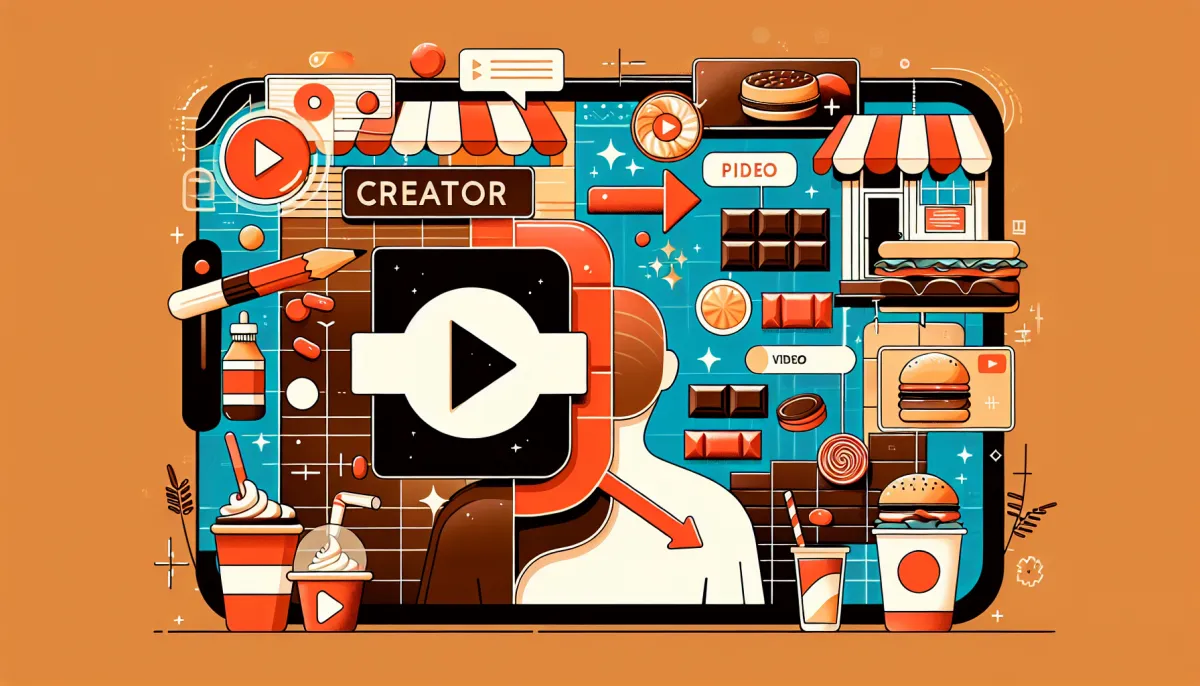
The strategic implication for other creators is the one everyone misses: the MrBeast model isn't about making YouTube videos. It's about using YouTube videos as the marketing channel for a portfolio of owned brands. The YouTube revenue pays for the production. The production generates the audience attention. The audience attention drives the brand sales. The brand sales fund more elaborate productions. The flywheel is tight, and each element reinforces the others. Creators who only optimize for YouTube monetization are, functionally, leaving most of the available value on the table.
The $150M Prime Video deal: TV-streaming crossover
In 2024, MrBeast signed a reported multi-year deal with Amazon Prime Video for Beast Games, a competition reality show modeled loosely on Squid Game but with legitimately massive cash prizes. Season 1 dropped in December 2024 and became one of the most-watched non-fiction titles in Prime Video's history. In 2025, Amazon renewed the deal, and reports pegged the combined multi-year arrangement at approximately $150 million — making it one of the largest deals ever signed by an individual creator with a streaming platform.
This matters for reasons that go beyond the dollar figure. What MrBeast accomplished with the Prime Video deal is something that the legacy entertainment industry has been trying and failing to do for fifteen years: bringing a digitally-native, platform-native creator into streaming without watering down what made them successful. Most TV-streaming crossovers for YouTubers have ended in disappointment — the production values go up, the constraints increase, the editorial voice gets sanded down, and the resulting content doesn't perform on either the streaming platform or back on YouTube. Beast Games avoided this trap by letting MrBeast's team maintain creative control and effectively treating the streaming version as a scaled-up version of what already works on YouTube.
The $150M figure also reflects something important about where the creator economy is going. Streaming platforms are increasingly willing to pay premium rates for creator-led content because they've learned, painfully, that audience-native talent generates engagement that algorithm-optimized traditional TV content can't match. Prime Video, Netflix, and Disney+ are all actively looking for the next MrBeast — a creator with massive audience ownership who can deliver sustained subscriber engagement. This is a trend that will continue, and the creators who are positioned as brand-owners (not just content producers) are the ones who will capture the premium deals.
The deal structure is also worth understanding. MrBeast didn't sell his YouTube audience or his brands — the Prime Video deal is purely for the Beast Games IP and format. MrBeast retains his channel, his brands, and his core audience. The streaming deal is an additive revenue stream layered on top of the existing empire, not a replacement for it. This is the opposite of the traditional "get discovered, sign to a studio, give up your audience" path that used to define creator-to-traditional-media transitions.
The localization playbook: 3 channels, 3 languages, 300M+ views
In Q1 2026, MrBeast launched three new dubbed channels: one in Spanish, one in Hindi, and one in Portuguese. These aren't casual experiments. Each is a full production operation with dedicated dubbing teams, localized thumbnails and titles, and regional community management. Within the first few months, all three channels had generated nine-figure view totals, and the combined reach across the dubbed channels was pushing 300 million cumulative views.
This is the localization playbook that MrBeast started building around 2021-2022, when he launched his original Spanish-dubbed channel and realized that roughly 40% of MrBeast's potential audience lived in non-English-speaking markets. The original Spanish channel (launched earlier) hit 50M+ subscribers faster than almost any YouTube channel in history, because the primary content already existed — what was needed was a translation and localization layer, not net-new production. The economics of this are extraordinary: the marginal cost of dubbing a video is a fraction of the cost of producing it, and the incremental audience is effectively free viewership that generates new ad revenue, new brand extension opportunities, and new territorial expansion for Feastables and other brands.
The Hindi channel is particularly strategic because India is the single largest YouTube market in the world by monthly active users, with more than 500 million Indians consuming YouTube content regularly. Historically, the Indian YouTube market has been dominated by Indian creators producing Hindi-language content from the ground up, and Western creators have had limited penetration because of the language barrier. MrBeast's Hindi dubbed channel effectively short-circuits this constraint — suddenly his production values, his narrative pacing, and his massive prize structures are accessible to an audience that has never had access to Western-scale creator content in their native language.
For creators trying to apply this lesson, the opportunity is smaller but real. You don't need MrBeast's production scale to benefit from localization. If you have a base of content that performs well in one language, dubbing or transcribing it into one or two other languages can unlock audiences that would otherwise be inaccessible. The marginal cost of dubbing has dropped dramatically in 2026 with AI-assisted translation and voice cloning tools, which makes the ROI on localization better than it's ever been for mid-tier creators.
If you're considering building up your YouTube presence and want to understand how to accelerate view counts on existing content, strategic YouTube views investment can help boost the social proof and algorithmic signals on key videos while you scale your organic reach.
5 actionable lessons for creators in 2026

Let's distill the MrBeast case study into five specific lessons that creators operating at any scale can actually apply in 2026. These aren't "be authentic" or "find your niche" platitudes. These are specific tactical moves that the MrBeast operation has proven out and that are within reach for creators with meaningful ambitions.
Lesson 1: Commit to retention analysis at granularity most creators won't. Stop looking at your retention curves as a general metric. Start looking at them at one-second granularity after every upload. Identify the specific moments where viewers drop off. Ask why. Change your approach on the next video. Do this for a year and you will be ahead of 95% of other creators in your category, because almost none of them will have the discipline to do this consistently.
Lesson 2: Think of your channel as a marketing engine, not an end product. The creators who build durable businesses in 2026 are the ones who treat their YouTube channel (or TikTok account or Instagram) as the customer acquisition engine for a brand they own, not as the final product they're selling. You don't need to launch a chocolate company. But you should be asking: what owned asset is my audience attention driving traffic to? A newsletter. A course. A community. A product. An agency. Something. If the answer is "nothing, I just make videos," you're leaving most of the value on the table.
Lesson 3: Plan for a multi-decade horizon. Jimmy Donaldson has been uploading to YouTube for fourteen years. He spent six of those years in near-total obscurity. The creators who get famous overnight are the ones who burn out in two to four years because their success wasn't built on a foundation of craft. The creators who build empires are the ones who commit to the practice long enough for the compound effects to matter.
Lesson 4: Localize aggressively into your largest adjacent markets. If you make content in English, the first Spanish-language version of your best content will likely pull more views in six months than your original content will pull in its next year. AI dubbing tools in 2026 have dropped the production cost to near-zero. The creators who localize win disproportionate audience share in the non-English markets that are increasingly where the audience growth is happening.
Lesson 5: Own your audience relationships, not just your platform presence. MrBeast has been aggressive about building email lists, SMS lists, and owned-audience touchpoints for his brands because he knows that every platform is, eventually, an adversary. The YouTube algorithm could change tomorrow. TikTok could be banned in a market you depend on. Instagram could deprioritize your content format. If your entire relationship with your audience runs through a platform, you're one policy change away from a catastrophic loss. Owned channels — email, SMS, community platforms — insulate you from platform risk and compound in value over time.
"Most creators think they're building an audience. MrBeast is building a business. The audience is a byproduct, not the goal. That reframing is the single most important strategic insight in the 2026 creator economy, and it's the one that most creators haven't yet made." — Creator economy analysis, Bloomberg, March 2026
The limits: what nobody else can replicate
Let's be honest about what the MrBeast playbook can and can't teach us, because pretending that anyone can become MrBeast by following a list of tactics is the kind of aspirational nonsense that leads to burned-out creators chasing an impossible standard.
There are three things about the MrBeast operation that functionally cannot be replicated by almost anyone else, and they're worth being clear about: First, the capital base. MrBeast reinvests a reported 90%+ of his YouTube revenue back into the next production, which creates escalating production budgets that compound over time. By 2026, individual MrBeast videos have production budgets in the low-to-mid seven figures. No creator without an existing massive revenue base can match that production quality, and the production quality is part of what makes the retention and reach possible. There's a chicken-and-egg problem here that most creators will never escape.
Second, the team. The MrBeast operation reportedly employs more than 300 full-time staff, including professional videographers, editors, writers, producers, analysts, and a substantial operations and business development function. This is a proper production studio, not a creator with a couple of editors. The output quality and velocity that MrBeast maintains is only possible with a team of this scale. Individual creators can't replicate this, and even serious creator businesses running at $5-10M in annual revenue can't justify teams of this size.
Third, the time capital. Jimmy Donaldson started at 13. He was producing daily content through his teenage years. He committed to a level of dedication that almost nobody else can commit to without being 13 — adults with mortgages and families and established careers cannot, realistically, replicate the all-in time investment that his adolescence allowed. This is perhaps the most important unreplicable factor: the six-year research phase was possible because he had nothing else he needed to be doing.
Acknowledging these limits isn't defeatism — it's the prerequisite for actually learning from MrBeast, because once you stop trying to become MrBeast and start trying to understand what elements of the MrBeast playbook can actually be applied at your scale, the case study becomes genuinely useful. The retention obsession is replicable. The brand-as-marketing-engine reframe is replicable. The localization strategy is replicable. The audience ownership discipline is replicable. The specific scale, budget, team, and time capital that MrBeast benefits from are not. Build the business that fits your reality, not a smaller version of someone else's empire.
Can anyone else pull this off? Analysis of US contenders
If MrBeast represents the apex of what's possible in the creator economy, who are the contenders who might credibly follow in his footsteps? There are a handful of US creators in 2026 who are executing at scales that warrant serious comparison, and looking at their strategies reveals both what's replicable about the MrBeast playbook and where each creator has made distinct strategic choices.
Ryan Trahan is probably the closest thing to a "MrBeast for the thoughtful audience" in the current US creator landscape. His penny series — where he traveled across the US starting with one penny and documenting the whole trip — was a masterclass in narrative structure and retention, and he's since expanded into longer-form adventure and philanthropy content that mirrors MrBeast's narrative architecture without directly competing on production scale. Trahan's audience skews slightly older and more engaged than MrBeast's average viewer, which gives him distinct monetization and brand-deal advantages even at a smaller follower count.
Airrack (Eric Decker) built his channel on a weekly-upload discipline and a signature style of ambitious, narratively-framed challenge videos. He's been more transparent than almost any other creator about his production process, his team build-out, and his strategic thinking, and he's positioned himself as something of a "MrBeast protégé without being a MrBeast clone." His business trajectory suggests he's on the path toward building a similar brand empire, though at a smaller scale and with a distinct editorial voice.
Dude Perfect is interesting because they represent a different model entirely — a creator-collective rather than an individual, built around a core group of trick-shot athletes who have expanded into a broader family-friendly media business. They've been executing on the creator-as-brand-business model since well before MrBeast, and their licensing and IP monetization (toys, games, live events) is arguably more mature than MrBeast's even though their YouTube reach is smaller.
Ben Azelart represents the next-generation model: a younger creator (born 2002) who grew up watching MrBeast's playbook and is applying it with his own editorial sensibilities for a Gen Z and Gen Alpha audience. His trajectory will be worth watching over the next five to seven years because he's early enough in his career that the MrBeast playbook is native to how he thinks about content, rather than something he had to learn mid-career.
Here's how the top US creator empires compare as of April 2026:
| Creator | Est. Combined Followers | Est. Annual Revenue | Videos Per Year | Team Size |
|---|---|---|---|---|
| MrBeast (Jimmy Donaldson) | 700M+ | $85M (Forbes 2025) | 40-50 (main channel) | 300+ |
| Ryan Trahan | 40-45M | $5-10M (est.) | 50-70 | 15-25 |
| Dude Perfect | 75M+ | $15-25M (est.) | 30-40 | 40-60 |
| Airrack (Eric Decker) | 20-25M | $3-5M (est.) | 50-55 | 10-15 |
| Ben Azelart | 30-35M | $2-4M (est.) | 40-50 | 8-12 |
The gap between MrBeast and everyone else is stark. MrBeast's estimated 2025 revenue ($85M per Forbes) is more than 3x Dude Perfect's (the second-highest), more than 8x Ryan Trahan's, and roughly 15x Airrack's. The follower count gap is even more dramatic — MrBeast's 700M combined followers is approaching 10x Dude Perfect's 75M. This is why "the next MrBeast" is probably a misleading framing; there might not be a next MrBeast in the way there wasn't a next Michael Jordan. The combination of timing, personal fit, and compounding advantages that Jimmy Donaldson has accumulated may simply not be reproducible by anyone else.
For context, Forbes' Top 50 creators list for 2025 showed the top 50 combined to generate approximately $853 million in total earnings. MrBeast's $85M represents roughly 10% of that entire top-50 total by himself. Beyond him, Charli D'Amelio — the top TikTok creator by earnings — pulled approximately $17.5M, and Khaby Lame generated $16-20M. The distribution is extraordinarily top-heavy, and MrBeast sits at the very top in a league of his own.
If you're evaluating whether to invest in building out your own creator presence and want to plan your strategy strategically, our pricing page lays out the investment options at different scales so you can build a plan that fits where you actually are rather than where you wish you were.
Conclusion: the end of the solo creator era
The real lesson of the MrBeast case study, if you look at it long enough, isn't that anyone can build an empire like this. It's that the era of the solo creator — one person with a camera, making content, monetizing directly through platform payouts — is ending. The creators at the top of the 2026 economy are, essentially, media companies. MrBeast has a 300+ person team, a portfolio of owned brands, a multi-year streaming deal, and a localization operation spanning multiple languages. Ryan Trahan, Dude Perfect, Airrack — all of them are running team-based production operations with multiple revenue streams and owned intellectual property. The solo YouTuber vlogging from their bedroom is still making great content at every level of the pyramid, but the creators who are actually capturing the outsized economic returns are all running something much closer to a traditional media company than to the original "creator" archetype.
This matters because it reframes how aspiring creators should think about their own trajectories. The question isn't "how do I become the next MrBeast" — that framing is probably a trap. The question is "what is my version of the creator-to-media-company transition, at what scale does it make sense for me, and how do I build toward it sustainably?" For most creators, the answer won't involve 300 employees or nine-figure Prime Video deals. It might involve a small production team, a handful of owned revenue channels, a strong email list, a localization experiment in one adjacent language market, and a multi-year commitment to the craft. That's a real business. It's achievable. And it's the actual lesson that the MrBeast case study offers to everyone who isn't Jimmy Donaldson.
There's one more context point worth mentioning as we close this out: the creator economy in 2026 is increasingly polluted by AI-generated content, and the audience is responding. Recent studies show that 52% of consumers disengage from content they identify as AI-generated, and there's a 44-point perception gap between marketers (77% of whom think AI content works well) and consumers (only 33% of whom agree). This is a structural tailwind for creators like MrBeast who are aggressively human-driven, spectacle-first, and real-world-anchored in their production approach. In an ecosystem where generic AI content is flooding every platform, the premium on genuinely human, ambitious, well-crafted content is going up, not down. The MrBeast playbook isn't becoming obsolete in the AI era — it's becoming more differentiated, more valuable, and more defensible. That's the final insight worth sitting with as you think about your own creator trajectory in 2026 and beyond.
Sources
- Forbes — Top-Earning Creators 2025 (MrBeast #1 at $85M)
- Bloomberg — MrBeast, Feastables and the Creator-as-Brand Model
- Tubefilter — MrBeast Dubbed Channels and the Localization Playbook
- Variety — MrBeast and Amazon Prime Video Beast Games Deal
- The Hollywood Reporter — Beast Games Season 2 Renewal and Deal Economics
- Influencer Marketing Hub — Creator Economy Report 2026
- Social Blade — MrBeast Channel Analytics and Growth
- Adweek — Consumer Disengagement from AI-Generated Content
Combine these Instagram tactics with our Instagram services for compounding results.